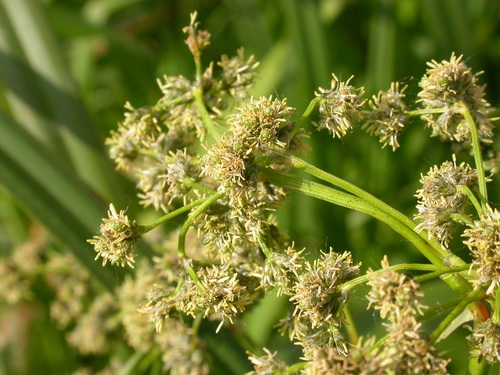


Scirpus Bulrushes
scirpus
Scirpus bulrushes, belonging to the genus Scirpus, are a group of common wetland plants found across the globe. These resilient plants play a crucial role in freshwater ecosystems, often forming dense stands along the edges of ponds, lakes, rivers, and marshes. They are vital for stabilizing shorelines, preventing erosion, and filtering pollutants from the water, thus improving water quality. Beyond their ecological functions, bulrushes provide essential habitat and food sources for a variety of wildlife, from nesting birds to muskrats and waterfowl. Their distinctive, rush-like appearance makes them easily recognizable components of wetland landscapes, contributing significantly to biodiversity and ecological health in these dynamic environments.
Hábitat: Scirpus bulrushes thrive in a variety of freshwater and brackish wetland environments, including the shallow margins of lakes, ponds, rivers, marshes, and swamps.
Scirpus bulrushes are characterized by their tall, slender, and often triangular-shaped stems, which are typically bright to dark green. They usually lack prominent leaves, with most photosynthetic activity occurring in their stems. At the tips of these stems, bulrushes bear clusters of small, inconspicuous flowers that develop into spiky or bristly brown seed heads. Their overall appearance is grass-like but more robust, growing in dense clumps or extensive colonies, varying in height from under a meter to over three meters depending on the species and environmental conditions.
Categoría
PlantasRareza
Common
Peligro
1/5 · Muy bajo
Snaps
¡Sé la primera persona en hacer un snap!
Bulrushes are essential nursery grounds for many fish species and aquatic invertebrates, providing cover from predators and a rich food source.
Indigenous peoples traditionally used bulrush stems for weaving mats, baskets, and even for constructing simple dwellings.
Some bulrush species have edible parts; their rhizomes and basal stems can be consumed raw or cooked, often tasting starchy and slightly sweet.
The extensive root systems of bulrushes are incredibly effective at stabilizing soil, making them valuable in wetland restoration projects to control erosion.
Bulrushes are highly effective at phytoremediation, absorbing excess nutrients and heavy metals from water. Their extensive root systems act as natural filters, improving water quality in wetlands.
These plants spread vigorously via underground rhizomes, allowing them to rapidly colonize new areas and form dense stands. This growth habit is crucial for stabilizing wetland soils and preventing erosion.
Scirpus species possess adaptations that allow them to thrive in anoxic (oxygen-depleted) waterlogged soils. Specialized tissues transport oxygen from the leaves to the roots, preventing suffocation in saturated conditions.
As photosynthetic organisms, Scirpus bulrushes produce their own food using sunlight, water, and carbon dioxide. They absorb nutrients from the sediment through their root systems.
Ondatra zibethicus
Rhizomes and stems are a primary food source for many wetland herbivores.
Agelaius phoeniceus
Dense stands provide excellent nesting sites and cover.
Anas platyrhynchos
Seeds are an important food source, especially for migratory birds.
Anisoptera
Submerged parts offer shelter for aquatic larvae.
Aún no hay insignias de rasgos asignadas a este objeto.
Todavía no hay alias listados.
Las colecciones para este objeto aparecerán aquí a medida que se añadan más temas.
Peligro
1/5 · Muy bajo
Todavía no hay notas especiales de seguridad.
La forma más fácil de identificar a Scirpus Bulrushes es usar la aplicación de identificación de naturaleza Snappit.
50-300 cm
0.1-1.5 kg
5-15 años
As photosynthetic organisms, Scirpus bulrushes produce their own food using sunlight, water, and carbon dioxide. They absorb nutrients from the sediment through their root systems.
Scirpus bulrushes thrive in a variety of freshwater and brackish wetland environments, including the shallow margins of lakes, ponds, rivers, marshes, and swamps.
Photosynthesis
Acércate para separar los grupos y explorar dónde se ha fotografiado este objeto.
Los snaps recientes aparecerán aquí a medida que se añadan nuevas observaciones.
















