


Sempervivum Vicentei
sempervivum vicentei
Sempervivum vicentei, comúnmente conocida como siempreviva, es una encantadora suculenta perenne nativa de los terrenos rocosos montañosos del suroeste de Europa, particularmente España. Esta resistente planta perenne forma rosetas limpias y geométricas de hojas gruesas y carnosas diseñadas para almacenar agua en entornos desafiantes. Es celebrada por su increíble resistencia, sobreviviendo a fríos extremos, sol intenso y suelos alpinos pobres en nutrientes donde pocas otras plantas pueden aferrarse a la vida. Históricamente, las plantas de este género se cultivaban en los tejados de paja de las casas para protegerlas de rayos e incendios, ganándose un lugar en la mitología popular. Hoy en día, Sempervivum vicentei es una de las favoritas entre los jardineros de rocas y los entusiastas de las suculentas, apreciada por su naturaleza de bajo mantenimiento, sus rosetas compactas y las hermosas flores en forma de estrella que coronan las plantas maduras durante los meses de verano.
Hábitat: Prospera en grietas montañosas rocosas y secas y suelos alpinos gravosos con exposición a pleno sol.
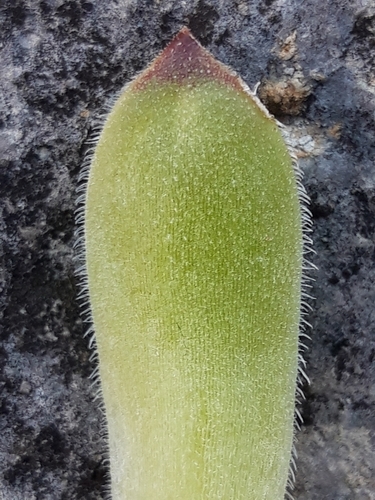
Esta planta presenta rosetas compactas y simétricas que alcanzan hasta 10 centímetros de diámetro. Las hojas son gruesas, carnosas y obovadas, pintadas en tonos verdes suaves con llamativas puntas rojizas-púrpura que se intensifican bajo la luz solar brillante o temperaturas frías. Pelos finos y delicados suelen bordear los márgenes de las hojas, dándoles una apariencia sutilmente texturizada. Durante la temporada de floración, un tallo central emerge de las rosetas maduras, llevando pequeñas flores en forma de estrella, agrupadas, de tonos rosa pálido o purpúreos.
Categoría
PlantasRareza
Común
Peligro
1/5 · Muy bajo
Snaps
¡Sé la primera persona en hacer un snap!
Históricamente, la gente plantaba siemprevivas en los tejados para proteger las casas de los rayos, una creencia que se originó por su asociación con Thor o Júpiter.
Es una especie monocárpica, lo que significa que cada roseta individual crece durante varios años, florece una vez y luego muere después de producir semillas.
El nombre Sempervivum se traduce literalmente como 'siempre viva' en latín, destacando la extraordinaria durabilidad de la planta.
Como planta fotoautótrofa, produce su propia energía mediante la fotosíntesis, utilizando luz solar, dióxido de carbono y una mínima cantidad de agua absorbida a través de su sistema radicular superficial.
Aún no hay insignias de rasgos asignadas a este objeto.
Todavía no hay alias listados.
Las colecciones para este objeto aparecerán aquí a medida que se añadan más temas.
Peligro
1/5 · Muy bajo
Todavía no hay notas especiales de seguridad.
Compara la disposición de las hojas, la forma de la roseta, las costillas, las espinas y las flores. Ten en cuenta que la sequía y el sol fuerte pueden cambiar el color y la forma de una planta. Identificador de suculentas: sube una foto y compara los detalles visibles.
3-10 cm
0.02-0.1 kg
3-10 años
Como planta fotoautótrofa, produce su propia energía mediante la fotosíntesis, utilizando luz solar, dióxido de carbono y una mínima cantidad de agua absorbida a través de su sistema radicular superficial.
Prospera en grietas montañosas rocosas y secas y suelos alpinos gravosos con exposición a pleno sol.
14-30 días
Acércate para separar los grupos y explorar dónde se ha fotografiado este objeto.
Los snaps recientes aparecerán aquí a medida que se añadan nuevas observaciones.
Llévate el descubrimiento
Haz una foto con Snappit, identifica la especie y guarda el hallazgo en tu colección.


















