






Shag-Rug Nudibranch
aeolidia papillosa
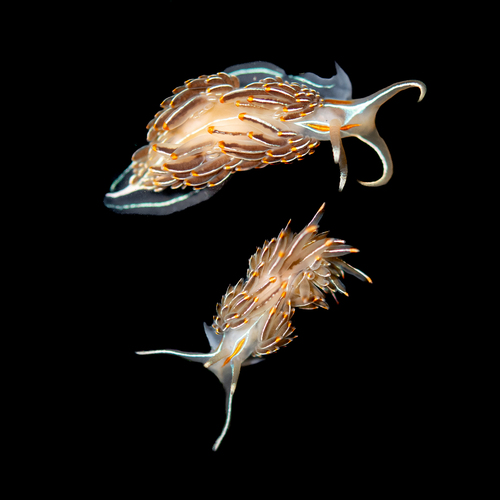
The Shag-Rug Nudibranch looks like a colorful, squishy carpet under the sea! Its vibrant colors and unique shape make it a fascinating creature to spot while exploring tide pools.
Hábitat: Shag-Rug Nudibranchs live in coastal waters, often hiding among rocks and seaweed.
The Shag-Rug Nudibranch has a soft, oval body covered in numerous fluffy, finger-like projections called cerata, resembling a shaggy rug. It typically displays a cream to pale brown body with white-tipped cerata, making it blend well with its environment.
Categoría
InvertebrateRareza
Common
Peligro
1/5 · Muy bajo
Snaps
¡Sé la primera persona en hacer un snap!
A Shag-Rug Nudibranch is a hermaphrodite, meaning each individual has both male and female reproductive parts.
Nudibranchs don't have a shell to protect them like snails; they rely on other cool defenses!
These sea slugs breathe through feathery gills on their back, not through lungs like us!
They lay their eggs in beautiful, spiral ribbons that attach to rocks or seaweed underwater.
Shag-Rug Nudibranch can steal stinging cells from its prey because of specialized sacs that help them defend against predators.
Shag-Rug Nudibranch can regrow lost or damaged parts of its body, including its cerata, helping them recover from attacks.
Shag-Rug Nudibranch can safely graze on stinging sea anemones because its skin is immune to their venom.
This sea slug is a carnivore that dines exclusively on stinging sea anemones!
Actinia equina
Its primary food source, providing defense cells.
Metridium senile
Common prey, found grazing on these in cooler waters.

Pycnopodia helianthoides
A large predator of various nudibranchs and invertebrates.
Anarhichas lupus
A bottom-feeding fish known to prey on sea slugs.
Los animales solitarios viven solos durante la mayor parte de su vida y solo interactúan con otros para aparearse o cuidar de sus crías.
Colorido describe a organismos u objetos que exhiben una amplia variedad de colores brillantes y distintivos.
Este rasgo identifica a los organismos cuya dieta consiste total o principalmente en tejido animal.
Los hábitats acuáticos abarcan entornos donde los organismos viven principalmente en el agua, incluidos océanos, ríos, lagos y humedales.

Los hábitats marinos abarcan todos los entornos de agua salada de los océanos de la Tierra, sustentando una inmensa diversidad de vida acuática.
Peligro
1/5 · Muy bajo
Todavía no hay notas especiales de seguridad.
6 cm
5 g
0.5 años
This sea slug is a carnivore that dines exclusively on stinging sea anemones!
Shag-Rug Nudibranchs live in coastal waters, often hiding among rocks and seaweed.
Grazing
25 m
Acércate para separar los grupos y explorar dónde se ha fotografiado este objeto.
Los snaps recientes aparecerán aquí a medida que se añadan nuevas observaciones.









.jpg&width=800)





