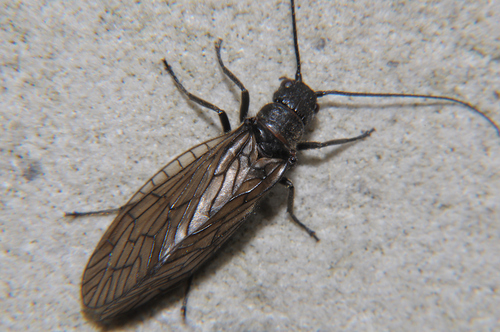


Sialis Lutaria Species Group
sialis lutaria
The common alderfly, scientifically known as Sialis lutaria, is a fascinating freshwater insect that spends the vast majority of its life hidden beneath the muddy bottoms of ponds and slow-flowing rivers. As a member of the Megaloptera order, it is a primitive insect whose life cycle is intricately tied to aquatic ecosystems. After a predatory larval stage that can last up to two years, these insects crawl out of the water to undergo pupation in the damp soil along the water's edge. Adult alderflies are a familiar sight to anglers and nature enthusiasts in the spring and early summer. Because their adult lifespan is incredibly short, often just a few days, they rarely feed, focusing entirely on finding a mate and laying eggs to begin the cycle anew. Their presence in aquatic environments frequently serves as a good indicator of water quality, making them both ecologically important and a joy to spot resting on waterside foliage.
Hábitat: Typically found near ponds, lakes, and slow-moving streams with muddy or silty bottoms where their aquatic larvae can thrive.
Adult Sialis lutaria are stout, dark-colored insects typically measuring 10 to 15 millimeters in length with a wingspan of roughly 25 to 35 millimeters. They are characterized by their brownish-black bodies and prominent, heavily veined wings, which they fold in a distinct tent-like or roof-like shape over their backs when at rest. Unlike stoneflies, they completely lack tail appendages or cerci, but they possess long, thread-like antennae that extend forward. Their flight is notoriously weak and fluttery, and they are usually seen clinging heavily to the stems and leaves of riparian plants like alder trees.
Categoría
InsectosRareza
Common
Peligro
1/5 · Muy bajo
Snaps
¡Sé la primera persona en hacer un snap!
Alderfly adults are notoriously poor and clumsy flyers, often fluttering just a few feet before awkwardly crash-landing on nearby vegetation.
Alderfly larvae are known as 'mud-dwellers,' spending up to two years buried in the silt of ponds and streams breathing through specialized abdominal gills.
Female alderflies lay huge, dense clusters of hundreds of tiny, cigar-shaped brown eggs on stems directly overhanging the water, allowing the newly hatched larvae to drop straight into their aquatic home.
The adult alderfly lives for such a short time, usually just a few days, that it doesn't even bother to eat, surviving entirely on energy reserves built up during its long larval stage.
Larvae possess seven pairs of jointed gills along their abdomen, allowing them to efficiently extract oxygen from murky, muddy waters.
Adults hatch in large numbers over a very short period in spring, maximizing their chances of finding a mate before predation can significantly impact their numbers.
Fully grown larvae instinctively leave the water and burrow into damp shoreline soil to pupate, a trait that bridges aquatic and terrestrial environments.
The aquatic larvae are aggressive predators hunting small invertebrates in the mud, while the short-lived adults rarely eat at all.
Diferencias por edad: Larvae are voracious aquatic predators, whereas adult alderflies generally do not feed, relying on stored energy reserves.
Salmo trutta
Alderflies are a classic and important prey species for many freshwater fish.
Chironomidae
Larvae aggressively hunt the aquatic larvae of non-biting midges in the mud.
Motacilla cinerea
Waterside birds frequently snatch resting adult alderflies from vegetation.
Aún no hay insignias de rasgos asignadas a este objeto.
Las colecciones para este objeto aparecerán aquí a medida que se añadan más temas.
Peligro
1/5 · Muy bajo
Todavía no hay notas especiales de seguridad.
La forma más fácil de identificar a Sialis Lutaria Species Group es usar la aplicación de identificación de naturaleza Snappit.
1-2 cm
2-3 cm
0.0001-0.0005 kg
1-2 años
5 km/h
The aquatic larvae are aggressive predators hunting small invertebrates in the mud, while the short-lived adults rarely eat at all.
Typically found near ponds, lakes, and slow-moving streams with muddy or silty bottoms where their aquatic larvae can thrive.
Acércate para separar los grupos y explorar dónde se ha fotografiado este objeto.
Los snaps recientes aparecerán aquí a medida que se añadan nuevas observaciones.