

Silvery Bladderpod
physaria ludoviciana
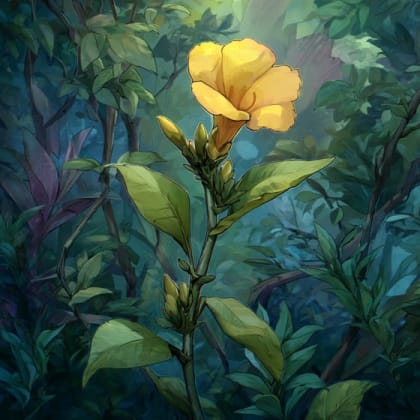
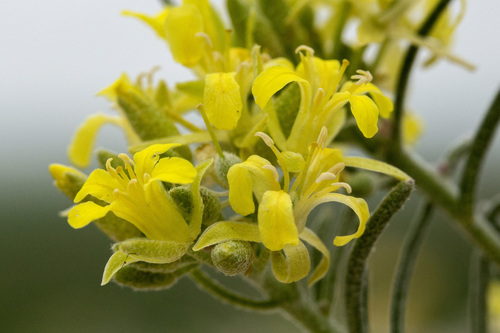
The Silvery Bladderpod (Physaria ludoviciana) is a resilient and captivating perennial wildflower native to the sandy prairies and open dunes of North America. Renowned for its distinctive shimmering appearance, this plant is draped in a dense coat of fine, star-shaped hairs that reflect the harsh prairie sun. In late spring, it bursts into bloom with clusters of brilliant yellow four-petaled flowers, which eventually give way to the curious, inflated, globe-like seed pods that inspire its common name. This hardy species plays a critical ecological role in stabilizing loose, sandy soils where few other plants can thrive. Finding a patch of Silvery Bladderpod is a true highlight for prairie explorers, as its presence often signals a healthy, intact sand prairie ecosystem.
Hábitat: Found in open sand prairies, sand dunes, and sandstone outcrops, typically in well-drained, sandy soils of the midwestern and central United States.
This low-growing perennial stands about 10 to 40 cm tall, forming a basal rosette of narrow, lance-shaped leaves that are 3 to 8 cm long. The entire plant has a distinctive silvery-gray or dusty green hue, thanks to a dense covering of microscopic, star-like (stellate) hairs. During the flowering period from May to June, it produces upright or sprawling stems bearing bright, golden-yellow flowers with four petals arranged in a cross shape. The most diagnostic feature appears post-flowering: spherical, bladder-like seed pods (silicles) that are 4 to 6 mm in diameter, dangling from recurved stalks.
Categoría
PlantasRareza
Common
Peligro
1/5 · Muy bajo
Snaps
¡Sé la primera persona en hacer un snap!
Because of its strict preference for unstable, sandy substrates, this plant is an excellent indicator of high-quality, undisturbed sand prairie remnants.
The genus name 'Physaria' comes from the Greek word for bellows or bladder, referring directly to the plant's inflated, balloon-like seed pods.
The silver sheen on its leaves isn't just for looks; those star-shaped hairs act as a natural sunscreen, reflecting UV rays to prevent sunburn in open sand dunes.
Microscopic star-shaped hairs cover the leaves, reflecting intense sunlight and drastically reducing water loss from evaporation in arid dune environments.
Develops a deep, sturdy taproot system that anchors the plant firmly in shifting sand dunes while reaching deep water reserves.
The bladder-like seed pods act as lightweight capsules that can be easily rolled by the wind, facilitating seed dispersal across dry, open landscapes.
As a photoautotrophic plant, the Silvery Bladderpod produces its own energy through photosynthesis, utilizing sunlight, carbon dioxide, and water.
Andrena carlini
Visits the bright yellow flowers for nectar and pollen, acting as an effective pollinator.
Melanoplus femurrubrum
Feeds on the foliage and stems of the bladderpod in sandy prairie habitats.
Aún no hay insignias de rasgos asignadas a este objeto.
Todavía no hay alias listados.
Las colecciones para este objeto aparecerán aquí a medida que se añadan más temas.
Peligro
1/5 · Muy bajo
Todavía no hay notas especiales de seguridad.
La forma más fácil de identificar a Silvery Bladderpod es usar la aplicación de identificación de naturaleza Snappit.
10-40 cm
3-7 años
As a photoautotrophic plant, the Silvery Bladderpod produces its own energy through photosynthesis, utilizing sunlight, carbon dioxide, and water.
Found in open sand prairies, sand dunes, and sandstone outcrops, typically in well-drained, sandy soils of the midwestern and central United States.
Acércate para separar los grupos y explorar dónde se ha fotografiado este objeto.
Los snaps recientes aparecerán aquí a medida que se añadan nuevas observaciones.