

Simandoa Cave Roach
simandoa conserfariam
The Simandoa Cave Roach (Simandoa conserfariam) is a legendary insect with a bittersweet history. Originally endemic to a single unique cave in the Simandou region of Guinea, West Africa, this stunning species is now classified as Extinct in the Wild. Their entire native habitat was completely destroyed by bauxite mining operations in the early 2000s. Fortunately, a small group of these roaches was collected by scientists just prior to the cave's destruction, saving the species from total extinction. Today, they thrive globally in captivity, maintained by dedicated hobbyists, zoos, and research institutions. Known for their striking colors and docile nature, they serve as crucial conservation ambassadors, illustrating the fragile nature of micro-endemic cave ecosystems.
Hábitat: Historically found exclusively inside a single humid cave system in Guinea, specifically living on or near deep piles of bat guano.
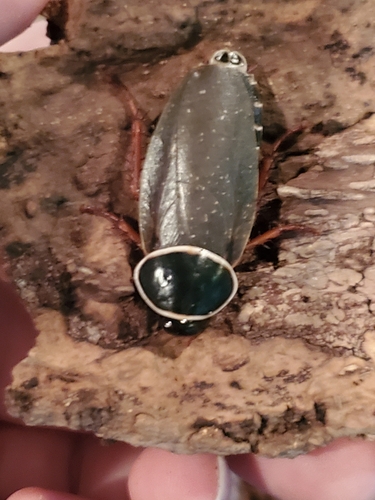
This species is highly distinctive, featuring a velvety, pitch-black oval body beautifully bordered by a creamy-white to pale-yellow margin along the outer edges of its pronotum and wings. The pronotum is large and shield-like, adorned with two vibrant, bright orange-yellow spots that closely resemble eyes. Adults possess fully developed, dark translucent wings that cover their abdomen, while the wingless nymphs are rougher in texture with a more uniform dark coloration and subtle golden speckling.
Categoría
InsectosRareza
Common
Peligro
1/5 · Muy bajo
Snaps
¡Sé la primera persona en hacer un snap!
Every single Simandoa Cave Roach alive today descends from a small rescue colony collected in Guinea in 2002.
They are ovoviviparous, meaning the female carries her egg capsule internally and gives birth to fully formed, live nymphs.
Unlike pest roach species, they are extremely clean, cannot climb smooth glass surfaces, and do not infest human homes.
Highly specialized digestive tract allowing them to consume and process nutrient-rich bat guano, converting cave waste into usable soil nutrients.
Bright eye-like spots on the pronotum deter potential cave predators by mimicking the eyes of a much larger animal in low-light conditions.
Exhibits strong aggregation behavior, clustering together to conserve body moisture and defend against fluctuating microclimates.
Feeds primarily on decomposing organic material found on the cave floor, with a heavy reliance on bat guano and associated fungal growths.
Macronycteris gigas
Sought refuge and fed on the nutrient-rich droppings provided by this cave-dwelling bat species.
Phrynichus scaber
Preyed upon young nymphs and adult roaches in the dark recesses of the Simandoa cave system.
Aún no hay insignias de rasgos asignadas a este objeto.
Todavía no hay alias listados.
Las colecciones para este objeto aparecerán aquí a medida que se añadan más temas.
Peligro
1/5 · Muy bajo
Todavía no hay notas especiales de seguridad.
La forma más fácil de identificar a Simandoa Cave Roach es usar la aplicación de identificación de naturaleza Snappit.
3+ cm
5+ cm
0.002+ kg
1+ años
1 km/h
Feeds primarily on decomposing organic material found on the cave floor, with a heavy reliance on bat guano and associated fungal growths.
Historically found exclusively inside a single humid cave system in Guinea, specifically living on or near deep piles of bat guano.
Acércate para separar los grupos y explorar dónde se ha fotografiado este objeto.
Los snaps recientes aparecerán aquí a medida que se añadan nuevas observaciones.