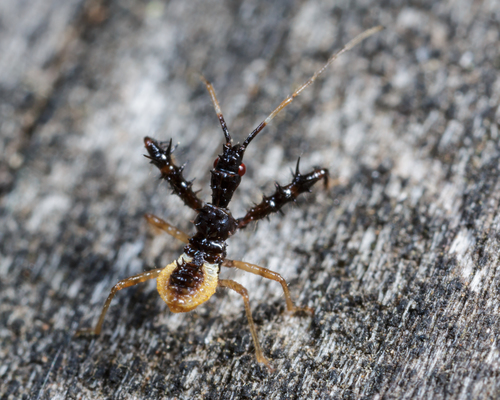


Sinea
sinea
Los chinches asesinos espinosos del género Sinea son depredadores notables y muy beneficiosos, que se encuentran comúnmente en toda Norteamérica. Fácilmente reconocibles por su apariencia espinosa y fuertemente blindada, estos cazadores activos patrullan jardines, campos y bordes de bosques en busca de diversas plagas agrícolas. Utilizando una combinación de tácticas de emboscada pacientes y ataques repentinos, son componentes vitales del control natural de plagas. Su naturaleza sigilosa y de movimientos lentos los convierte en un tema fascinante tanto para los observadores de vida silvestre como para los jardineros, quienes a menudo los ven descansando en soleadas cabezas de flores o tallos.
Hábitat: Se encuentran en campos abiertos, jardines, matorrales y cultivos agrícolas, a menudo posados en plantas con flores.
Los miembros del género Sinea suelen medir entre 1 y 2.2 centímetros de largo y exhiben una coloración marrón opaca, gris o marrón rojiza, lo que les ayuda a camuflarse con material vegetal seco. Su característica más distintiva es la serie de espinas afiladas y prominentes que cubren su cabeza, pronoto y, en particular, sus patas delanteras agrandadas y raptoriales. Poseen una cabeza estrecha y alargada con un pico curvo, similar a una aguja, metido debajo, grandes ojos compuestos y alas que se extienden planas sobre su abdomen cuando están en reposo.
Categoría
InsectosRareza
Común
Peligro
1/5 · Muy bajo
Snaps
¡Sé la primera persona en hacer un snap!
A pesar de su pequeño tamaño, pueden propinar una picadura dolorosa a los humanos si se manipulan sin cuidado, la cual se siente similar a la de una avispa.
Durante el cortejo, los machos utilizan señales visuales y vibraciones abdominales para acercarse a las hembras con cautela y evitar ser confundidos con presas.
Sus patas delanteras están cubiertas de finos pelos y espinas que generan una alta fricción, lo que hace casi imposible que los escarabajos resbaladizos o brillantes escapen.
Armado con patas delanteras densamente espinosas que pueden sujetar firmemente a la presa que lucha, impidiendo su escape.
Inyecta un potente cóctel de veneno paralizante y enzimas digestivas para licuar rápidamente los tejidos internos de su presa.
Permanece inmóvil con las patas delanteras levantadas, imitando una ramita seca inofensiva para engañar tanto a presas desprevenidas como a posibles depredadores.
Un depredador estricto de otros artrópodos, consume una amplia variedad de plagas de cultivos e insectos de cuerpo blando.
Lygus lineolaris
Caza y consume activamente chinches lygus en cultivos de hortalizas.
Aphis gossypii
Depreda intensamente las infestaciones de pulgones del algodón en jardines y campos.
Peucetia viridans
Es cazado y devorado por grandes arañas depredadoras de jardín en hábitats de arbustos superpuestos.
Aún no hay insignias de rasgos asignadas a este objeto.
Todavía no hay alias listados.
Las colecciones para este objeto aparecerán aquí a medida que se añadan más temas.
Peligro
1/5 · Muy bajo
Todavía no hay notas especiales de seguridad.
Busca seis patas, antenas, tres secciones en el cuerpo y la forma de las alas. Los escarabajos tienen las alas delanteras endurecidas; las moscas solo tienen un par que funciona. Los insectos diminutos pueden necesitar un primer plano antes de que se vea su grupo. Identificador de insectos: sube una foto y compara los detalles visibles.
2 km/h
Un depredador estricto de otros artrópodos, consume una amplia variedad de plagas de cultivos e insectos de cuerpo blando.
Se encuentran en campos abiertos, jardines, matorrales y cultivos agrícolas, a menudo posados en plantas con flores.
Ambush2025 01 20t21:40:00z 05:00 Táctica De Emboscada Y Técnica De Acecho Que Combina Sigilo Con Una Rápida Capacidad De Ataque, Utilizando Sus Patas Delanteras Para Atrapar Presas Desprevenidas Que Pasan Cerca Del Follaje De Plantas O Flores Donde Espera Pacientemente Durante Largos Períodos De Tiempo Durante Las Horas De Luz Diurna, Exhibiendo Altos Niveles De Control Eficiente De Plagas Tanto En Ecosistemas Gestionados Como Naturales. Beneficiosos Para Agricultores Y Jardineros Que Confían En Estos Depredadores Beneficiosos Para Mantener Las Poblaciones De Insectos Bajo Control Sin Intervención Química Ni Daños Excesivos A Los Cultivos Por Parte De Invasores Herbívoros De Todas Las Formas Y Tamaños, Incluidas Especies De Plagas Como Pulgones Y Escarabajos Dañinos Que A Menudo Infestan Paisajes Agrícolas Y Jardines Cultivados En Varias Regiones De Norteamérica, Donde Este Género De Chinches Asesinos Es El Más Prevalente Y Altamente Valorado Por Sus Propiedades Insecticidas Naturales Y Sus Funciones De Mantenimiento Del Equilibrio Ecológico Que Apoyan El Crecimiento Saludable De Las Plantas Y Los Esfuerzos De Preservación De La Biodiversidad A Nivel Local Y Regional En Toda Su Área De Distribución, Mientras Que Permanecen En Gran Medida Inofensivos Para Los Humanos A Menos Que Se Manipulen Sin Cuidado O Se Les Provoque, Lo Que Resulta En Una Picadura Dolorosa Pero Médicamente Insignificante Que Puede Causar Molestias Temporales E Hinchazón En El Sitio De La Herida, Pero Sin Problemas De Salud Graves Para La Mayoría De Las Personas, Lo Que Los Hace En Su Mayoría Seguros De Observar A Distancia Y Disfrutar De Sus Fascinantes Comportamientos Y Anatomía Intrincada Que Refleja Su Papel Altamente Especializado Como Micro Depredadores Ápice En La Maleza Y En Los Pétalos De Las Flores En Flor Donde Las Luchas De Vida Y Muerte Se Desarrollan Constantemente Por Debajo De Nuestro Campo De Visión Normal Y Nos Recuerdan La Complejidad Y La Interconexión De La Naturaleza Que Nos Rodea, Incluso En Entornos Altamente Urbanizados O Hábitats Artificiales Donde Estos Insectos Resistentes Y Adaptables Continúan Prosperando Y Cumpliendo Sus Deberes Ecológicos Vitales Día Tras Día Durante Los Meses Más Cálidos Del Año Cuando Están Más Activos Y Son Fácilmente Detectados Por Observadores Entusiastas De La Naturaleza Y Científicos Por Igual Que Buscan Comprender El Delicado Equilibrio De Nuestro Entorno Compartido Y Las Muchas Especies Que Contribuyen A Él De Sus Propias Maneras Únicas Y Especializadas, Como Lo Ejemplifica El Asombroso Género Sinea Y Sus Miembros Espinosos.
Acércate para separar los grupos y explorar dónde se ha fotografiado este objeto.
Los snaps recientes aparecerán aquí a medida que se añadan nuevas observaciones.
Llévate el descubrimiento
Haz una foto con Snappit, identifica la especie y guarda el hallazgo en tu colección.