






Six-spotted Tiger Beetle
Cicindela sexguttata
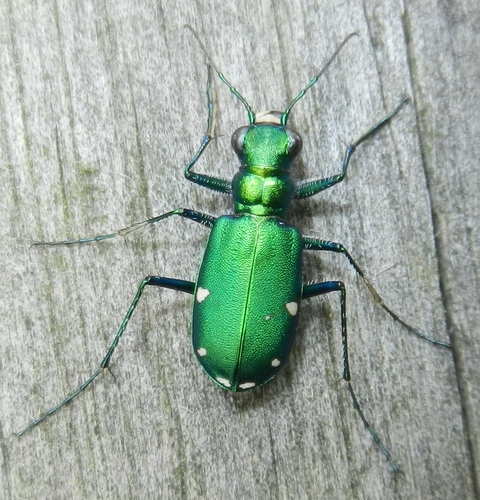
The Six-spotted Tiger Beetle is a shiny, fast insect that loves to run around on the ground. It has six spots on its back and is known for its speed and bright colors!
Hábitat: Sandy areas
The Six-spotted Tiger Beetle has an iridescent, gleaming metallic green to blue-green body, making it stand out like a tiny jewel. It features long, slender legs and large, prominent eyes. Its wing covers typically have three white spots on each side, totaling six, hence its name.
Categoría
InsectosRareza
Common
Peligro
1/5 · Muy bajo
Snaps
¡Sé la primera persona en hacer un snap!
Some species taste so awful that birds learn to avoid them after just one unpleasant bite!
Their jaws are like tiny, super-fast pincers, snapping shut to catch food in an instant!
These beetles run so fast they temporarily can't see their prey, having to stop and reorient!
Tiger beetle larvae are hidden ambush hunters, waiting in burrows to grab unsuspecting prey.
Six-spotted Tiger Beetle can run at speeds up to 2.5 meters per second, allowing them to chase down swift insect prey.
Six-spotted Tiger Beetle has large, keen eyes that help them spot tiny prey movements from a distance.
Six-spotted Tiger Beetle has a shimmering metallic green exoskeleton that provides camouflage in sunny, leafy environments.
Six-spotted Tiger Beetle has powerful, sharp mandibles that can quickly snap shut to capture and devour prey.
Tiny predators, these beetles swiftly hunt and devour smaller insects they find.
Diferencias por edad: Larvae are ambush predators from burrows; adults actively pursue prey.
Formica fusca
as a common and protein-rich food source
Anolis carolinensis
as a swift, nutritious meal for lizards
Toxostoma rufum
caught by birds seeking varied insect prey
Marcado con manchas o parches de un color diferente.
Colorido describe a organismos u objetos que exhiben una amplia variedad de colores brillantes y distintivos.
Este rasgo identifica a los organismos cuya dieta consiste principalmente en insectos y otros pequeños invertebrados.
Este rasgo identifica a los organismos cuya dieta consiste total o principalmente en tejido animal.

Los animales diurnos están activos principalmente durante el día y suelen descansar o dormir por la noche.

Este rasgo identifica a los organismos que exhiben una rapidez excepcional en sus movimientos para cazar, escapar o desplazarse.
Todavía no hay alias listados.
Peligro
1/5 · Muy bajo
These beetles are safe to watch, but it's best to leave them alone in nature.
25-28 mm
12-14 mm
30-90 días
10 km/h
Tiny predators, these beetles swiftly hunt and devour smaller insects they find.
Sandy areas
Pursuit
6
Acércate para separar los grupos y explorar dónde se ha fotografiado este objeto.
Los snaps recientes aparecerán aquí a medida que se añadan nuevas observaciones.

Maryland, US
Puedes ver Garza Azulada, Azulejo Oriental y Ciervo De Cola Blanca.
Ver guía →

Virginia, US
Puedes ver Kiwi Bubbles, Common Pawpaw y Eastern Skunk Cabbage.
Ver guía →
Indiana, US
Puedes ver Six-Spotted Tiger Beetle, Garlic Mustard y Buitre.
Ver guía →

Maryland, US
Puedes ver Common Pawpaw, Mariposa Cebra y águila Calva.
Ver guía →

Virginia, US
Puedes ver Common Jewelweed, Willow Oak y American Jumpseed.
Ver guía →
Texas, US
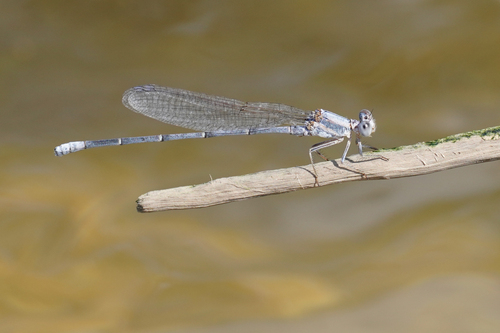
Puedes ver Powdered Dancer y Glassy-Winged Sharpshooter.
Ver guía →











.jpg&width=800)

