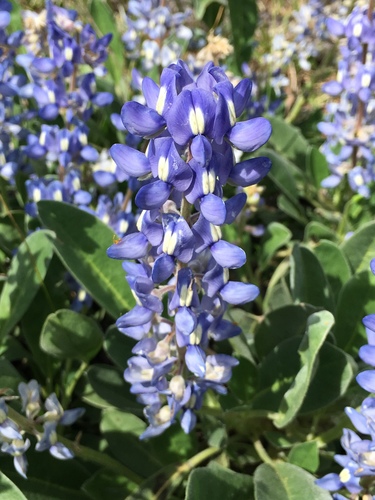


Skyblue Lupine
lupinus diffusus
The Skyblue Lupine (Lupinus diffusus) is a striking, low-growing perennial wildflower native to the sandy pinelands and scrub habitats of the southeastern United States. Renowned for its vibrant, candle-like spikes of sky-blue to lavender blossoms, this resilient plant brings a brilliant splash of color to nutrient-poor landscapes during the early spring. Unlike many delicate wildflowers, it is a tough colonizer, thriving in environments where other plants struggle. Beyond its visual beauty, the Skyblue Lupine plays a vital role in its ecosystem. It is a nitrogen-fixing legume, meaning it naturally enriches the soil, paving the way for other native flora. Its silky, silvery-green foliage is specially adapted to reflect sunlight and retain moisture, making it an ecological anchor in hot, dry sandhill habitats.
Hábitat: Found in dry, sandy soils, particularly in open longleaf pine sandhills, sand pine scrub, and along sunny, disturbed roadsides.
This plant is easily recognized by its spreading, mound-like growth habit, typically reaching 20 to 60 centimeters in height. Its most distinctive feature is the erect, spike-like cluster of pea-like flowers, which range from sky-blue to pale violet, often with a white or pale yellow spot on the upper banner petal. The leaves are simple and alternate, characterized by an oblong-elliptic shape and covered in a dense, velvety layer of silver-gray hairs that give the entire plant a soft, glowing, or frosted appearance.
Categoría
PlantasRareza
Common
Peligro
1/5 · Muy bajo
Snaps
¡Sé la primera persona en hacer un snap!
Its unique silver hairs not only protect the plant from the hot sun but also trap a boundary layer of humid air around the leaves, preventing dehydration.
The genus name Lupinus comes from the Latin word for wolf, due to an ancient misconception that these plants wolfed nutrients from the soil, when they actually enrich it.
Unlike many lupines which have palmately compound leaves resembling fingers, the Skyblue Lupine features simple, undivided leaves.
Houses symbiotic Rhizobium bacteria in its root nodules, allowing it to convert atmospheric nitrogen into usable soil nutrients.
Employs dense, silky silver leaf hairs to reflect excess sunlight and drastically reduce moisture loss through transpiration.
Utilizes an exceptionally deep and robust taproot system to access water deep within dry, sandy soils where surface moisture is scarce.
Synthesizes its own energy from sunlight, water, and carbon dioxide via photosynthesis, supplemented by nitrogen fixed from the atmosphere.
Callophrys irus
Serves as a critical host plant for caterpillars of this rare and threatened butterfly species.
Bombus pennsylvanicus
Relies on native bumblebees for pollination of its specialized pea-like flowers.
Gopherus polyphemus
Provides nutritious seasonal forage for this native reptile in dry sandhill habitats.
Aún no hay insignias de rasgos asignadas a este objeto.
Todavía no hay alias listados.
Las colecciones para este objeto aparecerán aquí a medida que se añadan más temas.
Peligro
1/5 · Muy bajo
Todavía no hay notas especiales de seguridad.
La forma más fácil de identificar a Skyblue Lupine es usar la aplicación de identificación de naturaleza Snappit.
20-60 cm
2-5 años
Synthesizes its own energy from sunlight, water, and carbon dioxide via photosynthesis, supplemented by nitrogen fixed from the atmosphere.
Found in dry, sandy soils, particularly in open longleaf pine sandhills, sand pine scrub, and along sunny, disturbed roadsides.
Acércate para separar los grupos y explorar dónde se ha fotografiado este objeto.
Los snaps recientes aparecerán aquí a medida que se añadan nuevas observaciones.








