Small-Flowered Buttercup
ranunculus abortivus
The Small-Flowered Buttercup is a cheerful little flower that brightens up fields and meadows. Its small yellow blooms are like tiny suns shining in the grass!
Hábitat: Wet meadows, fields, and along stream banks.
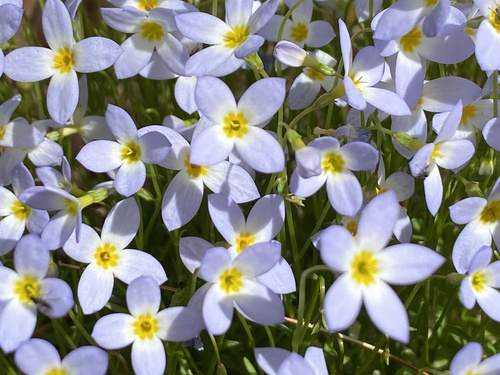
The Small-Flowered Buttercup has small, dull yellow to yellowish-green flowers, often with petals so tiny they seem absent. Its basal leaves are rounded or kidney-shaped, distinct from the deeply lobed upper stem leaves. Unlike other buttercups, its flowers lack a glossy sheen.
Categoría
PlantasRareza
Common
Peligro
1/5 · Muy bajo
Snaps
¡Sé la primera persona en hacer un snap!
Despite its common name, some people call it the 'Kidney-Leaf Buttercup' due to its unique leaf shape!
If you crush its leaves, they give off a peppery smell, a hint of its chemical defenses!
Its tiny, pale flowers are often overlooked compared to its showier, golden buttercup cousins!
This plant can spread through both seeds and small plantlets that grow from its roots!
Small-Flowered Buttercup can change its leaf shape dramatically as it matures, from rounded to deeply lobed, helping it adapt to light.
Small-Flowered Buttercup has sap containing protoanemonin that can irritate skin, protecting it from being eaten by animals.
Small-Flowered Buttercup can survive in cold early spring conditions, allowing it to grow and bloom before many other plants.
Apis mellifera
visits flowers for nectar
Bombus impatiens
collects pollen from blooms
Agriolimax reticulatus
young leaves are a food source
Puccinia ranunculi
causes rust disease
Colorido describe a organismos u objetos que exhiben una amplia variedad de colores brillantes y distintivos.
Este rasgo caracteriza a los organismos cuya dieta consiste total o principalmente en material vegetal.
Los hábitats de pastizales son biomas terrestres dominados por pastos y plantas herbáceas, que sustentan a una variedad de animales de pastoreo.
Los animales diurnos están activos principalmente durante el día y suelen descansar o dormir por la noche.

Describe organismos que transfieren polen, permitiendo la fertilización y reproducción de las plantas.
Peligro
1/5 · Muy bajo
Todavía no hay notas especiales de seguridad.
10-60 cm
0.5-1 cm
Spring_early_summer
No
Leve
Perenne
Insectos
Wet meadows, fields, and along stream banks.
Acércate para separar los grupos y explorar dónde se ha fotografiado este objeto.
Los snaps recientes aparecerán aquí a medida que se añadan nuevas observaciones.