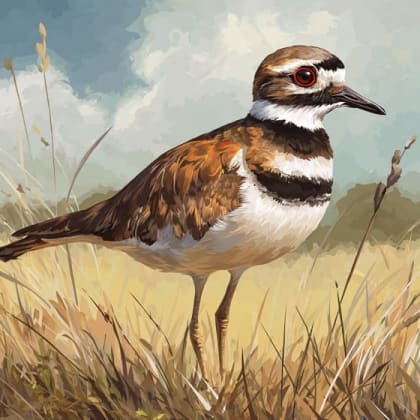



Smew
Mergellus albellus
The Smew is a small, beautiful duck with a striking black and white pattern. They love to swim and dive in the water, making them fun to watch as they hunt for fish and insects.
Hábitat: Wetlands
The Smew is a small diving duck with a distinctive look. Males are bright white with a black back and a striking black mask around their eyes, resembling a stylish tuxedo. Females have a grey body with a reddish-brown crown and nape, and a white cheek patch.
Categoría
AvesRareza
Common
Peligro
1/5 · Muy bajo
Snaps
¡Sé la primera persona en hacer un snap!
It's the smallest kind of 'sawbill' duck, famous for eating fish!
Smew males have a special 'eyeliner' patch that makes them look super cool!
Smews often use old woodpecker nests high up in trees to lay eggs.
They fly thousands of kilometers each year, seeking warmer waters!
Smew can swim and dive deep using its powerful legs because this helps them chase fast-moving fish underwater.
Smew has the ability to nest in old tree holes because this provides a safe, elevated spot for their eggs away from many predators.
Smew can spot prey quickly underwater because its eyes are adapted for clear vision in murky water.
Smews are expert underwater hunters, mostly eating small fish, insects, and other water critters.
Rutilus rutilus
A common small fish prey in freshwaters.

Haliaeetus albicilla
Large raptors can prey on adult Smews.
Picoides tridactylus
Smews use their old nesting holes for shelter.
Dytiscus marginalis
Aquatic insects like these are a food source.
Describe a los animales, principalmente aves, que poseen una cubierta de plumas.
Se caracteriza por tener los dedos conectados por una membrana, lo que generalmente ayuda a nadar.
Los animales sociales viven en grupos organizados, cooperando para obtener beneficios de supervivencia como la búsqueda de alimento, la defensa y la cría de descendencia.
Colorido describe a organismos u objetos que exhiben una amplia variedad de colores brillantes y distintivos.

Los organismos piscívoros son animales que subsisten principalmente de una dieta a base de peces.

Este rasgo de hábitat identifica especies que se encuentran en humedales, que son áreas de tierra saturadas de agua, ya sea permanente o estacionalmente, e incluyen marismas, pantanos y ciénagas.

Los hábitats de agua dulce incluyen entornos acuáticos no salinos como ríos, lagos, estanques y humedales, vitales para numerosas especies.

Los animales diurnos están activos principalmente durante el día y suelen descansar o dormir por la noche.

Los hábitats acuáticos abarcan entornos donde los organismos viven principalmente en el agua, incluidos océanos, ríos, lagos y humedales.

Los animales migratorios emprenden movimientos estacionales de una región a otra, típicamente en respuesta a cambios en el clima o la disponibilidad de alimentos.
Todavía no hay alias listados.
Peligro
1/5 · Muy bajo
Always watch birds from a distance and do not try to touch them.
38-44 cm
64-73 cm
0.45-0.65 kg
8-12 años
80 km/h
Smews are expert underwater hunters, mostly eating small fish, insects, and other water critters.
Wetlands
Pursuit
Acércate para separar los grupos y explorar dónde se ha fotografiado este objeto.
Los snaps recientes aparecerán aquí a medida que se añadan nuevas observaciones.





_(cropped).jpg&width=800)