

Sora
porzana carolina
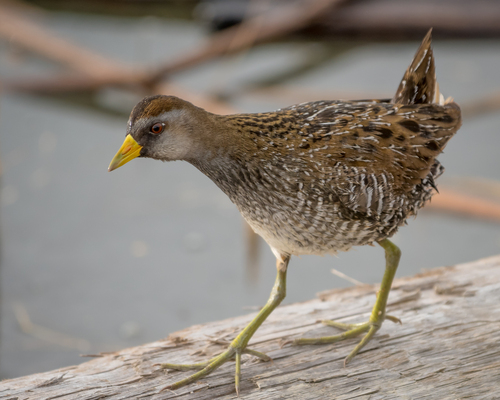
La Sora es un ave acuática pequeña y reservada, perteneciente a la familia de los rálidos, conocida por su naturaleza esquiva y sus llamadas distintivas que delatan su presencia en la densa vegetación de los humedales. A menudo escuchada pero rara vez vista, esta encantadora ave es una especie migratoria que se reproduce en gran parte de Norteamérica e inverna más al sur. A pesar de su cuerpo regordete y sus alas relativamente cortas, la Sora es una voladora sorprendentemente fuerte, realizando largas migraciones nocturnas. Desempeña un papel en los ecosistemas de humedales al consumir una variedad de insectos y materia vegetal, contribuyendo a la dispersión de semillas y al control de invertebrados. Su habilidad para moverse entre juncos densos y su plumaje camuflado la convierten en un verdadero fantasma del pantano.
Hábitat: Se encuentra en marismas de agua dulce, pantanos y praderas húmedas con vegetación emergente densa como totoras, juncos y pastos.
La Sora es un ave de pantano pequeña, parecida a un pollo, que mide entre 20 y 25 cm de largo con un cuerpo compacto. Los adultos exhiben una llamativa cara y garganta negras, que contrastan marcadamente con un pecho y cuello gris pizarra. Su coronilla y espalda son de color marrón oliva moteado con finas rayas blancas, proporcionando un excelente camuflaje entre los juncos. Los flancos están barrados con negro y blanco, y tiene un pico corto y de color amarillo brillante. Sus patas son de color verde amarillento. En vuelo, sus alas cortas y redondeadas revelan una parte inferior grisácea-marrón, y su cola corta a menudo está levantada. Los juveniles carecen de la cara negra y tienen un plumaje más opaco y parduzco.
Categoría
AvesRareza
Común
Peligro
1/5 · Muy bajo
Snaps
¡Sé la primera persona en hacer un snap!
A pesar de ser un ave de humedal, las Soras no son buenas nadadoras y prefieren caminar o correr entre la vegetación.
El nombre 'Sora' proviene de una de sus llamadas distintivas, una nota ascendente 'sora' que a menudo se escucha en el pantano.
Sus cuerpos están comprimidos lateralmente, lo que significa que son delgados de lado a lado, permitiéndoles deslizarse fácilmente entre las densas cañas del pantano.
Las Soras jóvenes nacen con plumón negro, lo que les ayuda a absorber el calor y a permanecer camufladas en sus nidos oscuros y pantanosos.
La dieta de la Sora consiste en una mezcla de pequeños invertebrados, particularmente insectos, y varias semillas de plantas y vegetación acuática.
Diferencias por edad: Los polluelos jóvenes son alimentados principalmente con insectos por sus padres. Los adultos mantienen una dieta mixta.
Aún no hay insignias de rasgos asignadas a este objeto.
Todavía no hay alias listados.
Las colecciones para este objeto aparecerán aquí a medida que se añadan más temas.
Peligro
1/5 · Muy bajo
Todavía no hay notas especiales de seguridad.
Compara la silueta, la forma del pico, la longitud de la cola, las barras de las alas y las marcas alrededor de los ojos. El mismo pajarito marrón de tu comedero puede verse bastante distinto con plumaje de cría, plumaje de invierno o en su primer año. Identificador de aves: sube una foto y compara los detalles visibles.
20-25 cm
30-35 cm
0.05-0.1 kg
2-5 años
La dieta de la Sora consiste en una mezcla de pequeños invertebrados, particularmente insectos, y varias semillas de plantas y vegetación acuática.
Se encuentra en marismas de agua dulce, pantanos y praderas húmedas con vegetación emergente densa como totoras, juncos y pastos.
Forrajeo
Acércate para separar los grupos y explorar dónde se ha fotografiado este objeto.
Los snaps recientes aparecerán aquí a medida que se añadan nuevas observaciones.
Llévate el descubrimiento
Haz una foto con Snappit, identifica la especie y guarda el hallazgo en tu colección.