

Southern California Walnut
juglans californica
The Southern California Walnut, Juglans californica, is a rare and beautiful tree endemic to the coastal and inland valleys of southern California. Often growing as a large, multi-trunked shrub or small tree, it is a hallmark species of the walnut woodland community, which is now highly threatened due to urbanization. This resilient plant has adapted to the region's Mediterranean climate, thriving on hillsides, in canyons, and along riparian corridors. It is beloved not only for its unique structural beauty but also for its ecological significance. The small, hard-shelled walnuts it produces serve as a vital food source for local wildlife, while its deep root system helps stabilize fragile soils. Exploring its native woodlands offers a glimpse into California's rich natural heritage, highlighting the delicate balance between urban expansion and conservation.
Hábitat: Found in southern California's riparian woodlands, chaparral slopes, and coastal sage scrub canyons below 900 meters.
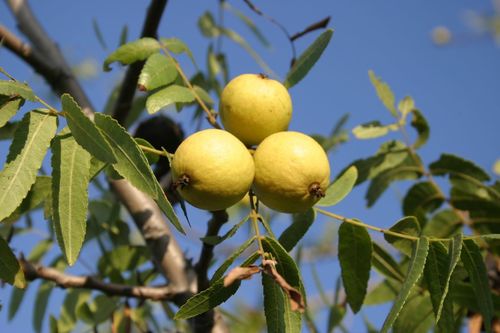
This species typically grows as a small tree or large multi-stemmed shrub, reaching heights of 6 to 15 meters. It is easily recognized by its compound leaves, which consist of 11 to 15 finely-toothed, lance-shaped leaflets that are a vibrant green in spring and turn a golden-yellow in autumn. The bark is rough, furrowed, and a dark greyish-brown. In spring, it produces drooping, green male catkins alongside small, inconspicuous female flowers. The fruits are spherical, green husks that dry and turn brown, revealing a small, hard, deeply grooved, dark-brown walnut shell containing a sweet but small seed.
Categoría
PlantasRareza
Common
Peligro
1/5 · Muy bajo
Snaps
¡Sé la primera persona en hacer un snap!
Because it is highly adapted to local soils, it is frequently used as a rootstock for grafting commercial English walnuts in California agriculture.
Indigenous peoples of California, such as the Tongva and Chumash, traditionally used the hard walnut shells to make game pieces and black dye.
Unlike the single-trunked commercial walnut trees, the Southern California Walnut naturally grows in a multi-trunked clumping form to survive fires.
The tree produces juglone, a natural chemical that inhibits the growth of competing plants within its root zone.
It can drop its leaves early during severe dry seasons to conserve moisture and survive prolonged drought periods.
Following wildfires or physical damage, it can rapidly regenerate by sending up new shoots from its sturdy root crown.
Like all plants, it generates its own energy through photosynthesis, utilizing sunlight, carbon dioxide, water, and soil nutrients.
Otospermophilus beecheyi
Eats the fallen walnuts, acting as both a seed predator and an occasional seed disperser when forgotten caches germinate.
Xanthomonas arboricola
Attacks the foliage and nuts of the tree, causing leaf spotting and walnut blight.
Baeolophus inornatus
Uses the tree branches for nesting and feeds on the insects found in the bark.
Aún no hay insignias de rasgos asignadas a este objeto.
Todavía no hay alias listados.
Las colecciones para este objeto aparecerán aquí a medida que se añadan más temas.
Peligro
1/5 · Muy bajo
Todavía no hay notas especiales de seguridad.
La forma más fácil de identificar a Southern California Walnut es usar la aplicación de identificación de naturaleza Snappit.
600+ cm
Like all plants, it generates its own energy through photosynthesis, utilizing sunlight, carbon dioxide, water, and soil nutrients.
Found in southern California's riparian woodlands, chaparral slopes, and coastal sage scrub canyons below 900 meters.
Acércate para separar los grupos y explorar dónde se ha fotografiado este objeto.
Los snaps recientes aparecerán aquí a medida que se añadan nuevas observaciones.