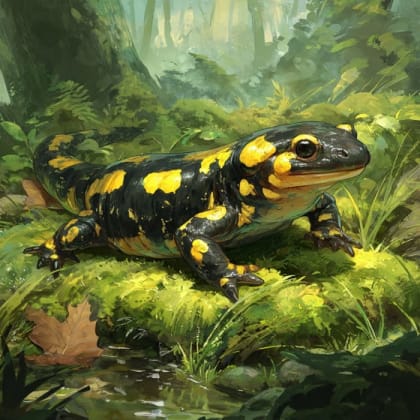
Southern Two-lined Salamander
Eurycea cirrigera
The Southern Two-lined Salamander is a small, slimy creature that loves to hide under rocks and logs. It has beautiful yellow stripes running down its back, making it look very special in its forest home.
Hábitat: Forests
The Southern Two-lined Salamander is a slender amphibian, typically yellow-brown to orange with two prominent dark stripes running from its eyes down its sides to its tail. Its back is often dotted with tiny black spots, making it distinct from solid-colored stream salamanders.
Categoría
AnfibiosRareza
Common
Peligro
1/5 · Muy bajo
Snaps
¡Sé la primera persona en hacer un snap!
Baby salamanders hatch with feathery gills and live underwater for many months!
Some male salamanders have special whisker-like 'cirri' under their nostrils!
They can grow back lost limbs, tails, and even parts of their eyes!
They lay their tiny eggs under rocks or logs in streams, carefully guarding them!
Southern Two-lined Salamander can absorb oxygen directly through its moist skin because it lacks lungs, which helps them breathe underwater and on land.
Southern Two-lined Salamander can shed its tail when grabbed by a predator because the wriggling tail distracts the attacker, allowing the salamander to escape.
Southern Two-lined Salamander has coloration that blends perfectly with wet leaves and rocks, which helps them hide from both predators and prey.
Southern Two-lined Salamander spends its early life as gilled larvae in streams, which allows them to develop in a safe, aquatic environment.
This salamander eats tiny insects and other small invertebrates it finds in damp places.
Diferencias por edad: Young larvae eat small aquatic invertebrates like copepods and insect larvae, while adults eat terrestrial prey.
Thamnophis sirtalis
Snakes hunt them near water.
Procyon lotor
Raccoons search stream beds for them.
Isotoma viridis
They hunt tiny springtails among damp leaves.
Formica fusca
They snatch up ants from the forest floor.
Marcado con bandas paralelas o líneas de color.
Los animales solitarios viven solos durante la mayor parte de su vida y solo interactúan con otros para aparearse o cuidar de sus crías.
El camuflaje describe a los organismos que poseen colores o patrones que les permiten mezclarse con su entorno.
Este rasgo identifica a los organismos cuya dieta consiste principalmente en insectos y otros pequeños invertebrados.

Los hábitats boscosos son entornos terrestres dominados por una densa cubierta arbórea, que sustentan una gran diversidad de vida animal y vegetal.

Los organismos regenerativos poseen la capacidad de volver a desarrollar partes del cuerpo, tejidos u órganos perdidos o dañados.

Los organismos tóxicos contienen sustancias que son venenosas y pueden causar efectos adversos al estar expuestos a ellas.

Los animales nocturnos están principalmente activos durante la noche, y suelen descansar o dormir durante el día.

El estado de peligro de extinción indica que una especie corre un riesgo muy alto de extinguirse en estado silvestre en un futuro próximo.
Todavía no hay alias listados.
Peligro
1/5 · Muy bajo
If you find a salamander, look but don’t touch! They need to stay safe in their homes.
6-12 cm
0.003-0.015 kg
3-7 años
1.5 km/h
This salamander eats tiny insects and other small invertebrates it finds in damp places.
Forests
Foraging
10-50
Acércate para separar los grupos y explorar dónde se ha fotografiado este objeto.
Los snaps recientes aparecerán aquí a medida que se añadan nuevas observaciones.