Spurge-laurel
Daphne laureola
Spurge-laurel is a lovely green shrub that grows in shady places. It has shiny leaves and small yellow-green flowers that bloom in spring, making it a special sight in the forest.
Hábitat: Forests
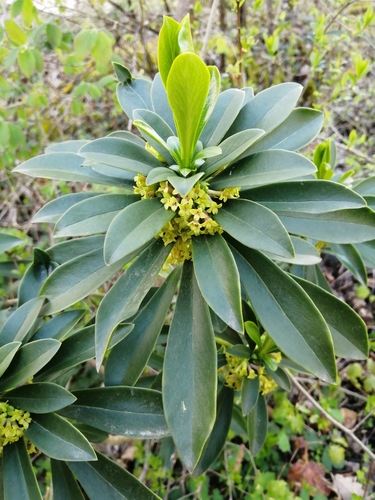
The Spurge-laurel has glossy, dark green leaves that are clustered at the top of its stems, appearing almost like rosettes. Its tiny, yellowish-green flowers are tucked among the leaves, later developing into small, shiny black berries.
Categoría
PlantasRareza
Common
Peligro
3/5 · Moderado
Snaps
¡Sé la primera persona en hacer un snap!
Despite its small size, the wood of the Spurge-laurel is surprisingly tough and dense!
Its name "Daphne" comes from an ancient Greek myth about a nymph who turned into a laurel tree!
NEVER eat the shiny black berries or any part of this plant; they are extremely poisonous!
The plant blooms in winter, making it one of the very first sources of nectar for early insects!
Spurge-laurel has powerful toxins in all its parts, especially the berries, that help it defend against hungry animals.
Spurge-laurel keeps its waxy, dark green leaves all year round, helping it make food even in cold winter months.
Spurge-laurel can grow happily in deep shade under big trees, which helps it find a home others might avoid.
Apis mellifera
Visits early spring flowers for nectar and pollen.
Turdus merula
Eats ripe berries, helping to disperse the seeds.
Marssonina daphnes
Causes leaf spot disease, weakening the plant's foliage.
Las plantas con flores son cualquier planta que produce flores como parte de su ciclo reproductivo.
Un arbusto es una planta leñosa más pequeña que un árbol, típicamente con múltiples tallos que se ramifican desde o cerca del suelo.
Las plantas de floración primaveral producen sus flores durante la temporada de primavera, lo que a menudo significa el final del invierno y el comienzo de un nuevo crecimiento.
Las plantas tolerantes a la sombra están adaptadas para crecer y prosperar en áreas con bajos niveles de luz, requiriendo menos luz solar directa.

Las plantas de hoja perenne conservan su follaje durante todo el año, sin perder nunca todas sus hojas a la vez.

Las flores fragantes emiten un aroma agradable, a menudo para atraer polinizadores o como defensa.

Los hábitats boscosos son entornos terrestres dominados por una densa cubierta arbórea, que sustentan una gran diversidad de vida animal y vegetal.
Todavía no hay alias listados.
Peligro
3/5 · Moderado
Do not eat any part of the plant, as it can be harmful.
50-150 cm
50-100 cm
0.5-1 cm
Late winter to early spring
No
Deadly
Perenne
Insectos
Acércate para separar los grupos y explorar dónde se ha fotografiado este objeto.
Los snaps recientes aparecerán aquí a medida que se añadan nuevas observaciones.
British Columbia, CA
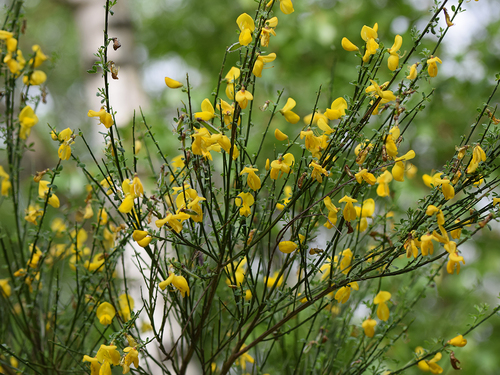
Puedes ver Scotch Broom, Pacific Trillium y Fringe Cups.
Ver guía →

British Columbia, CA
Puedes ver Barnacla Canadiense, Oregon Oak y Golondrina Común.
Ver guía →
British Columbia, CA
Puedes ver Spurge-Laurel, Lagartija Roquera y Western Skunk Cabbage.
Ver guía →