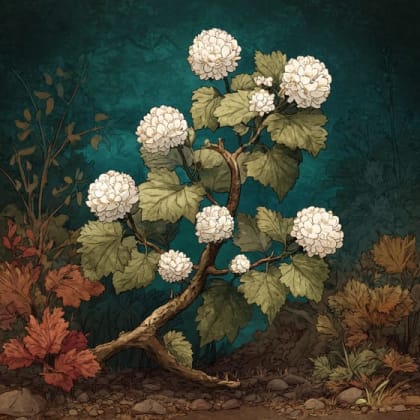
staghorn sumac
Rhus typhina
Staghorn sumac is a bushy plant with bright red berries and fuzzy, antler-like branches. It grows in sunny spots and is great for attracting birds and butterflies!
Hábitat: Open fields and sunny areas
The staghorn sumac is a striking plant characterized by its thick, fuzzy branches resembling deer antlers in velvet. It produces dense, upright, cone-shaped clusters of bright red berries that persist through winter. Its large leaves transform into vibrant shades of orange, red, and purple in autumn.
Categoría
PlantasRareza
Common
Peligro
1/5 · Muy bajo
Snaps
¡Sé la primera persona en hacer un snap!
Even when winter arrives, its bright red berry clusters often remain, adding color to snowy landscapes!
Its fuzzy branches feel soft like velvet, reminding people of a deer's antlers!
This hardy plant is often one of the first to grow in places where the ground has been disturbed!
You can steep the tart red berries in water to make a refreshing "sumac-ade" drink!
Staghorn sumac can quickly colonize disturbed areas and poor soils, helping other plants grow later.
Staghorn sumac has persistent, tart red berries that provide a crucial food source for birds and small mammals in winter.
Staghorn sumac can spread extensively underground using rhizomes, allowing it to form dense thickets and expand its territory.
Turdus migratorius
Eats the berries in winter
Procyon lotor
Consumes berries for food
Apis mellifera
Visits flowers for nectar
Odocoileus virginianus
Uses dense thickets for cover
Las plantas caducifolias pierden periódicamente todas sus hojas, por lo general durante el otoño o las estaciones secas.
Un arbusto es una planta leñosa más pequeña que un árbol, típicamente con múltiples tallos que se ramifican desde o cerca del suelo.
Las plantas frutales producen frutos, que son los ovarios maduros de las plantas con flores que contienen semillas.
Los colores otoñales se refieren al cambio estacional en la pigmentación del follaje, principalmente en plantas de hoja caduca, mostrando tonos vibrantes.

Las plantas comestibles son aquellas partes de una planta que se consideran seguras para el consumo humano.

Las plantas de crecimiento rápido exhiben tasas de crecimiento aceleradas, aumentando rápidamente de tamaño y biomasa en un corto período de tiempo.

Describe plantas que son particularmente atractivas y beneficiosas para una amplia variedad de organismos polinizadores.

Los hábitats de pastizales son biomas terrestres dominados por pastos y plantas herbáceas, que sustentan a una variedad de animales de pastoreo.
Peligro
1/5 · Muy bajo
Always be careful not to touch the berries too much, as they can be sour!
300-450 cm
300-600 cm
Late spring to early summer
Sí
Ninguna
Perenne
Insectos
Open fields and sunny areas
Acércate para separar los grupos y explorar dónde se ha fotografiado este objeto.
Los snaps recientes aparecerán aquí a medida que se añadan nuevas observaciones.

Massachusetts, US
Puedes ver Pato, Petirrojo Americano y Cisne Vulgar.
Ver guía →
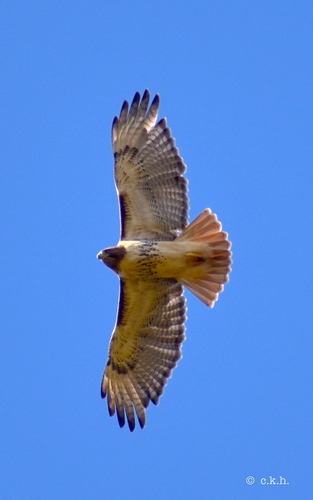
New Hampshire, US
Puedes ver Busardo Colirrojo, Cardenal Norteño y Chipping Sparrow.
Ver guía →

Quebec, CA
Puedes ver Marmota, Gaviota De Delaware y Ardilla Gris Oriental.
Ver guía →
_end_July_2012.jpg)
Massachusetts, US
Puedes ver Great Egret, Eastern Redcedar y águila Pescadora.
Ver guía →

New York, US
Puedes ver Eastern Red-Backed Salamander y Eastern Poison Ivy.
Ver guía →

Louisiana, US
Puedes ver Sharp-Lobed Hepatica y Purple-Flowered Raspberry.
Ver guía →