
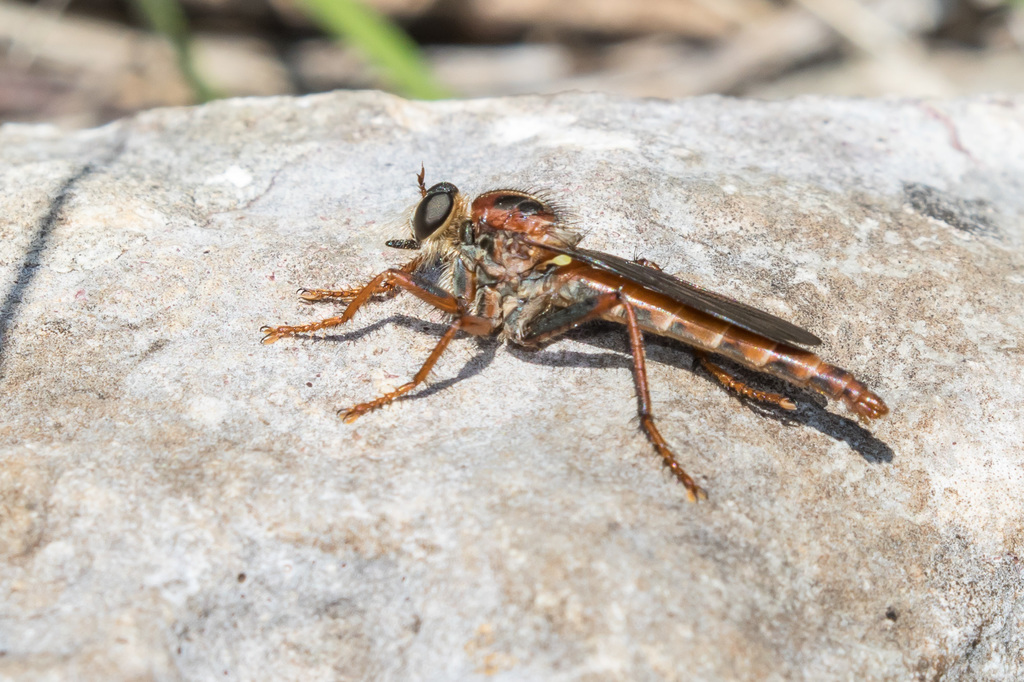





Stenopogon inquinatus
Stenopogon inquinatus
The Stenopogon inquinatus is a fun little fly that loves to buzz around! They are often found near water and are known for their unique, colorful bodies.
Hábitat: Wetlands
The Stenopogon inquinatus is a medium-sized robber fly, typically greyish-brown with bristly legs and a distinct "moustache" of hairs around its mouthparts. It has large, prominent reddish-brown compound eyes, giving it excellent vision for hunting.
Categoría
InsectosRareza
Common
Peligro
1/5 · Muy bajo
Snaps
¡Sé la primera persona en hacer un snap!
Robber flies often perch on sunny rocks or branches, patiently waiting for a meal to fly by!
Some types of robber flies cleverly mimic bees or wasps to scare away predators!
Their larvae are also fierce hunters, living in soil and eating other insect grubs!
They don't drink nectar; they pierce their prey and slurp out its liquefied insides!
Stenopogon inquinatus can ambush prey with incredible speed and agility, using its sharp eyesight to pinpoint targets.
Stenopogon inquinatus has a powerful venom injected through its proboscis that quickly paralyzes its insect prey.
Stenopogon inquinatus has strong, bristly legs that help them securely grasp struggling prey in flight.
This insect is an expert hunter, preying on other insects to get its meals.
Diferencias por edad: Larvae are predatory, feeding on small soil-dwelling insects and grubs, while adults hunt flying insects.
Apis mellifera
A common flying insect prey for adult robber flies.
Vespula vulgaris
Despite their sting, wasps are prey for these agile hunters.

Melanoplus sanguinipes
Larger insects like grasshoppers are important food sources.

Sayornis saya
This bird preys on various insects, including robber flies.
Los animales sociales viven en grupos organizados, cooperando para obtener beneficios de supervivencia como la búsqueda de alimento, la defensa y la cría de descendencia.
Las criaturas aéreas pasan una parte importante de su vida en el aire, utilizando el vuelo para diversas actividades como la caza, la migración o la anidación.
Este rasgo identifica organismos cuya dieta incluye tanto materia vegetal como animal.
Colorido describe a organismos u objetos que exhiben una amplia variedad de colores brillantes y distintivos.

Este rasgo de hábitat identifica especies que se encuentran en humedales, que son áreas de tierra saturadas de agua, ya sea permanente o estacionalmente, e incluyen marismas, pantanos y ciénagas.

Los animales diurnos están activos principalmente durante el día y suelen descansar o dormir por la noche.

Este rasgo identifica a los organismos que exhiben una rapidez excepcional en sus movimientos para cazar, escapar o desplazarse.

Describe organismos que transfieren polen, permitiendo la fertilización y reproducción de las plantas.
Todavía no hay alias listados.
Peligro
1/5 · Muy bajo
These flies are harmless, but it's best to watch them from a distance.
22-30 mm
15-20 mm
14-45 días
40 km/h
This insect is an expert hunter, preying on other insects to get its meals.
Wetlands
Ambush
6
Acércate para separar los grupos y explorar dónde se ha fotografiado este objeto.
Los snaps recientes aparecerán aquí a medida que se añadan nuevas observaciones.












