Stinking Orange Oyster
phyllotopsis nidulans
The Stinking Orange Oyster is a bright orange mushroom that can often be found growing on decaying wood. Its unique smell might not be pleasant, but it's a fun find for little explorers!
Hábitat: Forests and woodlands, particularly on decaying logs and stumps.
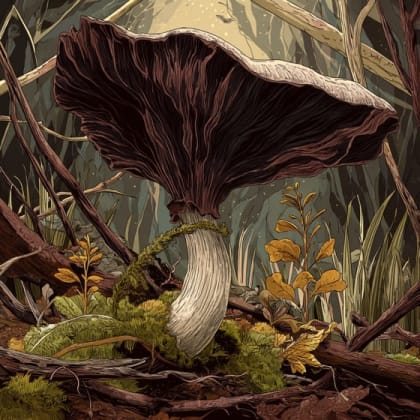
The Stinking Orange Oyster is a striking fan-shaped fungus with a bright orange to yellowish cap, often covered in dense, woolly hairs. Its crowded, orange gills radiate from where it attaches to wood, lacking a distinct stem. This gives it a shaggy, cup-like appearance.
Categoría
HongosRareza
Common
Peligro
1/5 · Muy bajo
Snaps
¡Sé la primera persona en hacer un snap!
It loves growing in cool, damp weather, even into early winter!
It's called an 'oyster' but isn't a true oyster mushroom genus.
Its name 'nidulans' means 'nestling,' like it's cozy on logs!
Some say its smell is like old garlic or even rancid meat.
Stinking Orange Oyster can release a potent smell like rotten cabbage, which might warn off animals from eating it.
Stinking Orange Oyster can break down dead wood, returning its nutrients to the forest floor to help new plants grow.
Stinking Orange Oyster has a dense, fuzzy outer layer that might protect it from drying out or from small pests.
Quercus alba
Decomposes dead wood of this tree species.
Acer rubrum
Breaks down fallen logs and branches.
Tsuga canadensis
Found on decaying conifers too.
Los animales solitarios viven solos durante la mayor parte de su vida y solo interactúan con otros para aparearse o cuidar de sus crías.
Colorido describe a organismos u objetos que exhiben una amplia variedad de colores brillantes y distintivos.
Los hábitats boscosos son entornos terrestres dominados por una densa cubierta arbórea, que sustentan una gran diversidad de vida animal y vegetal.
Describe a los organismos que descomponen la materia orgánica muerta, reciclando los nutrientes de vuelta al ecosistema.
Peligro
1/5 · Muy bajo
Do not touch or eat wild mushrooms.
inedible
2-10 cm
Forests and woodlands, particularly on decaying logs and stumps.
wood
Fall to Winter
White to pale pink
Acércate para separar los grupos y explorar dónde se ha fotografiado este objeto.
Los snaps recientes aparecerán aquí a medida que se añadan nuevas observaciones.