

Stream Orchid
epipactis gigantea
The Stream Orchid, also known as the giant helleborine, is an elegant and robust wild orchid native to western North America. It stands out in the plant kingdom due to its preference for damp, riparian environments, often gracing the edges of rushing mountain streams, bubbling springs, and wet meadows. Unlike many of its tropical, tree-dwelling relatives, this orchid is terrestrial, anchoring its roots deep into the wet soils and gravel banks of temperate zones.
Hábitat: Found in wet habitats such as stream banks, springs, seeps, wet meadows, and moist canyon walls, often growing in sandy or gravelly soil.
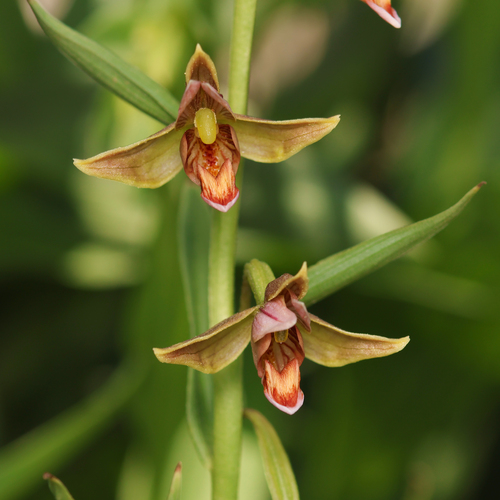
This species is a tall, leafy perennial growing between 30 to 100 cm in height, featuring lance-shaped, parallel-veined bright green leaves that clasp the sturdy stem. Its flowers, measuring 2 to 3 cm across, hang like delicate lanterns in loose clusters. Each flower boasts a complex color scheme of greenish-yellow sepals and petals heavily veined with reddish-brown, contrasting with a distinct pouch-like, three-lobed lower lip marked with pinkish-purple stripes and a yellow center.
Categoría
PlantasRareza
Common
Peligro
1/5 · Muy bajo
Snaps
¡Sé la primera persona en hacer un snap!
It is one of the few orchid species native to the western United States that can successfully grow directly in active, wet gravel bars.
Its species name 'gigantea' refers to the plant's tall, robust growth form compared to other members of the helleborine genus.
The orchid's nectar is known to contain natural chemical compounds that have a mildly narcotic effect on wasps, making them sluggish and improving pollination success.
Utilizes a tough, creeping network of underground rhizomes to anchor itself firmly into unstable, waterlogged stream banks, preventing erosion.
Produces a specialized sweet nectar containing chemical compounds that mimic aphid alarm pheromones, successfully attracting predatory wasps for pollination.
Forms vital subterranean partnerships with specialized soil fungi to assist its microscopic seeds in germinating and obtaining early nutrients.
The Stream Orchid is a photosynthesizing plant that produces its own sugars from sunlight, water, and carbon dioxide, while absorbing minerals through its roots.
Diferencias por edad: Seedlings rely entirely on nutrients supplied by mycorrhizal fungi before developing green leaves to perform photosynthesis.
Syrphus opinator
Provides energy-rich nectar to adult hoverflies, which in turn transfer pollen packets between flowers.
Tulasnella calospora
Assists the orchid seeds in germination and provides nutrients to the root system.
Odocoileus hemionus
Occasionally grazes on the lush green leaves and juicy stems of the plant in riparian valleys.
Aún no hay insignias de rasgos asignadas a este objeto.
Todavía no hay alias listados.
Las colecciones para este objeto aparecerán aquí a medida que se añadan más temas.
Peligro
1/5 · Muy bajo
Todavía no hay notas especiales de seguridad.
La forma más fácil de identificar a Stream Orchid es usar la aplicación de identificación de naturaleza Snappit.
30-100 cm
5-20 años
The Stream Orchid is a photosynthesizing plant that produces its own sugars from sunlight, water, and carbon dioxide, while absorbing minerals through its roots.
Found in wet habitats such as stream banks, springs, seeps, wet meadows, and moist canyon walls, often growing in sandy or gravelly soil.
Photosynthesis
Acércate para separar los grupos y explorar dónde se ha fotografiado este objeto.
Los snaps recientes aparecerán aquí a medida que se añadan nuevas observaciones.