Swamp Spreadwing
Lestes vigilax
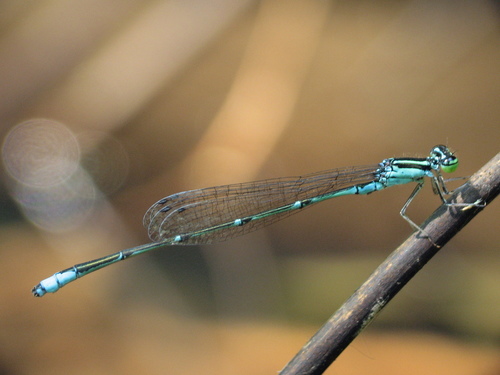
The Swamp Spreadwing is a beautiful dragonfly that loves to flutter around wetlands. With its long, slender body and colorful wings, it dances in the air, making it a joy to watch!
Hábitat: Wetlands
The Swamp Spreadwing is a slender damselfly, often exhibiting a metallic green or bronze body. Males can develop powdery blue markings on their thorax and tail end as they age. Its clear wings are held distinctively spread at an angle when it rests, a key identifier for this group.
Categoría
InsectosRareza
Common
Peligro
1/5 · Muy bajo
Snaps
¡Sé la primera persona en hacer un snap!
A Swamp Spreadwing starts life underwater, transforming from a larva to a flying adult!
Look closely at their legs; they're spiky to help them grab onto slippery flying prey!
Males will often guard their territory, chasing away other damselflies who get too close.
They are ancient insects, with relatives that lived alongside dinosaurs millions of years ago.
Swamp Spreadwing holds its wings open at rest, which helps them quickly warm up in the sun or cool down in the shade.
Swamp Spreadwing has huge compound eyes that help them spot tiny flying insects for a meal while zipping through the air.
Swamp Spreadwing starts life as a naiad that breathes underwater using special gills, helping it hunt tiny aquatic creatures.
They are fierce insect hunters, catching tiny flying prey with impressive aerial maneuvers!
Diferencias por edad: Larvae (naiads) hunt aquatic invertebrates; adults hunt flying insects.
Culex pipiens
Adults prey on this common pest, helping control populations.
Chironomus plumosus
Adults actively catch midges, a common food source, while flying.
Rana catesbeiana
Adult damselflies can become a meal for this large, hungry amphibian.
Gambusia affinis
Their aquatic naiads are a food source for fish like the mosquitofish.
Typha latifolia
They use cattails for perching, hunting from, and laying their eggs on.
Las criaturas aéreas pasan una parte importante de su vida en el aire, utilizando el vuelo para diversas actividades como la caza, la migración o la anidación.
Colorido describe a organismos u objetos que exhiben una amplia variedad de colores brillantes y distintivos.
Describe plantas que son particularmente atractivas y beneficiosas para una amplia variedad de organismos polinizadores.
Este rasgo identifica a los organismos cuya dieta consiste principalmente en insectos y otros pequeños invertebrados.

Este rasgo de hábitat identifica especies que se encuentran en humedales, que son áreas de tierra saturadas de agua, ya sea permanente o estacionalmente, e incluyen marismas, pantanos y ciénagas.

Los animales diurnos están activos principalmente durante el día y suelen descansar o dormir por la noche.

Este rasgo identifica a los organismos que exhiben una rapidez excepcional en sus movimientos para cazar, escapar o desplazarse.

Describe organismos que transfieren polen, permitiendo la fertilización y reproducción de las plantas.
Todavía no hay alias listados.
Peligro
1/5 · Muy bajo
It's safe to watch dragonflies, but don't try to catch them; they are delicate creatures.
45-55 mm
35-45 mm
30-60 días
15 km/h
They are fierce insect hunters, catching tiny flying prey with impressive aerial maneuvers!
Wetlands
Pursuit
6
Acércate para separar los grupos y explorar dónde se ha fotografiado este objeto.
Los snaps recientes aparecerán aquí a medida que se añadan nuevas observaciones.