

Symmorphus
symmorphus
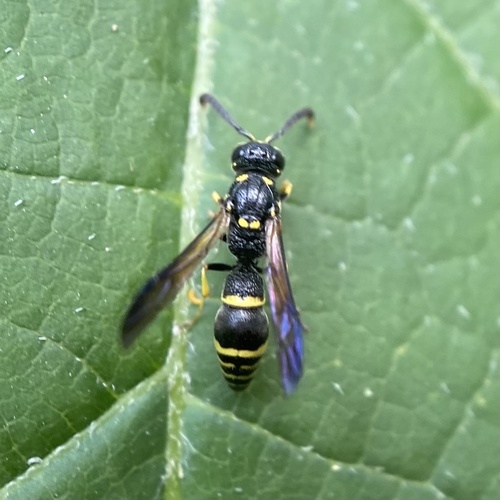
El género Symmorphus representa un grupo fascinante de avispas alfareras solitarias dentro de la familia Vespidae. En lugar de construir grandes nidos de papel comunales como sus primas las avispas amarillas sociales, estos insectos laboriosos son arquitectos solitarios. Las hembras buscan cavidades tubulares preexistentes, como tallos de plantas huecos o galerías abandonadas de escarabajos en madera muerta, para construir celdas de cría individuales divididas con barro meticulosamente recolectado. Las avispas Symmorphus son muy beneficiosas tanto para los ecosistemas como para los jardineros, ya que son cazadoras expertas de larvas de escarabajos de hoja y gorgojos, ayudando a mantener a raya las poblaciones de plagas. Observar a una hembra Symmorphus transportando diligentemente barro y presas paralizadas de vuelta a su nido oculto ofrece una visión cautivadora de las vidas ocultas y complejas de las avispas solitarias.
Hábitat: Se encuentra en bosques abiertos, praderas y jardines, frecuentando a menudo áreas con umbelíferas en flor, madera muerta y plantas de tallo hueco.
Las avispas Symmorphus son insectos delgados, de tamaño pequeño a mediano, que suelen medir entre 6 y 12 milímetros de longitud. Exhiben una coloración de advertencia marcada, de negro intenso con bandas amarillas o blanquecinas nítidas y contrastantes a través de su abdomen y tórax. Una característica distintiva es su cintura estrecha o peciolo, y como otras véspidas, pliegan sus alas de tonalidad oscura longitudinalmente sobre su espalda cuando están en reposo. Vistas de cerca, poseen surcos longitudinales distintos en su sección media y tienen una forma corporal notablemente más alargada y delicada en comparación con las avispas sociales más robustas.
Categoría
InsectosRareza
Común
Peligro
1/5 · Muy bajo
Snaps
¡Sé la primera persona en hacer un snap!
Una avispa Symmorphus madre se comporta como una controladora de plagas natural, a veces empaquetando hasta una docena de larvas de escarabajo paralizadas en una sola celda para asegurar que su cría tenga suficiente alimento.
El nombre de 'avispa alfarera' proviene del hábito de la hembra de usar barro para construir paredes seguras entre cada cámara de huevos dentro de un tallo hueco.
Utilizarán con facilidad 'hoteles de abejas' artificiales en jardines traseros, mudándose rápidamente a los pequeños agujeros perforados destinados a las abejas solitarias.
A diferencia de los avispones sociales o las avispas amarillas, las avispas Symmorphus son solitarias y no tienen una colonia que defender, lo que las hace extremadamente dóciles y poco propensas a picar a los humanos.
Las hembras recolectan agua y tierra para mezclar barro, construyendo particiones resistentes entre las celdas de cría individuales dentro de tallos huecos o perforaciones de escarabajos.
Poseen un aguijón especializado que libera un veneno no letal y paralizante a las larvas de escarabajo, manteniendo la presa fresca para su descendencia carnívora.
Cuando están en reposo, pliegan sus alas delanteras longitudinalmente por la mitad, una peculiaridad anatómica característica de la familia Vespidae que protege las alas de daños en espacios reducidos.
Los adultos se alimentan principalmente del néctar floral para obtener energía, pero cazan y paralizan activamente larvas de escarabajo para alimentar a su descendencia.
Diferencias por edad: Las larvas son estrictamente carnívoras, alimentándose de presas paralizadas proporcionadas por la madre, mientras que los adultos se alimentan principalmente de néctar.

Daucus carota
Los adultos se alimentan del néctar de la zanahoria silvestre, ayudando en la polinización incidental.

Chrysomela populi
Las hembras cazan larvas de escarabajos de hoja para alimentar a su descendencia en crecimiento.
Chrysis ignita
Las avispas de cola de rubí a menudo parasitan los nidos de Symmorphus, poniendo huevos dentro de las celdas provistas para robar el alimento.
Aún no hay insignias de rasgos asignadas a este objeto.
Todavía no hay alias listados.
Las colecciones para este objeto aparecerán aquí a medida que se añadan más temas.
Peligro
1/5 · Muy bajo
Todavía no hay notas especiales de seguridad.
Busca seis patas, antenas, tres secciones en el cuerpo y la forma de las alas. Los escarabajos tienen las alas delanteras endurecidas; las moscas solo tienen un par que funciona. Los insectos diminutos pueden necesitar un primer plano antes de que se vea su grupo. Identificador de insectos: sube una foto y compara los detalles visibles.
0-1 cm
1-2 cm
0.00001-0.00005 kg
1 años
20 km/h
Los adultos se alimentan principalmente del néctar floral para obtener energía, pero cazan y paralizan activamente larvas de escarabajo para alimentar a su descendencia.
Se encuentra en bosques abiertos, praderas y jardines, frecuentando a menudo áreas con umbelíferas en flor, madera muerta y plantas de tallo hueco.
Acércate para separar los grupos y explorar dónde se ha fotografiado este objeto.
Los snaps recientes aparecerán aquí a medida que se añadan nuevas observaciones.
Llévate el descubrimiento
Haz una foto con Snappit, identifica la especie y guarda el hallazgo en tu colección.