

Tachina Canariensis
tachina canariensis
Tachina canariensis es una especie fascinante de mosca taquínida endémica de las Islas Canarias. Conocida por su cuerpo robusto y cerdoso y su vuelo activo, este insecto desempeña un doble papel crucial en su ecosistema: es un importante polinizador de la flora local y un regulador natural clave de las poblaciones de orugas. Como adultos, se les ve con frecuencia revoloteando entre las flores silvestres bajo el cálido sol de la isla, buscando néctar para alimentar sus vidas de alta energía.
Hábitat: Se encuentra en pinares abiertos de las Islas Canarias, laderas volcánicas arbustivas y zonas de matorral costero abundantes en plantas con flores.
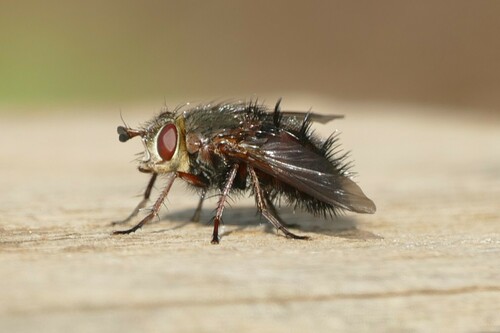
Esta mosca de tamaño mediano a grande se caracteriza por un cuerpo robusto, de color marrón oscuro a negruzco, densamente cubierto de cerdas negras fuertes y protectoras, especialmente en su abdomen redondeado. Los lados del abdomen a menudo muestran sutiles toques de color rojo anaranjado cálido, y la cabeza presenta grandes ojos compuestos rojizos. Sus alas transparentes, que se extienden hasta 3 centímetros, se mantienen en ángulo cuando está en reposo, revelando la silueta clásica de una mosca taquínida robusta.
Categoría
InsectosRareza
Común
Peligro
1/5 · Muy bajo
Snaps
¡Sé la primera persona en hacer un snap!
Debido a que son endémicas de las Islas Canarias, se han adaptado perfectamente a los microclimas únicos y a los terrenos volcánicos del archipiélago.
Las larvas de Tachina canariensis no matan inmediatamente a su huésped; en cambio, consumen primero los tejidos no esenciales para mantener a la oruga viva el mayor tiempo posible.
Su densa capa de cerdas sensoriales actúa como un sistema de detección de viento muy avanzado, ayudándolas a detectar depredadores que se aproximan en milisegundos.
Las hembras utilizan agudas señales químicas y visuales para localizar a sus huéspedes, generalmente orugas de lepidópteros, donde depositar sus huevos.
La gruesa capa de cerdas rígidas en su cuerpo proporciona una defensa mecánica contra depredadores y huéspedes agresivos.
Equipada con potentes músculos de vuelo, esta mosca puede flotar, lanzarse y ejecutar giros aéreos rápidos para evadir la captura y perseguir a sus huéspedes.
Las larvas son parasitoides internos que se alimentan de los tejidos vivos de las orugas, mientras que los adultos se alimentan principalmente de néctar y polen de flores silvestres endémicas.
Diferencias por edad: Las larvas son estrictamente endoparasitoides que se alimentan de orugas huésped, mientras que los adultos cambian completamente a una dieta de néctar azucarado y polen.
Caradrina rebeli
Las larvas de Tachina canariensis parasitan las orugas de esta polilla nocturna endémica de las Islas Canarias, ayudando a controlar su población.
Euphorbia canariensis
Las moscas adultas visitan y se alimentan del dulce néctar de la tabaiba dulce (Euphorbia canariensis), contribuyendo a su polinización.
Aún no hay insignias de rasgos asignadas a este objeto.
Todavía no hay alias listados.
Las colecciones para este objeto aparecerán aquí a medida que se añadan más temas.
Peligro
1/5 · Muy bajo
Todavía no hay notas especiales de seguridad.
Busca seis patas, antenas, tres secciones en el cuerpo y la forma de las alas. Los escarabajos tienen las alas delanteras endurecidas; las moscas solo tienen un par que funciona. Los insectos diminutos pueden necesitar un primer plano antes de que se vea su grupo. Identificador de insectos: sube una foto y compara los detalles visibles.
1+ cm
1+ cm
0.0001+ kg
0+ años
15 km/h
Las larvas son parasitoides internos que se alimentan de los tejidos vivos de las orugas, mientras que los adultos se alimentan principalmente de néctar y polen de flores silvestres endémicas.
Se encuentra en pinares abiertos de las Islas Canarias, laderas volcánicas arbustivas y zonas de matorral costero abundantes en plantas con flores.
Acércate para separar los grupos y explorar dónde se ha fotografiado este objeto.
Los snaps recientes aparecerán aquí a medida que se añadan nuevas observaciones.
Llévate el descubrimiento
Haz una foto con Snappit, identifica la especie y guarda el hallazgo en tu colección.