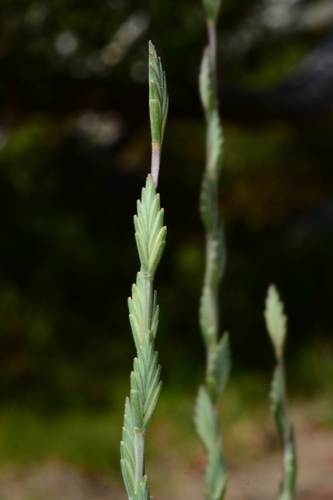


Tall Wheat Grass
thinopyrum obtusiflorum
Tall wheatgrass (Thinopyrum obtusiflorum) is a robust, cool-season perennial grass that stands out due to its impressive height and remarkable environmental resilience. Native to Eurasia and the Mediterranean, this adaptable bunchgrass has been widely introduced across North America and other temperate regions for agricultural and ecological restoration purposes. It is highly valued for its exceptional tolerance to saline and alkaline soils, allowing it to thrive in barren landscapes where most other vegetation struggles to survive. Beyond its utility in reclaiming degraded lands, tall wheatgrass serves as a key forage crop for livestock and provides critical nesting cover and food for local wildlife. Its presence helps stabilize shifting soils and control erosion, making it an unsung hero of dry land conservation and sustainable farming.
Hábitat: Typically found in saline or alkaline flats, salt marshes, riparian meadows, and degraded agricultural sites where soil moisture is seasonally abundant.
This tall bunchgrass typically grows in dense clumps, reaching heights between 100 and 250 centimeters. It features erect, coarse stems and long, flat leaves that are roughly 1 to 2 centimeters wide and possess a distinct glaucous, bluish-green hue. In late summer, it produces long, slender flower spikes (ranging from 15 to 40 centimeters in length) with widely spaced, flattened spikelets that resemble wheat. The spikelets are pressed close to the stem, giving the mature inflorescence a clean, geometric silhouette.
Categoría
PlantasRareza
Common
Peligro
1/5 · Muy bajo
Snaps
¡Sé la primera persona en hacer un snap!
Because of its high biomass and ability to grow on marginal lands, researchers are evaluating tall wheatgrass as a potential bioenergy crop for ethanol production.
Its seed heads can remain standing throughout winter, offering valuable shelter and emergency forage for ground-nesting birds and small mammals during heavy snows.
Tall wheatgrass is so salt-tolerant that it is frequently used to reclaim 'saline seeps'—barren areas where salty groundwater has risen to the surface.
It can absorb water from extremely salty soils by accumulating inorganic ions in its cell vacuoles, preventing dehydration where other plants wither.
Its extensive root system penetrates up to three meters deep into the earth, stabilizing soil and tapping into deep groundwater reserves.
The plant can enter a semi-dormant state during severe drought and rapidly rejuvenate when moisture levels return.
As a primary producer, tall wheatgrass generates its own food via photosynthesis, utilizing solar energy, carbon dioxide, and mineral nutrients from the soil.
Antilocapra americana
Provides critical spring and early summer grazing forage for native wild ungulates.
Bos taurus
Frequently harvested as highly productive hay or grazed directly in managed pastures.
Claviceps purpurea
Acts as a primary host plant for this toxic, parasitic fungus that infects the grass's grain heads.
Aún no hay insignias de rasgos asignadas a este objeto.
Todavía no hay alias listados.
Las colecciones para este objeto aparecerán aquí a medida que se añadan más temas.
Peligro
1/5 · Muy bajo
Todavía no hay notas especiales de seguridad.
La forma más fácil de identificar a Tall Wheat Grass es usar la aplicación de identificación de naturaleza Snappit.
100+ cm
5+ años
As a primary producer, tall wheatgrass generates its own food via photosynthesis, utilizing solar energy, carbon dioxide, and mineral nutrients from the soil.
Typically found in saline or alkaline flats, salt marshes, riparian meadows, and degraded agricultural sites where soil moisture is seasonally abundant.
Photosynthesis
Acércate para separar los grupos y explorar dónde se ha fotografiado este objeto.
Los snaps recientes aparecerán aquí a medida que se añadan nuevas observaciones.




_001.jpg&width=800)










