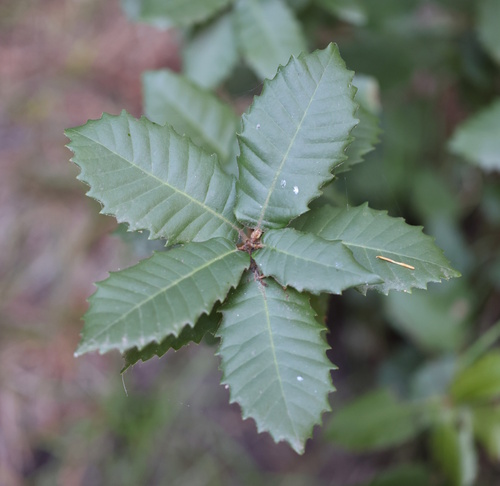


Tanoak
notholithocarpus densiflorus
El Tanoak es un majestuoso árbol de hoja perenne nativo de las regiones costeras de California y el suroeste de Oregón. A pesar de su nombre común, no es un roble verdadero, sino un eslabón evolutivo entre los robles y los castaños, clasificado en su propio género único, Notholithocarpus. Históricamente valorado por su corteza rica en taninos, que fue intensamente cosechada para el curtido de cuero, este árbol desempeña un papel fundamental en sus ecosistemas forestales nativos al proporcionar abundante alimento y refugio para una gran variedad de vida silvestre. Los Tanoaks son increíblemente resistentes, capaces de rebrotar vigorosamente desde sus coronas radiculares después de los incendios forestales, lo que los convierte en una especie fundamental del noroeste del Pacífico y el chaparral californiano.
Hábitat: Se encuentra en bosques costeros húmedos, bosques de hoja perenne mixtos y ecosistemas de secuoyas de California y Oregón.
Los Tanoaks suelen crecer como árboles de tamaño mediano a grande, alcanzando alturas de 15 a 45 metros, aunque también pueden formar densos arbustos de múltiples tallos en hábitats más secos. Se reconocen fácilmente por sus hojas gruesas, coriáceas y perennes que presentan venas paralelas prominentes y márgenes dentados. Las hojas tienen un envés distintivo de color pálido y difuso, cubierto de finos pelos lanosos de color blanco dorado. Quizás su característica más identificativa es el fruto, similar a una bellota, que se asienta dentro de una copa única densamente cubierta de escamas largas, extendidas y parecidas a una rebaba, lo que les da una apariencia barbuda o espinosa que recuerda a la rebaba de un castaño.
Categoría
PlantasRareza
Common
Peligro
1/5 · Muy bajo
Snaps
4
A pesar de su nombre común, el tanoak no es un roble verdadero, sino un puente evolutivo entre los castaños y los robles.
Sus bellotas se encuentran acunadas en copas únicas, parecidas a cepillos, cubiertas de largas fibras peludas que parecen pequeños erizos de mar.
El nombre común tanoak se refiere al uso histórico de su corteza por los primeros colonos para curtir cuero debido a su contenido extremadamente alto de taninos.
Capaz de volver a crecer rápidamente desde las coronas radiculares subterráneas después de intensos incendios forestales.
Establece redes micorrícicas profundas con hongos subterráneos para maximizar la absorción de nutrientes y agua.
Acumula altas concentraciones de taninos amargos en su corteza y hojas para disuadir a herbívoros y plagas de insectos.
Como planta fotoautótrofa, el tanoak produce su propia energía a través de la fotosíntesis, utilizando la luz solar, el dióxido de carbono y el agua.
Phytophthora ramorum
El Tanoak sirve como fuente crítica de alimento y huésped para este patógeno destructivo del moho acuático.
Aphelocoma californica
El arrendajo californiano se alimenta y esconde bellotas de tanoak, ayudando en la dispersión y propagación de las semillas del árbol.
Odocoileus hemionus
El venado bura ramonea las hojas y ramitas de los plantones de tanoak y consume sus bellotas altamente nutritivas.
Aún no hay insignias de rasgos asignadas a este objeto.
Todavía no hay alias listados.
Las colecciones para este objeto aparecerán aquí a medida que se añadan más temas.
Peligro
1/5 · Muy bajo
Todavía no hay notas especiales de seguridad.
La forma más fácil de identificar a Tanoak es usar la aplicación de identificación de naturaleza Snappit.
1000-4500 cm
150-300 años
Como planta fotoautótrofa, el tanoak produce su propia energía a través de la fotosíntesis, utilizando la luz solar, el dióxido de carbono y el agua.
Se encuentra en bosques costeros húmedos, bosques de hoja perenne mixtos y ecosistemas de secuoyas de California y Oregón.
Acércate para separar los grupos y explorar dónde se ha fotografiado este objeto.

California, US
Puedes ver Acedera De Secuoya, Secuoya y Babosa Banana De Button.
Ver guía →

California, US
Puedes ver Secuoya, Trillium Del Pacífico y Arándano De Hoja Perenne.
Ver guía →
Llévate el descubrimiento
Haz una foto con Snappit, identifica la especie y guarda el hallazgo en tu colección.











.jpg&width=800)



_001.jpg&width=800)




