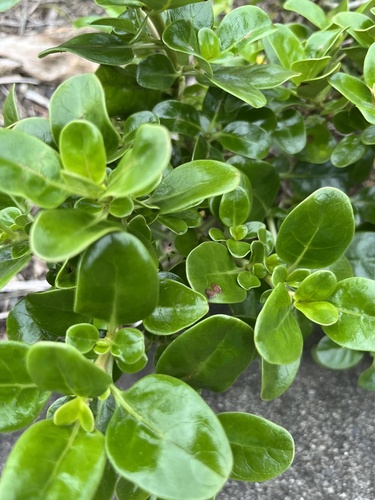


Taupata
coprosma repens
La Taupata, también conocida como la Planta Espejo, es un arbusto perenne notablemente robusto y adaptable, nativo de Nueva Zelanda. Reconocida por su follaje llamativamente brillante, de color verde oscuro y sus vibrantes bayas anaranjadas, prospera en entornos costeros desafiantes donde muchas otras plantas perecerían. Su inherente resistencia a la brisa marina, los vientos fuertes y los suelos secos y arenosos la convierte en una especie invaluable para los esfuerzos de revegetación costera y una planta ornamental muy popular en varios climas de todo el mundo. Más allá de su resistencia y atractivo estético, la Taupata juega un papel ecológico crucial al proporcionar alimento y refugio esenciales para las especies de aves e insectos nativos. Su hábito de crecimiento denso y extendido también contribuye significativamente a la estabilización de las dunas y riberas costeras, previniendo la erosión y fomentando ecosistemas más saludables. Este arbusto resistente encarna una doble identidad, existiendo tanto como un formidable superviviente en la naturaleza como una preciada adición a jardines y paisajes.
Hábitat: Se encuentra principalmente en zonas costeras, creciendo en costas rocosas, acantilados, dunas de arena y bosques costeros, pero también es adaptable a diversos entornos de jardín.
La Taupata se identifica fácilmente por sus hojas gruesas, coriáceas y excepcionalmente brillantes, de un vibrante verde oscuro, que a menudo presentan un margen ligeramente rugoso u ondulado, y que suelen medir entre 5 y 8 cm de largo. Forma un arbusto denso y extendido, que con frecuencia crece más ancho que alto, alcanzando alturas de entre 1 y 2,5 metros. Un identificador visual clave durante el otoño y el invierno es la abundante producción de drupas (bayas) pequeñas, carnosas, de color naranja brillante a naranja rojizo que se agrupan a lo largo de sus tallos. Los tallos en sí son robustos y a menudo muestran un tinte rojizo, especialmente en el crecimiento más joven.
Categoría
PlantasRareza
Común
Peligro
1/5 · Muy bajo
Snaps
¡Sé la primera persona en hacer un snap!
Coprosma repens es una planta dioica, lo que significa que los individuos son o masculinos o femeninos; solo las plantas femeninas producen las características bayas de color naranja brillante.
A pesar de su uso generalizado en jardines, las abundantes bayas naranjas de la Taupata son una importante fuente de alimento tradicional para varias especies de aves nativas de Nueva Zelanda.
El intenso brillo de sus hojas se asemeja a menudo a un espejo pulido, lo que le da el popular nombre común alternativo de 'Planta Espejo'.
Este arbusto increíblemente resistente puede tolerar una amplia gama de condiciones de crecimiento, desde pleno sol hasta sombra parcial y varios tipos de suelo, contribuyendo a su éxito como planta pionera costera y espécimen de jardín resiliente.
Como planta fotosintética, la Taupata produce su propio alimento al convertir la luz solar, el agua y el dióxido de carbono en azúcares a través de la fotosíntesis. Absorbe nutrientes minerales esenciales del suelo a través de su extenso sistema radicular.
Aún no hay insignias de rasgos asignadas a este objeto.
Todavía no hay alias listados.
Las colecciones para este objeto aparecerán aquí a medida que se añadan más temas.
Peligro
1/5 · Muy bajo
Todavía no hay notas especiales de seguridad.
Empieza por la planta entera y luego compara la disposición de las hojas, sus bordes, los tallos y las flores o frutos, si los hay. Las hojas opuestas crecen en parejas; las alternas salen de una en una a lo largo del tallo. Juntos, estos detalles dicen mucho más que una sola hoja verde. Identificador de plantas: sube una foto y compara los detalles visibles.
100-250 cm
5-50 kg
20-50 años
Como planta fotosintética, la Taupata produce su propio alimento al convertir la luz solar, el agua y el dióxido de carbono en azúcares a través de la fotosíntesis. Absorbe nutrientes minerales esenciales del suelo a través de su extenso sistema radicular.
Se encuentra principalmente en zonas costeras, creciendo en costas rocosas, acantilados, dunas de arena y bosques costeros, pero también es adaptable a diversos entornos de jardín.
Acércate para separar los grupos y explorar dónde se ha fotografiado este objeto.
Los snaps recientes aparecerán aquí a medida que se añadan nuevas observaciones.
Llévate el descubrimiento
Haz una foto con Snappit, identifica la especie y guarda el hallazgo en tu colección.