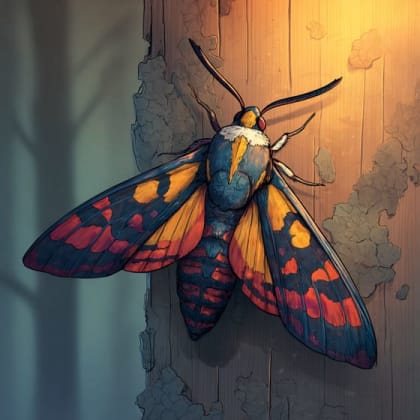
The Tanner
Prionus coriarius
The Tanner is a big, brown beetle that loves to munch on wood! It has long antennae that help it smell and find food. You might spot it in forests or near trees.
Hábitat: Forests
The Tanner is a large, sturdy longhorn beetle, typically dark reddish-brown to black. It has broad, flattened body and distinctive, long antennae that are noticeably serrated or 'saw-toothed' along their edges.
Categoría
InsectosRareza
Common
Peligro
1/5 · Muy bajo
Snaps
¡Sé la primera persona en hacer un snap!
Did you know the Tanner beetle larvae can live inside wood for up to five years before they become adults?
Female Tanners lay hundreds of tiny eggs deep within decaying tree stumps.
Male Tanner beetles are often seen flying at night, zipping around streetlights searching for mates!
Their giant antennae can actually be longer than the beetle's entire body!
The Tanner larvae can chew through tough dead wood because of their strong mandibles, which helps them find food and shelter.
The Tanner has long, segmented antennae that help it detect mates and find suitable egg-laying sites from far away.
The Tanner can fly swiftly and expertly in the dark because of its powerful wings, helping it find new territories at night.
Adult Tanner beetles eat very little, but their larvae are busy munching on decaying wood!
Diferencias por edad: Larvae consume decaying wood, while adults typically do not feed or feed very little.

Strix aluco
Adult beetles are a nighttime snack.
Dendrocopos major
Searches for larvae hidden in wood.
Fomes fomentarius
Helps break down wood for larvae.
Los animales solitarios viven solos durante la mayor parte de su vida y solo interactúan con otros para aparearse o cuidar de sus crías.
Este rasgo caracteriza a los organismos cuya dieta consiste total o principalmente en material vegetal.
Los hábitats boscosos son entornos terrestres dominados por una densa cubierta arbórea, que sustentan una gran diversidad de vida animal y vegetal.
Describe a los organismos que descomponen la materia orgánica muerta, reciclando los nutrientes de vuelta al ecosistema.

Gigante describe organismos u objetos de un tamaño significativamente mayor al promedio de su especie o tipo.

Los animales nocturnos están principalmente activos durante la noche, y suelen descansar o dormir durante el día.

Describe organismos que transfieren polen, permitiendo la fertilización y reproducción de las plantas.
Todavía no hay alias listados.
Peligro
1/5 · Muy bajo
Be gentle and watch your fingers when exploring around trees and wood!
50-100 mm
25-60 mm
60-90 días
15 km/h
Adult Tanner beetles eat very little, but their larvae are busy munching on decaying wood!
Forests
Foraging
6
Acércate para separar los grupos y explorar dónde se ha fotografiado este objeto.
Los snaps recientes aparecerán aquí a medida que se añadan nuevas observaciones.




_(23437796612).jpg&width=800)