thimbleberry
Rubus parviflorus
Thimbleberries are sweet, red berries that grow on tall bushes. They are soft and look like little cups, perfect for picking and eating right from the plant!
Hábitat: Forests
The thimbleberry has large, soft, maple-leaf-shaped leaves and showy white flowers resembling wild roses. Its bright red, cap-like berries, which look like tiny sewing thimbles, easily separate from their core when picked.
Categoría
PlantasRareza
Common
Peligro
1/5 · Muy bajo
Snaps
¡Sé la primera persona en hacer un snap!
If you ever get lost, finding thimbleberries might mean you're near water because they love moist soil!
Its extra-large, soft leaves can be used like a natural, biodegradable paper towel in the wilderness!
The thimbleberry's bright red fruit is so delicate, it often falls apart right in your hand!
Unlike many berry bushes, thimbleberry plants do not have thorns, making their fruit easy to pick and enjoy!
Thimbleberry can spread underground with rhizomes that help it quickly colonize new clearings after disturbances.
Thimbleberry produces large, showy white flowers that strongly attract a wide variety of native insects for pollination.
Its juicy, edible berries attract birds and mammals to eat them, which helps to spread its seeds far and wide.
Bombus occidentalis
Feeds on thimbleberry nectar
Ursus americanus
Eats the sweet, ripe berries
Odocoileus hemionus
Browses on leaves and shoots
Turdus migratorius
Consumes the nutritious berries
Las plantas caducifolias pierden periódicamente todas sus hojas, por lo general durante el otoño o las estaciones secas.
Las plantas con flores son cualquier planta que produce flores como parte de su ciclo reproductivo.
Un arbusto es una planta leñosa más pequeña que un árbol, típicamente con múltiples tallos que se ramifican desde o cerca del suelo.
Las plantas frutales producen frutos, que son los ovarios maduros de las plantas con flores que contienen semillas.

Las plantas comestibles son aquellas partes de una planta que se consideran seguras para el consumo humano.

Las plantas de crecimiento rápido exhiben tasas de crecimiento aceleradas, aumentando rápidamente de tamaño y biomasa en un corto período de tiempo.

Describe plantas que son particularmente atractivas y beneficiosas para una amplia variedad de organismos polinizadores.

Los hábitats boscosos son entornos terrestres dominados por una densa cubierta arbórea, que sustentan una gran diversidad de vida animal y vegetal.
Peligro
1/5 · Muy bajo
Always ask an adult before picking and eating berries in the wild.
100-250 cm
100-300 cm
2-6 cm
Late spring to mid-summer
Sí
Ninguna
Perenne
Insectos
Acércate para separar los grupos y explorar dónde se ha fotografiado este objeto.
Los snaps recientes aparecerán aquí a medida que se añadan nuevas observaciones.

British Columbia, CA
Puedes ver American Dipper, Salmón Rojo y Pato.
Ver guía →

British Columbia, CA
Puedes ver águila Calva, Ghost Pipe y Salmonberry.
Ver guía →

Washington, US
Puedes ver Tsuga Del Pacífico, Pato y Western Sword Fern.
Ver guía →

British Columbia, CA
Puedes ver Herb Robert, Western Redcedar y Thimbleberry.
Ver guía →
British Columbia, CA
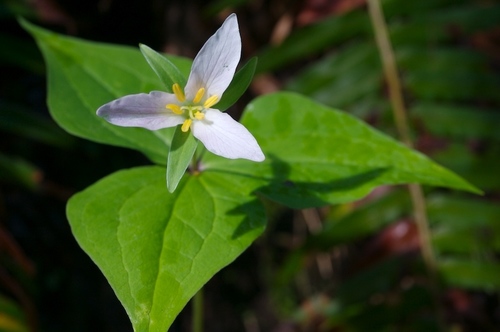
Puedes ver Pacific Trillium, Vanilla Leaf y Japanese Knotweed.
Ver guía →

Washington, US
Puedes ver Prostrate Knotweed, Common Dandelion y Pato.
Ver guía →