






Three-toed Box Turtle
Terrapene triunguis
The Three-toed Box Turtle is a small turtle with a special shell that can close up tight! They are friendly and love to explore their surroundings slowly.
Hábitat: Forests
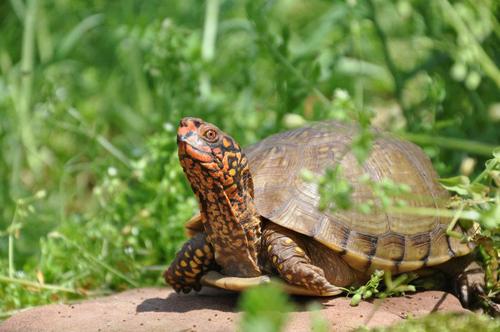
The Three-toed Box Turtle has a high-domed, reddish-brown shell, often with faint yellow or olive markings. Its head and limbs are typically yellowish-orange, sometimes adorned with red spots. A key feature is the three distinct toes on each hind foot, making it unique.
Categoría
ReptilesRareza
Common
Peligro
1/5 · Muy bajo
Snaps
¡Sé la primera persona en hacer un snap!
A box turtle can sometimes survive for over a year without food!
Each growth ring on their shell can tell you how old they are.
Temperature decides if a hatchling will be male or female!
They often have favorite spots and rarely roam far from home.
Three-toed Box Turtle has drab brown and olive colors that help them blend perfectly into the forest floor, hiding from hungry eyes.
Three-toed Box Turtle can find hidden food like mushrooms and grubs because of its excellent sense of smell, even after rain.
Three-toed Box Turtle can survive cold winters by digging into the soil and entering a deep sleep, conserving energy until spring.
They are omnivores, munching on a variety of plants, fruits, fungi, and small critters!
Diferencias por edad: Younger turtles eat more insects and protein, while adults consume a broader omnivorous diet.
Procyon lotor
Raccoons often prey on their eggs and hatchlings when found.
Mephitis mephitis
Skunks can dig up and eat box turtle eggs or small young.
Limax maximus
The turtles will forage for and eat slow-moving slugs.
Morchella esculenta
A favorite food source, they seek out various fungi like morels.
Los animales solitarios viven solos durante la mayor parte de su vida y solo interactúan con otros para aparearse o cuidar de sus crías.
Este rasgo identifica organismos cuya dieta incluye tanto materia vegetal como animal.
Este rasgo caracteriza a los organismos cuya dieta consiste total o principalmente en material vegetal.
Los hábitats boscosos son entornos terrestres dominados por una densa cubierta arbórea, que sustentan una gran diversidad de vida animal y vegetal.

Este rasgo indica que los organismos pertenecen a un grupo evolutivo muy antiguo con antepasados que se remontan a millones de años.

Este rasgo caracteriza a los organismos con una esperanza de vida excepcionalmente larga en comparación con otros de su especie.

Acorazado describe a los animales protegidos por una cubierta externa dura o caparazón para defenderse.

Los animales diurnos están activos principalmente durante el día y suelen descansar o dormir por la noche.
Todavía no hay alias listados.
Peligro
1/5 · Muy bajo
If you see a turtle, watch it from a distance and don't touch it without asking an adult.
10-14 cm
0.3-0.6 kg
30-50 años
0.5 km/h
They are omnivores, munching on a variety of plants, fruits, fungi, and small critters!
Forests
Foraging
1-8
Acércate para separar los grupos y explorar dónde se ha fotografiado este objeto.
Los snaps recientes aparecerán aquí a medida que se añadan nuevas observaciones.













_playing_dead_(14178349634).jpg&width=800)


