

Tigrosa Grandis
tigrosa grandis
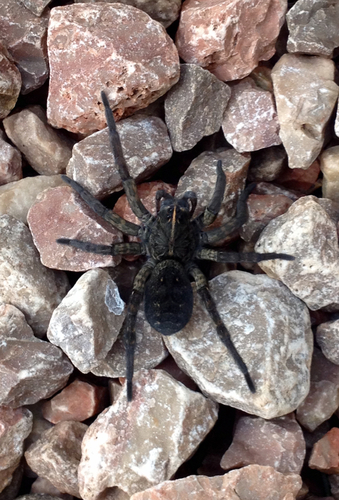
Tigrosa grandis, commonly known as the giant tiger wolf spider, is a formidable yet fascinating arachnid native to the grasslands and floodplains of North America. Renowned for its impressive size and robust build, this wolf spider is an active nocturnal hunter that eschews traditional webs in favor of actively stalking and chasing down its prey. Its common and scientific names hint at its fierce, tiger-like striped patterns and large physical stature within the Lycosidae family. Despite their intimidating appearance, these spiders are vital contributors to their ecosystems, acting as natural pest controllers. They play a critical role in managing insect populations, especially in agricultural and suburban areas. Female Tigrosa grandis demonstrate remarkable maternal instincts, carrying their spherical egg sacs wherever they go and later carting dozens of tiny spiderlings on their backs, offering an extraordinary glimpse into arachnid parental care.
Hábitat: Typically found in temperate grasslands, open woodlands, agricultural fields, and riparian zones, often hiding under flat stones, logs, or leaf litter during the day.
Tigrosa grandis is characterized by its large, robust, and hairy body, typically measuring 1.5 to 3.5 centimeters in length, with females being significantly larger than males. Its coloration is a mixture of cryptic grays, deep browns, and tan, dominated by a prominent light-colored median stripe running down the dark cephalothorax. The legs are thick and powerful, often displaying faint, darker banding. One of its most identifying features is its arrangement of eight eyes, including two exceptionally large, forward-facing posterior median eyes that gleam when caught by a flashlight beam at night.
Categoría
InvertebrateRareza
Common
Peligro
1/5 · Muy bajo
Snaps
¡Sé la primera persona en hacer un snap!
If you shine a flashlight over a grassy field at night, you can spot these spiders by their green eyeshine, caused by light reflecting off a membrane behind their retinas.
Unlike many spiders that spin webs to catch food, Tigrosa grandis is a cursorial hunter, meaning it relies on its impressive speed and physical strength to overpower prey.
When the spiderlings hatch, they climb onto their mother's back, clinging to specialized knobbed hairs until they are large enough to disperse and fend for themselves.
Equipped with specialized sensory hairs called trichobothria, this spider can detect minuscule vibrations in the ground or air, allowing it to pinpoint prey and sense approaching predators without relying on sight.
Possesses large, highly sensitive eyes backed by a reflective membrane called a tapetum lucidum, giving it superb night vision crucial for nocturnal hunting.
Females carry their egg sacs attached to their spinnerets and later transport hatched spiderlings on their abdomens, aggressively defending them from threats.
An active predator that hunts a variety of terrestrial invertebrates and small insects on the ground.
Diferencias por edad: Spiderlings feed on tiny insects like fruit flies and springtails, while mature adults tackle much larger prey including large beetles and grasshoppers.
Melanoplus differentialis
Preys upon this common agricultural pest during night hunts.
Entypus unifasciatus
Often parasitized and paralyzed by this wasp to serve as food for its larvae.
Hogna carolinensis
Competes for ground-dwelling insect prey in the same grassland habitats.
Aún no hay insignias de rasgos asignadas a este objeto.
Todavía no hay alias listados.
Las colecciones para este objeto aparecerán aquí a medida que se añadan más temas.
Peligro
1/5 · Muy bajo
Todavía no hay notas especiales de seguridad.
La forma más fácil de identificar a Tigrosa Grandis es usar la aplicación de identificación de naturaleza Snappit.
2-4 cm
0.001-0.006 kg
1-3 años
2 km/h
An active predator that hunts a variety of terrestrial invertebrates and small insects on the ground.
Typically found in temperate grasslands, open woodlands, agricultural fields, and riparian zones, often hiding under flat stones, logs, or leaf litter during the day.
Pursuit
Acércate para separar los grupos y explorar dónde se ha fotografiado este objeto.
Los snaps recientes aparecerán aquí a medida que se añadan nuevas observaciones.




.jpg&width=800)











