

Tillandsia Fasciculata
tillandsia fasciculata
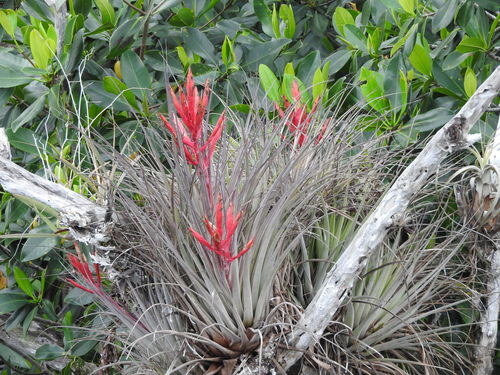
Tillandsia Fasciculata, comúnmente conocida como planta de aire gigante o planta de aire cardenal, es una bromelia epífita icónica y visualmente impactante nativa de las regiones tropicales y subtropicales de América. A diferencia de las plantas terrestres, esta notable especie crece posada en las ramas de los árboles huéspedes, suspendida en el dosel del bosque. No parasita a su huésped, sino que lo utiliza únicamente como soporte estructural, obteniendo humedad y nutrientes esenciales directamente del aire húmedo, la lluvia y los detritos orgánicos que caen.
Hábitat: Se encuentra en bosques húmedos, pantanos de cipreses y pinares llanos, típicamente creciendo en lo alto de los troncos y ramas de los árboles huéspedes.
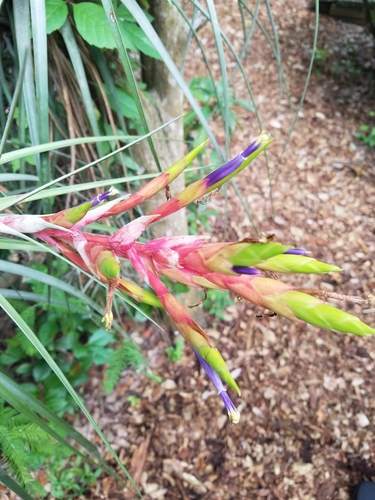
Esta gran planta de aire forma una roseta de hojas rígidas, cónicas y de color gris verdoso que pueden crecer hasta 60 centímetros de longitud. El follaje tiene un aspecto polvoriento debido a una densa cubierta de escamas microscópicas que absorben agua. Al reproducirse, produce una espectacular espiga floral ramificada con brácteas vibrantes y superpuestas en tonos de rojo brillante, amarillo y verde, de las que emergen pequeñas flores tubulares de color violeta púrpura.
Categoría
PlantasRareza
Común
Peligro
1/5 · Muy bajo
Snaps
¡Sé la primera persona en hacer un snap!
A pesar de tener raíces, puede sobrevivir e incluso prosperar cuando está suspendida completamente en el aire en un trozo de alambre o cuerda, siempre que reciba pulverización.
Se le apoda 'planta de aire cardenal' debido a los colores rojo fuego y amarillo de sus magníficas brácteas florales.
Sus semillas están equipadas con pelos sedosos, similares a paracaídas, que les permiten viajar con las corrientes de viento durante kilómetros antes de adherirse a un nuevo árbol huésped.
Genera energía a través de la fotosíntesis mientras absorbe agua y minerales disueltos de la atmósfera, la lluvia y el polvo orgánico en descomposición.
Aún no hay insignias de rasgos asignadas a este objeto.
Las colecciones para este objeto aparecerán aquí a medida que se añadan más temas.
Peligro
1/5 · Muy bajo
Todavía no hay notas especiales de seguridad.
Empieza por la planta entera y luego compara la disposición de las hojas, sus bordes, los tallos y las flores o frutos, si los hay. Las hojas opuestas crecen en parejas; las alternas salen de una en una a lo largo del tallo. Juntos, estos detalles dicen mucho más que una sola hoja verde. Identificador de plantas: sube una foto y compara los detalles visibles.
20-60 cm
0.1-0.8 kg
10-20 años
Genera energía a través de la fotosíntesis mientras absorbe agua y minerales disueltos de la atmósfera, la lluvia y el polvo orgánico en descomposición.
Se encuentra en bosques húmedos, pantanos de cipreses y pinares llanos, típicamente creciendo en lo alto de los troncos y ramas de los árboles huéspedes.
Acércate para separar los grupos y explorar dónde se ha fotografiado este objeto.
Los snaps recientes aparecerán aquí a medida que se añadan nuevas observaciones.
Llévate el descubrimiento
Haz una foto con Snappit, identifica la especie y guarda el hallazgo en tu colección.