
.jpg&width=800)




Timber Milkvetch
Astragalus miser
Timber Milkvetch is a special plant that grows in dry places. It has pretty flowers and is great for helping the soil stay healthy.
Hábitat: Grasslands
The Timber Milkvetch is a low-growing plant with slender stems and clusters of small, pea-like flowers. Its blossoms range from purplish-pink to cream or white, often appearing in dense racemes. The leaves are grayish-green and covered in fine hairs, distinguishing it from other meadow plants.
Categoría
PlantasRareza
Common
Peligro
1/5 · Muy bajo
Snaps
¡Sé la primera persona en hacer un snap!
Despite its toxicity to animals, some tiny insects are specially adapted to safely eat this plant.
It's called 'milkvetch' because people once wrongly believed it made cows produce more milk!
Some of its seed pods are so hairy, they look like tiny fuzzy caterpillars hanging from the stem!
This plant is often called a 'locoweed' because it can make animals act dizzy or 'loco'.
Timber Milkvetch can produce powerful toxins that protect it from being eaten by many grazing animals.
Timber Milkvetch can pull nitrogen from the air and enrich the soil, helping itself and other plants grow.
Timber Milkvetch has deep roots and hairy leaves that help it survive and thrive in dry, rocky conditions.
Bombus occidentalis
Main pollinator visiting its flowers
Rhizobium leguminosarum
Forms nodules on roots to fix nitrogen

Bos taurus
Ingesting plant causes 'locoism' toxicity
Ovis aries
Eating the plant can lead to neurological issues
Describe a los organismos capaces de convertir el nitrógeno atmosférico en compuestos utilizables por las plantas.
Las plantas con flores son cualquier planta que produce flores como parte de su ciclo reproductivo.
Las plantas tolerantes a la sequía pueden sobrevivir y florecer en condiciones de escasa disponibilidad de agua.
Las plantas comestibles son aquellas partes de una planta que se consideran seguras para el consumo humano.

Este rasgo caracteriza a los organismos cuya dieta consiste total o principalmente en material vegetal.

Describe plantas que son particularmente atractivas y beneficiosas para una amplia variedad de organismos polinizadores.

Los hábitats de pastizales son biomas terrestres dominados por pastos y plantas herbáceas, que sustentan a una variedad de animales de pastoreo.
Todavía no hay alias listados.
Peligro
1/5 · Muy bajo
Always look but don't touch plants unless you know they are safe.
10-50 cm
15-40 cm
0.5-1.5 cm
Late_spring_to_mid_summer
No
Alta
Perenne
Insectos
Acércate para separar los grupos y explorar dónde se ha fotografiado este objeto.
Los snaps recientes aparecerán aquí a medida que se añadan nuevas observaciones.
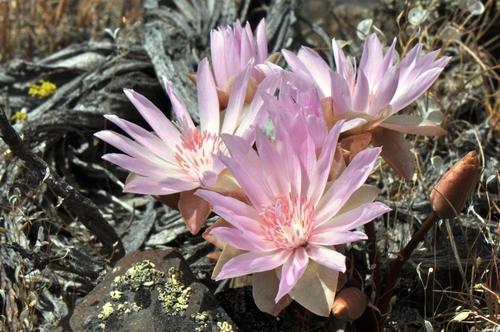
British Columbia, CA
Puedes ver Bitterroot, Arrowleaf Balsamroot y Western Stoneseed.
Ver guía →
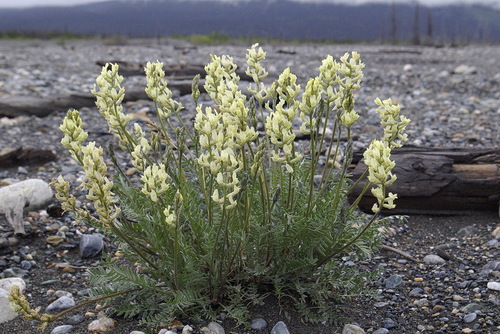
British Columbia, CA
Puedes ver Field Locoweed, Silky Lupine y Wax Currant.
Ver guía →
.jpg)
British Columbia, CA
Puedes ver Oregon Grape, Heartleaf Arnica y Solomon's Plume.
Ver guía →











.jpg&width=800)






