

Tolpis Webbii
tolpis webbii
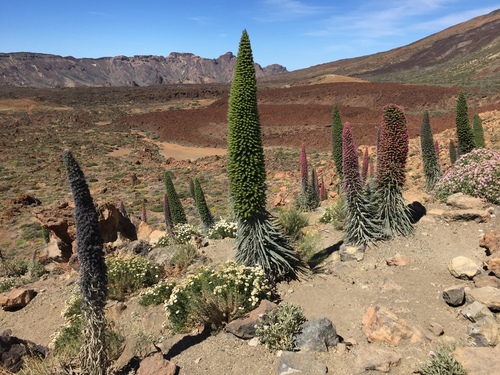
Tolpis webbii es un encantador subarbusto perenne endémico de las zonas de alta altitud de las Islas Canarias, particularmente Tenerife y La Palma. Perteneciente a la familia Asteraceae, esta planta resistente es una característica clásica del matorral subalpino y del sotobosque de los pinares canarios. Prospera en suelos volcánicos pobres en nutrientes, pintando los dramáticos paisajes volcánicos con explosiones de flores de color amarillo brillante. Su capacidad para soportar la intensa radiación solar y la sequía estacional la convierte en una especie pionera vital en estos entornos hostiles, apoyando a las comunidades de insectos locales.
Hábitat: Se encuentra en matorrales volcánicos de alta altitud y pinares canarios, típicamente en laderas rocosas y secas.
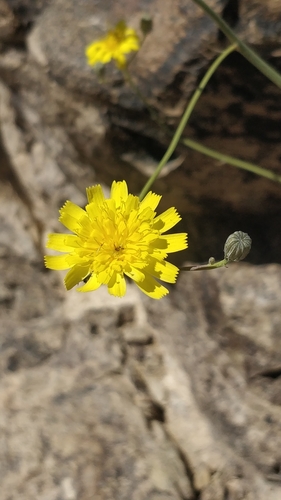
Esta planta crece como una hierba de base leñosa o un pequeño subarbusto que alcanza de 20 a 60 centímetros de altura. Presenta hojas lanceoladas, de color verde grisáceo, que a menudo se agrupan en la base o a lo largo de los tallos inferiores. Su característica más llamativa son las cabezas florales compuestas, que consisten en numerosas lígulas de color amarillo brillante que rodean un disco central ligeramente más oscuro, imitando un diente de león robusto y muy ramificado.
Categoría
PlantasRareza
Común
Peligro
1/5 · Muy bajo
Snaps
¡Sé la primera persona en hacer un snap!
A pesar de su apariencia delicada, similar a un diente de león, esta planta tiene una base leñosa que le permite sobrevivir como un subarbusto perenne durante años.
Es una de las especies de plantas icónicas que decoran la caldera del Teide, el pico más alto de España.
El nombre de la especie 'webbii' honra a Philip Barker Webb, un botánico inglés que fue coautor del estudio definitivo del siglo XIX sobre la flora de las Islas Canarias.
Extrae nutrientes con éxito y establece raíces en sustratos volcánicos jóvenes y altamente porosos.
Utiliza cutículas foliares especializadas y sistemas radiculares profundos para sobrevivir a períodos prolongados de sequía en ambientes de gran altitud.
Produce flavonoides protectores en su follaje para mitigar el daño de la intensa radiación solar de alta elevación.
Como planta fotoautótrofa, produce energía a través de la fotosíntesis, convirtiendo la luz solar, el agua y el dióxido de carbono en azúcares.
Pinus canariensis
Sirve como competidor en el sotobosque por la luz y el espacio con los plantones jóvenes.
Bombus canariensis
Depende de abejas nativas para la polinización de sus cabezas florales de color amarillo brillante.

Oryctolagus cuniculus
Los herbívoros introducidos se alimentan de sus hojas y botones florales, afectando la supervivencia de las plántulas.
Aún no hay insignias de rasgos asignadas a este objeto.
Todavía no hay alias listados.
Las colecciones para este objeto aparecerán aquí a medida que se añadan más temas.
Peligro
1/5 · Muy bajo
Todavía no hay notas especiales de seguridad.
Empieza por la planta entera y luego compara la disposición de las hojas, sus bordes, los tallos y las flores o frutos, si los hay. Las hojas opuestas crecen en parejas; las alternas salen de una en una a lo largo del tallo. Juntos, estos detalles dicen mucho más que una sola hoja verde. Identificador de plantas: sube una foto y compara los detalles visibles.
20-60 cm
2-7 años
Como planta fotoautótrofa, produce energía a través de la fotosíntesis, convirtiendo la luz solar, el agua y el dióxido de carbono en azúcares.
Se encuentra en matorrales volcánicos de alta altitud y pinares canarios, típicamente en laderas rocosas y secas.
Acércate para separar los grupos y explorar dónde se ha fotografiado este objeto.
Los snaps recientes aparecerán aquí a medida que se añadan nuevas observaciones.
Llévate el descubrimiento
Haz una foto con Snappit, identifica la especie y guarda el hallazgo en tu colección.