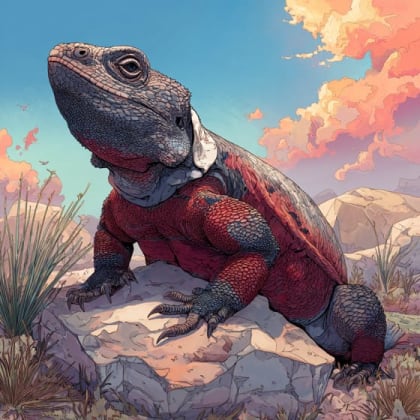
Tortoises
Testudinidae
Tortoises are slow-moving reptiles with hard shells that protect them. They can live for a very long time and enjoy munching on plants and veggies.
Hábitat: Grasslands
The Tortoise has a distinctive, high-domed shell that can be various shades of brown, green, or black, providing strong protection. Its thick, club-like legs end in stumpy feet, unlike the flatter shells and webbed feet of aquatic turtles.
Categoría
ReptilesRareza
Common
Peligro
1/5 · Muy bajo
Snaps
¡Sé la primera persona en hacer un snap!
A group of tortoises is playfully called a 'creep'!
Some tortoises can survive for an entire year without food or water in harsh conditions!
Their protective shell is actually made of 60 bones fused together, connected to their spine!
They don't have external ears but can feel vibrations in the ground through their shell and skull!
Tortoises has a sturdy, dome-shaped shell that helps them retreat entirely inside for ultimate protection from predators.
Tortoises can store water in their large bladders, which helps them survive long periods without drinking in dry environments.
Tortoises can dig deep burrows using their strong limbs, which helps them escape extreme heat, cold, or danger underground.
Tortoises has an incredibly slow metabolism that helps them live for over a hundred years, making them very long-lived.
Tortoises are herbivores, mostly munching on leaves, grasses, fruits, and colorful flowers.
Aquila chrysaetos
Eats eggs and hatchlings of some tortoise species.
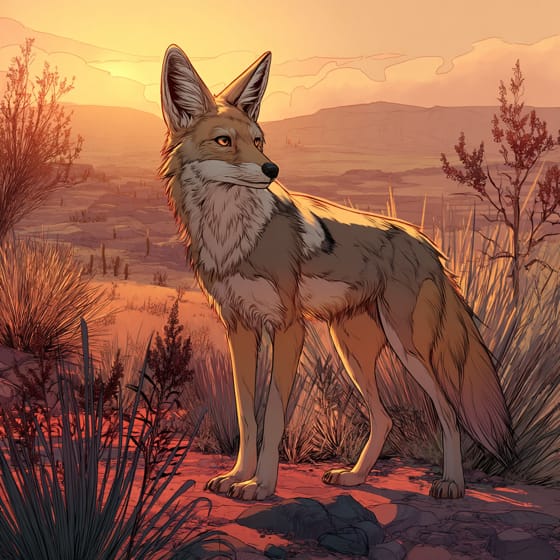
Canis latrans
Preys on tortoise eggs and young hatchlings in its range.
Varanus niloticus
Consumes tortoise eggs and small juveniles.
Cynodon dactylon
A common food source for many grazing tortoise species.
Los animales solitarios viven solos durante la mayor parte de su vida y solo interactúan con otros para aparearse o cuidar de sus crías.
Este rasgo caracteriza a los organismos cuya dieta consiste total o principalmente en material vegetal.
Los hábitats de pastizales son biomas terrestres dominados por pastos y plantas herbáceas, que sustentan a una variedad de animales de pastoreo.
Este rasgo indica que los organismos pertenecen a un grupo evolutivo muy antiguo con antepasados que se remontan a millones de años.

Este rasgo caracteriza a los organismos con una esperanza de vida excepcionalmente larga en comparación con otros de su especie.

Acorazado describe a los animales protegidos por una cubierta externa dura o caparazón para defenderse.

Los animales diurnos están activos principalmente durante el día y suelen descansar o dormir por la noche.

El estado de peligro de extinción indica que una especie corre un riesgo muy alto de extinguirse en estado silvestre en un futuro próximo.
Peligro
1/5 · Muy bajo
Always watch tortoises from a distance and never try to pick them up without help.
10-120 cm
0.1-400 kg
30-190 años
0.3 km/h
Tortoises are herbivores, mostly munching on leaves, grasses, fruits, and colorful flowers.
Grasslands
Foraging
1-30
Acércate para separar los grupos y explorar dónde se ha fotografiado este objeto.
Los snaps recientes aparecerán aquí a medida que se añadan nuevas observaciones.