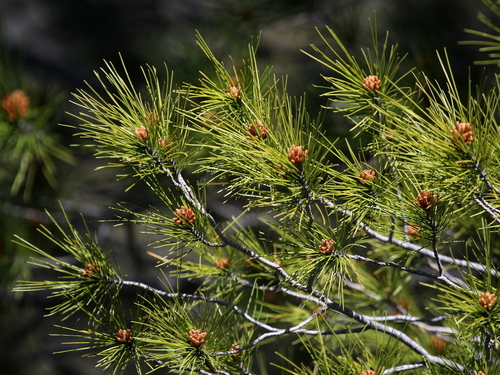
tree spurge
Euphorbia dendroides
Tree spurge is a unique plant that looks like a small tree! It has thick, green stems and bright yellow flowers that bloom in spring. This plant is special because it can grow in rocky places where other plants might struggle.
Hábitat: Coastal areas
The tree spurge is a striking, rounded shrub that often resembles a small tree, boasting a dense crown. Its leaves are spirally arranged, turning vibrant yellow-green during its winter to spring bloom. After flowering, the plant can take on a distinctive umbrella-like shape.
Categoría
PlantasRareza
Common
Peligro
2/5 · Bajo
Snaps
¡Sé la primera persona en hacer un snap!
Even though its sap is irritating, ancient doctors once used it in their remedies!
It loves sunny, rocky hillsides, growing like a mini tree by the sparkling sea!
Its bright yellow 'flowers' are actually colorful leaves called bracts, not true petals!
This clever plant can drop all its leaves to 'sleep' through super hot, dry summers!
Tree spurge has a milky, sticky sap that oozes out to defend against hungry nibblers, making them think twice.
It can drop all its leaves in summer to avoid drying out, saving water until cooler weather returns.
Tree spurge blooms in late winter, helping it grab sunshine and pollinators before other plants wake up.
Its strong roots help it cling to rocky slopes, finding tiny cracks for water where other plants can't grow.
Apis mellifera
Honey bees collect nectar and pollen from its early spring flowers.
Syrphus ribesii
Hoverflies visit the plant for nectar, aiding in pollen transfer.
Podarcis muralis
Lizards often hide in its dense branches for cover and shade.
Las plantas con flores son cualquier planta que produce flores como parte de su ciclo reproductivo.
Un arbusto es una planta leñosa más pequeña que un árbol, típicamente con múltiples tallos que se ramifican desde o cerca del suelo.
Las plantas de floración primaveral producen sus flores durante la temporada de primavera, lo que a menudo significa el final del invierno y el comienzo de un nuevo crecimiento.
Las plantas medicinales poseen compuestos químicos que pueden utilizarse con fines terapéuticos para tratar enfermedades o mantener la salud.

Los árboles de hoja ancha son angiospermas caracterizadas por hojas planas y anchas que típicamente se caen anualmente en climas templados.

Las plantas tolerantes a la sequía pueden sobrevivir y florecer en condiciones de escasa disponibilidad de agua.

Describe plantas que son particularmente atractivas y beneficiosas para una amplia variedad de organismos polinizadores.

Los hábitats costeros son entornos dinámicos situados a lo largo de la interfaz entre la tierra y el mar, influenciados por las mareas, las olas y el agua salada.

Describe organismos que transfieren polen, permitiendo la fertilización y reproducción de las plantas.
Todavía no hay alias listados.
Peligro
2/5 · Bajo
Be careful not to touch the sap, as it can irritate your skin.
50-200 cm
50-150 cm
0.5-1.5 cm
Late_winter-early_spring
No
Moderada
Perenne
Insectos
Acércate para separar los grupos y explorar dónde se ha fotografiado este objeto.
Los snaps recientes aparecerán aquí a medida que se añadan nuevas observaciones.