twinberry honeysuckle
Lonicera involucrata
Twinberry honeysuckle is a special plant with sweet, tasty berries! It has pretty yellow flowers that attract butterflies and hummingbirds. You can find it in the woods and along streams.
Hábitat: Forests
The twinberry honeysuckle has tubular, yellowish flowers that mature into shiny, dark purplish-black berries. These distinctive berries always grow in pairs and are strikingly framed by large, bright reddish-purple bracts.
Categoría
PlantasRareza
Common
Peligro
2/5 · Bajo
Snaps
¡Sé la primera persona en hacer un snap!
Even though they look yummy, its dark twin berries are not safe for humans to eat!
Hummingbirds are huge fans, sipping nectar from its flowers with their long beaks!
Its tubular flowers produce a sweet nectar, just like real honey for thirsty visitors!
This plant helps keep nature healthy by providing food for many different birds!
Twinberry honeysuckle has two berries growing side-by-side, maximizing seed production for future plants.
It possesses bright reddish-purple bracts that act as flashy signals, guiding birds and insects to its flowers.
.jpg&width=800)
Selasphorus rufus
Sips nectar from flowers
Turdus migratorius
Consumes its dark berries
Bombus melanopygus
Visits flowers for nectar
Las plantas caducifolias pierden periódicamente todas sus hojas, por lo general durante el otoño o las estaciones secas.
Las plantas con flores son cualquier planta que produce flores como parte de su ciclo reproductivo.
Un arbusto es una planta leñosa más pequeña que un árbol, típicamente con múltiples tallos que se ramifican desde o cerca del suelo.
Las plantas de floración de verano producen sus flores durante la temporada estival, a menudo aportando un color vibrante cuando muchas otras plantas ya han terminado de florecer.

Las plantas frutales producen frutos, que son los ovarios maduros de las plantas con flores que contienen semillas.

Las plantas comestibles son aquellas partes de una planta que se consideran seguras para el consumo humano.

Describe plantas que son particularmente atractivas y beneficiosas para una amplia variedad de organismos polinizadores.

Los hábitats boscosos son entornos terrestres dominados por una densa cubierta arbórea, que sustentan una gran diversidad de vida animal y vegetal.
Todavía no hay alias listados.
Peligro
2/5 · Bajo
While the berries are sweet, it's best to ask an adult before tasting any wild berries.
100-300 cm
100-200 cm
1-2 cm
Late Spring to Mid-Summer
No
Leve
Perenne
Aves
Acércate para separar los grupos y explorar dónde se ha fotografiado este objeto.
Los snaps recientes aparecerán aquí a medida que se añadan nuevas observaciones.
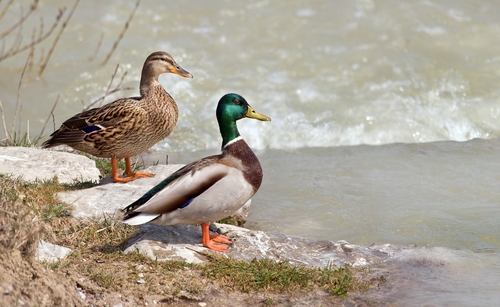
Oregon, US
Puedes ver Pato, Twinberry Honeysuckle y Barnacla Canadiense.
Ver guía →
.jpg)
California, US
Puedes ver California Phacelia, Twinberry Honeysuckle y Coast Paintbrush.
Ver guía →
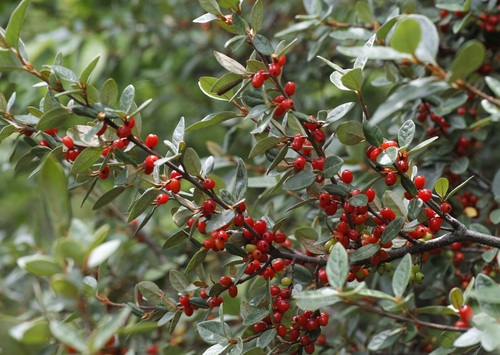
British Columbia, CA
Puedes ver Canadian Buffalo-Berry, Oregon Boxwood y Pacific Trillium.
Ver guía →

British Columbia, CA
Puedes ver Western Columbine, Mountain Lady's-Slipper y Thimbleberry.
Ver guía →
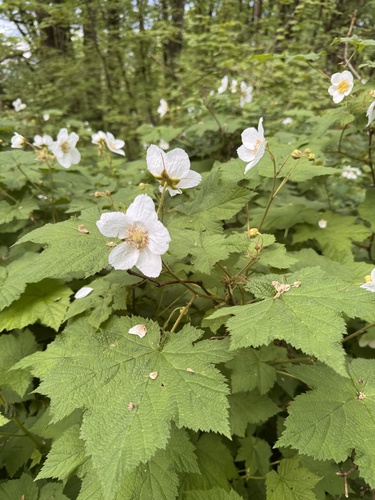
British Columbia, CA
Puedes ver Thimbleberry, Western Redcedar y Red Osier Dogwood.
Ver guía →

British Columbia, CA
Puedes ver Sitka Valerian, Leafy Aster y Pearly Everlasting.
Ver guía →











_(8395478679).jpg&width=800)

.jpg&width=800)