

Underwing, Tiger, Tussock, And Allied Moths
erebidae
The family Erebidae is one of the largest and most ecologically diverse groups of moths in the order Lepidoptera. This fascinating group encompasses a spectacular variety of forms, including the dramatically patterned underwings, furry tussock moths, and toxic tiger moths. Many species in this family have evolved remarkable survival strategies, such as using ultrasonic clicks to jam bat echolocation or displaying bright warning colors to deter visual predators. They play an essential role in global ecosystems, acting as vital pollinators in their adult form and serving as a key food source for many nocturnal birds, bats, and small mammals. Their larvae are equally important as major consumers of plant foliage, helping cycle nutrients within forests and grasslands alike. Their sheer diversity makes them a favorite subject for entomologists and nature enthusiasts globally.
Hábitat: Found globally in a wide variety of terrestrial environments, including deciduous forests, grasslands, tropical rainforests, and urban gardens.
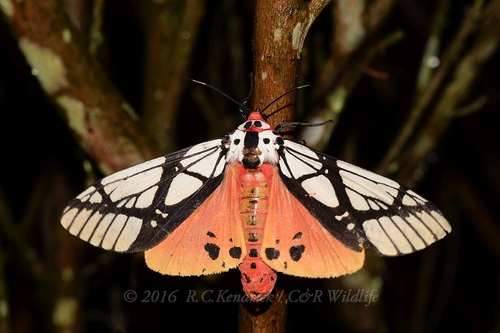
Erebidae moths exhibit an extraordinary range of sizes and colors, with wingspans stretching from small 2 cm species up to the massive 24 cm Black Witch moth. Many species feature cryptically colored forewings, resembling bark or dry leaves, which perfectly camouflage them during the day. When disturbed, they flash brightly patterned hindwings decorated with vibrant bands of orange, yellow, pink, or blue to startle predators. The caterpillars are equally distinctive: tiger moth larvae are famously covered in dense, bristly setae (known as woolly bears), while tussock moth caterpillars sport neat, paintbrush-like tufts of hair, often in striking contrasting colors like white, yellow, and black.
Categoría
InsectosRareza
Common
Peligro
1/5 · Muy bajo
Snaps
¡Sé la primera persona en hacer un snap!
Some tussock moth caterpillars have specialized defense hairs called urticating hairs that can cause painful, itchy skin rashes on humans who handle them.
The Black Witch moth, an erebid moth with a massive wingspan, is subject to many cultural legends in Central America, sometimes viewed as a harbinger of death or luck.
Woolly bear caterpillars can survive freezing winter temperatures by producing glycerol, which acts as a natural antifreeze inside their bodies.
Many tiger moths can emit high-frequency clicks from their tymbal organs that jam the echolocation of hunting bats, effectively making themselves invisible or confusing to the predator.
Numerous larvae sequester toxic chemicals from host plants, retaining these noxious compounds into adulthood to make themselves unpalatable to birds.
Underwing moths use camouflage to blend into tree bark, suddenly revealing highly colorful hindwings to scare off potential predators when threatened.
Larvae are primarily folivores that consume leaves of trees, shrubs, and herbaceous plants, while adults feed on liquid flower nectar, tree sap, and fermenting fruit juices.
Diferencias por edad: Caterpillars have chewing mouthparts adapted for eating solid leaves, whereas adult moths possess a coiled proboscis used exclusively for sipping liquids.
Eptesicus fuscus
Adult moths are heavily preyed upon by bats, prompting the moths to develop ultrasonic defense mechanism.
Quercus alba
Larvae of many underwing moth species rely heavily on oak foliage as their primary food source.
Aún no hay insignias de rasgos asignadas a este objeto.
Todavía no hay alias listados.
Las colecciones para este objeto aparecerán aquí a medida que se añadan más temas.
Peligro
1/5 · Muy bajo
Todavía no hay notas especiales de seguridad.
La forma más fácil de identificar a Underwing, Tiger, Tussock, And Allied Moths es usar la aplicación de identificación de naturaleza Snappit.
1-10 cm
2-24 cm
0.0001-0.005 kg
1 años
20 km/h
Larvae are primarily folivores that consume leaves of trees, shrubs, and herbaceous plants, while adults feed on liquid flower nectar, tree sap, and fermenting fruit juices.
Found globally in a wide variety of terrestrial environments, including deciduous forests, grasslands, tropical rainforests, and urban gardens.
Acércate para separar los grupos y explorar dónde se ha fotografiado este objeto.
Los snaps recientes aparecerán aquí a medida que se añadan nuevas observaciones.