





Valgus hemipterus
Valgus hemipterus
El Valgus hemipterus es un insecto único conocido por sus colores brillantes y su interesante forma. Le encanta esconderse bajo las hojas y a menudo se encuentra en jardines y bosques.
Hábitat: Bosques
El Valgus hemipterus es un escarabajo pequeño y peludo, típicamente de color marrón oscuro a negro, a menudo con escamas pálidas dispersas. Tiene un cuerpo compacto, algo aplanado y patas traseras notablemente anchas y aplanadas, lo que le confiere una apariencia única.
Categoría
InsectosRareza
Common
Peligro
1/5 · Muy bajo
Snaps
1
¡Sus larvas pasan años masticando madera muerta, escondidas del mundo!
¡El nombre científico de Valgus hemipterus en realidad significa 'patizambo' debido a sus patas únicas!
¡Son miembros importantes del equipo de limpieza, ayudando a los bosques a mantenerse saludables al reciclar nutrientes!
¡Este diminuto escarabajo a veces se encuentra viviendo pacíficamente justo al lado de colonias de hormigas!
El Valgus hemipterus puede descomponer expertamente la madera en descomposición gracias a sus fuertes mandíbulas, ayudando a reciclar los nutrientes del bosque.
El Valgus hemipterus tiene una relación especial con las hormigas, a menudo se encuentra inofensivamente cerca de sus nidos, lo que puede ofrecer protección.
El Valgus hemipterus puede mimetizarse perfectamente con la hojarasca y la corteza gracias a su cuerpo monótono y texturizado, lo que lo hace difícil de detectar.
Este diminuto escarabajo ayuda a limpiar los bosques masticando madera muerta y hongos.
Diferencias por edad: Las larvas se alimentan exclusivamente de madera en descomposición.
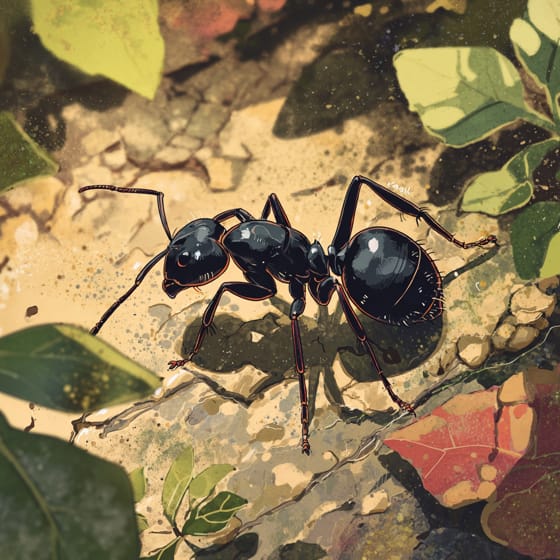
Lasius niger
A menudo se encuentran cerca de sus nidos, la interacción exacta es compleja.
Dendrocopos major
Los pájaros carpinteros pueden extraer larvas de madera en descomposición.
Quercus robur
Las larvas se desarrollan dentro de la madera en descomposición de los robles.
Los animales solitarios viven solos durante la mayor parte de su vida y solo interactúan con otros para aparearse o cuidar de sus crías.
El camuflaje describe a los organismos que poseen colores o patrones que les permiten mezclarse con su entorno.
Colorido describe a organismos u objetos que exhiben una amplia variedad de colores brillantes y distintivos.
Este rasgo caracteriza a los organismos cuya dieta consiste total o principalmente en material vegetal.

Describe plantas que son particularmente atractivas y beneficiosas para una amplia variedad de organismos polinizadores.

Los hábitats boscosos son entornos terrestres dominados por una densa cubierta arbórea, que sustentan una gran diversidad de vida animal y vegetal.

Los animales diurnos están activos principalmente durante el día y suelen descansar o dormir por la noche.

Describe organismos que transfieren polen, permitiendo la fertilización y reproducción de las plantas.
Todavía no hay alias listados.
Peligro
1/5 · Muy bajo
Es mejor observar a los insectos desde la distancia y no tocarlos.
La forma más fácil de identificar a Valgus hemipterus es usar la aplicación de identificación de naturaleza Snappit.
6-16 mm
4-8 mm
30-90 días
2-5 km/h
Este diminuto escarabajo ayuda a limpiar los bosques masticando madera muerta y hongos.
Bosques
Forrajeo
Acércate para separar los grupos y explorar dónde se ha fotografiado este objeto.
Llévate el descubrimiento
Haz una foto con Snappit, identifica la especie y guarda el hallazgo en tu colección.








.jpg&width=800)


