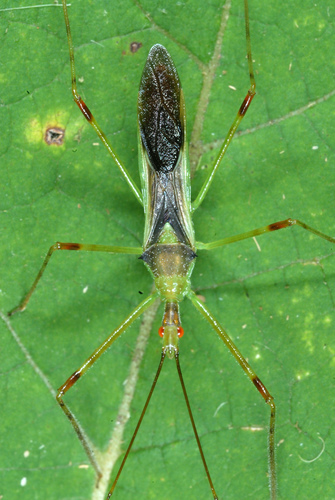
Walnut Lace Bug
corythucha juglandis
The Walnut Lace Bug is a tiny insect that loves to hang out on walnut trees! It has a beautiful lace-like pattern on its wings that makes it look like nature's little artwork.
Hábitat: Walnut trees and surrounding areas.
The Walnut Lace Bug has a flattened, oval body with intricate, delicate, lace-like wings that are pale, almost transparent, and patterned with dark markings. Its head and thorax are dark, contrasting with the finely veined, reticulated forewings which give it its distinctive appearance.
Categoría
InsectosRareza
Common
Peligro
0/5 · Sin peligro conocido
Snaps
¡Sé la primera persona en hacer un snap!
Baby lace bugs, called nymphs, look spiky and don't have wings yet!
Their wings look like tiny stained-glass windows under a microscope!
These tiny bugs often leave behind shiny, sticky 'honeydew' on leaves!
They communicate by tapping their bodies on leaves, sending secret messages!
Walnut Lace Bug has exquisite, see-through lace wings that help them glide gracefully and blend into leaf textures.
Walnut Lace Bug can pierce plant tissue with its straw-like mouthparts, allowing them to drink vital sap from walnut leaves.
Walnut Lace Bug has a flat body and muted colors that help them expertly hide on the undersides of walnut leaves from predators.
Feeds exclusively on the sap of walnut tree leaves, sometimes causing minor damage.
Juglans nigra
Feeds on the sap of its leaves, sometimes causing discoloration.
Harmonia axyridis
Adults and larvae prey on soft-bodied insects like lace bugs.
Chrysoperla carnea
Larvae are voracious predators of small insects including lace bugs.
Misumena vatia
Ambushes small insects that visit the leaves for feeding or shelter.
Los animales sociales viven en grupos organizados, cooperando para obtener beneficios de supervivencia como la búsqueda de alimento, la defensa y la cría de descendencia.
Los animales arborícolas viven principalmente en los árboles, utilizándolos como refugio, alimento y protección contra los depredadores.
Colorido describe a organismos u objetos que exhiben una amplia variedad de colores brillantes y distintivos.
Este rasgo caracteriza a los organismos cuya dieta consiste total o principalmente en material vegetal.

Los animales diurnos están activos principalmente durante el día y suelen descansar o dormir por la noche.
Peligro
0/5 · Sin peligro conocido
Todavía no hay notas especiales de seguridad.
6-10 mm
3-5 mm
30-60 días
Feeds exclusively on the sap of walnut tree leaves, sometimes causing minor damage.
Walnut trees and surrounding areas.
Foraging
6
10-100
Acércate para separar los grupos y explorar dónde se ha fotografiado este objeto.
Los snaps recientes aparecerán aquí a medida que se añadan nuevas observaciones.