

Western Atlantic Striped False Limpet
siphonaria naufragum
Clinging tightly to the wave-swept rocks of the intertidal zone, the Western Atlantic Striped False Limpet is a resilient and fascinating marine mollusk. Although its conical shell makes it look identical to a true limpet, this creature is actually a pulmonate gastropod, meaning it is more closely related to land snails and breathes air using a modified mantle cavity that functions like a lung. This unique adaptation allows it to thrive in the harsh boundary between land and sea, enduring hours of exposure to the air during low tide. As the tide recedes, these false limpets actively graze on microscopic algae coating the rock faces, leaving a chemical slime trail that guides them back to their precise resting spot. This homing behavior is crucial for survival, ensuring they return to a perfectly molded spot on the rock that matches their shell shape to prevent drying out.
Hábitat: Found on rocky intertidal shores, jetties, and concrete seawalls where they are regularly splashed or submerged by ocean waves.
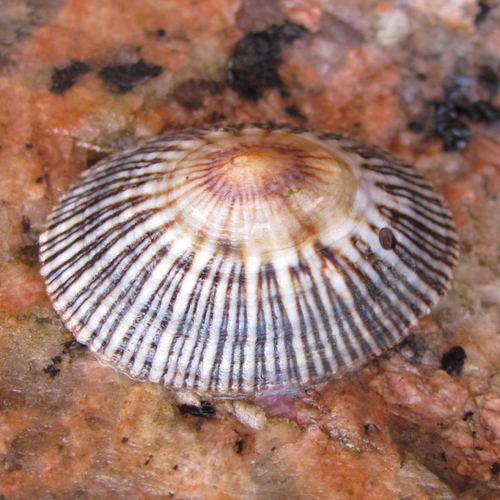
The Western Atlantic Striped False Limpet features a small, dome-shaped shell resembling a shallow cone, measuring between 1 to 3 centimeters in length. The shell surface is characterized by distinct, coarse radial ribs that extend from the apex to the outer margin. Its coloration is highly recognizable, showcasing alternating dark brown or blackish stripes with contrasting off-white to pale yellow lines, creating a striking striped pattern. Its low-profile, hydrodynamic shape helps it resist the powerful drag of crashing waves.
Categoría
InvertebrateRareza
Common
Peligro
1/5 · Muy bajo
Snaps
¡Sé la primera persona en hacer un snap!
Despite looking like true limpets, they are pulmonate snails, meaning they are evolutionary cousins to land snails and slugs and must breathe air.
Their radula, or tongue-like feeding structure, is reinforced with minerals to scrape tough algae off hard rock surfaces without wearing down.
They create a custom home scar on rocks by grinding down the stone with their shell edge over time, creating a perfect, airtight seal.
Possesses a modified mantle cavity that functions as a lung, allowing it to extract oxygen from the air when exposed during low tide.
Secretes a mucus trail while foraging and uses chemical cues to navigate back to the exact same resting spot on its home rock.
Uses a highly muscular foot to create a powerful vacuum seal against rock surfaces, protecting it from predators and high-impact waves.
Grazes on microscopic algae, diatoms, and organic biofilms that coat wet rock surfaces in the intertidal zone.
Haematopus palliatus
This snail is a common prey item for coastal shorebirds searching for food on rocky shorelines.
Stramonita haemastoma
Preyed upon by carnivorous sea snails that can drill through or slide under its protective shell.
Echinolittorina ziczac
Competes for grazing space and food resources with other intertidal gastropods.
Aún no hay insignias de rasgos asignadas a este objeto.
Todavía no hay alias listados.
Las colecciones para este objeto aparecerán aquí a medida que se añadan más temas.
Peligro
1/5 · Muy bajo
Todavía no hay notas especiales de seguridad.
La forma más fácil de identificar a Western Atlantic Striped False Limpet es usar la aplicación de identificación de naturaleza Snappit.
1-3 cm
0.002-0.01 kg
1-3 años
Grazes on microscopic algae, diatoms, and organic biofilms that coat wet rock surfaces in the intertidal zone.
Found on rocky intertidal shores, jetties, and concrete seawalls where they are regularly splashed or submerged by ocean waves.
Grazing
500+
Acércate para separar los grupos y explorar dónde se ha fotografiado este objeto.
Los snaps recientes aparecerán aquí a medida que se añadan nuevas observaciones.












