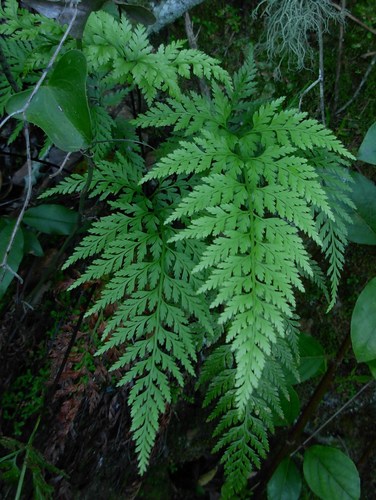


Western Black Spleenwort
asplenium onopteris
The Western Black Spleenwort (Asplenium onopteris) is a graceful evergreen fern native to the Mediterranean region, Western Europe, and parts of North Africa. With its delicate, finely-cut fronds, this plant brings a touch of elegant green texture to rocky woodlands, shady crevices, and ancient stone walls. Unlike many delicate ferns, it is surprisingly tough, capable of thriving in dry, rocky soils where other plants struggle. It is highly valued by plant enthusiasts for its glossy, dark green appearance and resilience. Historically, spleenworts were named for their traditional medicinal use, as their spleen-shaped sori (spore-bearing structures) led ancient herbalists to believe they could treat ailments of the spleen under the Doctrine of Signatures. Today, it is appreciated primarily for its ecological role and ornamental beauty, providing shelter for small invertebrates and stabilizing fragile soils in shaded, rocky habitats.
Hábitat: Typically found in shaded, rocky oak woodlands, limestone crevices, old stone walls, and sheltered ravines with moist but well-drained soils.
This medium-sized fern is easily recognized by its highly divided, bi- to tri-pinnate fronds that taper to a fine, sharp point. The individual frond blades are glossy and a deep, dark green, contrasting sharply with the dark brown to blackish, shiny stems (stipes) that give the plant its common name. The fronds emerge from a short, creeping rhizome, forming a loose, arching clump that typically grows between 10 to 45 centimeters in length. On the undersides of mature fronds, you can find linear, brown sori arranged in neat rows along the veins, which release tiny spores for reproduction.
Categoría
PlantasRareza
Common
Peligro
1/5 · Muy bajo
Snaps
¡Sé la primera persona en hacer un snap!
It is capable of hybridizing with other closely related spleenwort species, creating unique intermediate fern forms in areas where their ranges overlap.
The common name 'spleenwort' comes from the ancient belief that the plant's spleen-shaped reproductive structures could cure spleen ailments.
Unlike many ferns that die back in winter, the Western Black Spleenwort is evergreen, maintaining its glossy green appearance throughout the coldest months.
Can survive periods of dry conditions by curling its fronds to reduce moisture loss, rapidly unfurling once water becomes available.
Possesses a fibrous, tenacious root system that allows it to anchor firmly in tight rock crevices and extract trace nutrients from mineral-rich stones.
Its dark green, thin fronds contain high levels of chlorophyll optimized to capture extremely low levels of sunlight filtering through dense forest canopies.
As a photosynthetic plant, it synthesizes its own energy from sunlight, carbon dioxide, and water while absorbing essential minerals through its roots.
Quercus ilex
Creates the shaded, moist microclimate canopy required for the fern to thrive on the forest floor.
Aneugmenus padi
The larvae of this sawfly feed directly on the green fronds of various fern species, including spleenworts.
Aún no hay insignias de rasgos asignadas a este objeto.
Todavía no hay alias listados.
Las colecciones para este objeto aparecerán aquí a medida que se añadan más temas.
Peligro
1/5 · Muy bajo
Todavía no hay notas especiales de seguridad.
La forma más fácil de identificar a Western Black Spleenwort es usar la aplicación de identificación de naturaleza Snappit.
10-45 cm
5-15 años
As a photosynthetic plant, it synthesizes its own energy from sunlight, carbon dioxide, and water while absorbing essential minerals through its roots.
Typically found in shaded, rocky oak woodlands, limestone crevices, old stone walls, and sheltered ravines with moist but well-drained soils.
Acércate para separar los grupos y explorar dónde se ha fotografiado este objeto.
Los snaps recientes aparecerán aquí a medida que se añadan nuevas observaciones.



.jpg&width=800)