White-eared titi
Callicebus donacophilus
The White-eared titi is a small monkey with fluffy fur and big, bright eyes. They love to swing through trees and are very playful with their friends!
Hábitat: Forests
The White-eared titi has soft, grayish-brown fur on its body, often with reddish-orange underparts. Its most distinctive features are the prominent tufts of white fur on its ears. Its long, bushy tail is darker, sometimes with a whitish tip, and is not prehensile.
Categoría
MamíferosRareza
Common
Peligro
1/5 · Muy bajo
Snaps
¡Sé la primera persona en hacer un snap!
Male titis are super dads, carrying their babies almost all the time!
These monkeys often warm up by sunbathing on branches after chilly forest nights.
They mate for life and are one of the few truly monogamous primates.
Titis "shout" at neighboring groups to tell them to stay away from their area.
White-eared titis can intertwine their long tails with family members, creating a secure and cozy bond while resting high in the trees.
White-eared titis have complex, loud calls they perform in duets with their mate, that helps them communicate and defend their territory.
White-eared titis can leap effortlessly between branches with incredible agility, because of their strong legs that helps them move through the dense forest canopy.
These small monkeys mostly munch on delicious fruits and leaves, but also enjoy a side of tasty insects!
Harpia harpyja
A powerful bird of prey in its habitat.
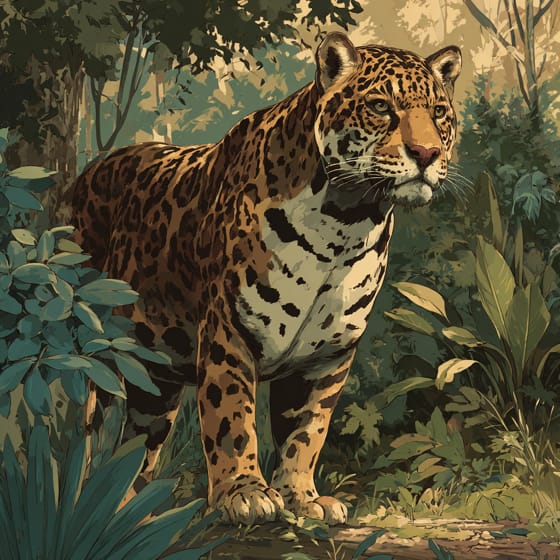
Panthera onca
A large feline predator of the forest.
Boa constrictor
A large snake that ambushes small primates.
Peludo describe a los animales que poseen una cubierta densa de pelo o pelaje suave.
Los animales sociales viven en grupos organizados, cooperando para obtener beneficios de supervivencia como la búsqueda de alimento, la defensa y la cría de descendencia.
Los animales arborícolas viven principalmente en los árboles, utilizándolos como refugio, alimento y protección contra los depredadores.
Este rasgo caracteriza a los organismos cuya dieta consiste total o principalmente en material vegetal.

Los hábitats boscosos son entornos terrestres dominados por una densa cubierta arbórea, que sustentan una gran diversidad de vida animal y vegetal.

Los animales diurnos están activos principalmente durante el día y suelen descansar o dormir por la noche.

El estado de peligro de extinción indica que una especie corre un riesgo muy alto de extinguirse en estado silvestre en un futuro próximo.
Todavía no hay alias listados.
Peligro
1/5 · Muy bajo
Always watch animals from a distance and never try to touch them in the wild.
25-35 cm
0.5-1.5 kg
10-20 años
15 km/h
These small monkeys mostly munch on delicious fruits and leaves, but also enjoy a side of tasty insects!
Forests
Foraging
1-2
Acércate para separar los grupos y explorar dónde se ha fotografiado este objeto.
Los snaps recientes aparecerán aquí a medida que se añadan nuevas observaciones.