White-faced Saki
Pithecia pithecia
The White-faced Saki is a playful monkey with a fluffy white face and a long tail. They love to swing through the trees and eat fruits and seeds. These monkeys are very social and often live in groups!
Hábitat: Forests
The White-faced Saki has long, shaggy fur, which is entirely black for females and young, while adult males sport a striking white or pale-yellow face contrasting sharply with their dark bodies. Their bushy, non-prehensile tails are about as long as their bodies.
Categoría
MamíferosRareza
Common
Peligro
2/5 · Bajo
Snaps
¡Sé la primera persona en hacer un snap!
Baby sakis cling tightly to their mother's belly for their first few months of life!
Male and female sakis look so different, people once thought they were different species!
These monkeys live almost entirely in the rainforest canopy, rarely touching the ground!
White-faced Sakis are shy, often staying hidden, making them tricky to spot.
White-faced Saki can jump up to 10 meters between trees using powerful legs, helping them escape danger and find food.
White-faced Saki has specialized teeth and strong jaws to crack open tough seeds, helping them access nutrient-rich food.
White-faced Saki has dark, shaggy fur, blending perfectly into rainforest shadows and dense foliage, protecting them from predators.
White-faced Saki can sleep hanging upside down by its feet, a unique posture helping them hide from canopy predators.
They munch on juicy fruits, crack open tough seeds, and sometimes snack on tasty insects!
Harpia harpyja
A powerful bird of prey in their canopy home.
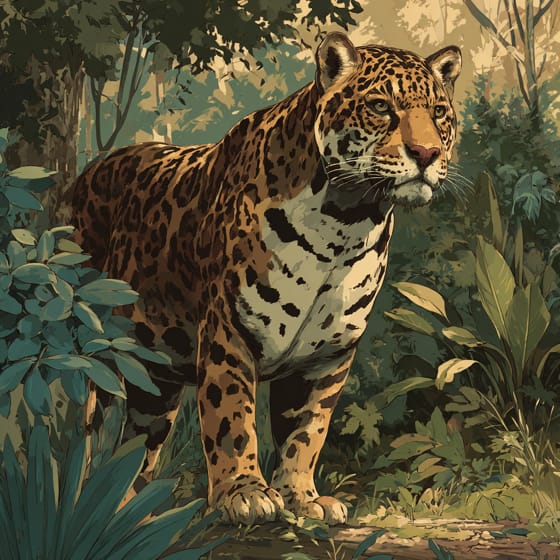
Panthera onca
A stealthy big cat that hunts in their forest.
Ficus insipida
They consume the fruits and seeds of this large fig.
Pouteria caimito
They enjoy the sweet, fleshy fruits of this tree.
Peludo describe a los animales que poseen una cubierta densa de pelo o pelaje suave.
Los animales sociales viven en grupos organizados, cooperando para obtener beneficios de supervivencia como la búsqueda de alimento, la defensa y la cría de descendencia.
Los animales arborícolas viven principalmente en los árboles, utilizándolos como refugio, alimento y protección contra los depredadores.
Este rasgo caracteriza a los organismos cuya dieta consiste total o principalmente en material vegetal.

Los hábitats boscosos son entornos terrestres dominados por una densa cubierta arbórea, que sustentan una gran diversidad de vida animal y vegetal.

Los animales diurnos están activos principalmente durante el día y suelen descansar o dormir por la noche.

Este rasgo identifica a los organismos que exhiben una rapidez excepcional en sus movimientos para cazar, escapar o desplazarse.

El estado de peligro de extinción indica que una especie corre un riesgo muy alto de extinguirse en estado silvestre en un futuro próximo.
Todavía no hay alias listados.
Peligro
2/5 · Bajo
Always watch from a distance and don't try to touch wild animals.
30-50 cm
1.5-2.5 kg
15-20 años
25 km/h
They munch on juicy fruits, crack open tough seeds, and sometimes snack on tasty insects!
Forests
Foraging
1
Acércate para separar los grupos y explorar dónde se ha fotografiado este objeto.
Los snaps recientes aparecerán aquí a medida que se añadan nuevas observaciones.











.jpg&width=800)