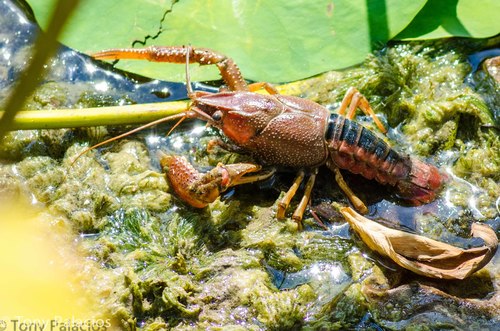


White River Crayfish
procambarus acutus
The White River Crayfish, Procambarus acutus, is a common and highly adaptable freshwater crustacean native to North America. Known for its robust nature and ability to thrive in a variety of aquatic environments, it plays a significant role in freshwater ecosystems as both a detritivore and a prey item. This species is an important indicator of water quality in many regions and is also a popular target for recreational fishing. Its resilience and broad diet contribute to its ecological success, but also raise concerns in areas where it has been introduced outside its native range, as it can outcompete native species.
Hábitat: Found in a wide array of freshwater habitats, including slow-moving rivers, streams, ponds, lakes, ditches, and temporary wetlands, often in areas with abundant vegetation or debris.
The White River Crayfish typically exhibits a reddish-brown to dark brown coloration, though individuals can sometimes appear olive-green or grayish depending on their environment and diet. It has a smooth carapace, lacking spines or prominent tubercles, and its claws (chelae) are generally long and slender, often appearing disproportionately large in males. Adults usually measure between 7 to 15 cm (3 to 6 inches) in length from the tip of the rostrum to the end of the tail, making it a medium-sized crayfish species.
Categoría
AnimalRareza
Common
Peligro
1/5 · Muy bajo
Snaps
¡Sé la primera persona en hacer un snap!
Despite being nocturnal, they are often active during the day, especially in cloudy weather or shaded areas.
They can regenerate lost limbs, a crucial adaptation for survival against predators and during territorial disputes.
When threatened, crayfish will often rapidly flick their tails to propel themselves backward in a "tail-flip" escape maneuver.
White River Crayfish are sometimes called "mudbugs" due to their burrowing habits and preference for muddy substrates.
This crayfish can dig complex burrows to escape drought conditions or predators, allowing it to survive in intermittent aquatic habitats by accessing groundwater.
Possesses a highly adaptable diet, consuming a broad range of organic matter from plant detritus to small invertebrates, which enables it to thrive in diverse environments and exploit various food sources.
Exhibits a high reproductive rate, producing multiple clutches of eggs per year, which contributes to its ability to quickly colonize new areas and maintain robust populations.
The White River Crayfish is an opportunistic omnivore, primarily feeding on decaying organic matter but also actively preying on smaller invertebrates and consuming aquatic vegetation. Its flexible diet allows it to adapt to various food availabilities in its environment.
Diferencias por edad: Juveniles tend to consume more detritus and smaller invertebrates, while adults have a broader diet, including larger prey.
Micropterus salmoides
A common predator of crayfish, especially juveniles.
Procyon lotor
Preys on small crayfish.
Typha latifolia
Crayfish consume detritus from these plants.
Faxonius rusticus
Compete for resources in shared habitats.
Aún no hay insignias de rasgos asignadas a este objeto.
Todavía no hay alias listados.
Las colecciones para este objeto aparecerán aquí a medida que se añadan más temas.
Peligro
1/5 · Muy bajo
Todavía no hay notas especiales de seguridad.
La forma más fácil de identificar a White River Crayfish es usar la aplicación de identificación de naturaleza Snappit.
7-15 cm
0.03-0.15 kg
2-4 años
The White River Crayfish is an opportunistic omnivore, primarily feeding on decaying organic matter but also actively preying on smaller invertebrates and consuming aquatic vegetation. Its flexible diet allows it to adapt to various food availabilities in its environment.
Found in a wide array of freshwater habitats, including slow-moving rivers, streams, ponds, lakes, ditches, and temporary wetlands, often in areas with abundant vegetation or debris.
Foraging
100-600
Acércate para separar los grupos y explorar dónde se ha fotografiado este objeto.
Los snaps recientes aparecerán aquí a medida que se añadan nuevas observaciones.