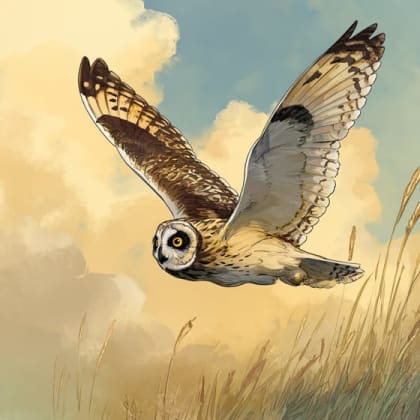
White Stork
Ciconia ciconia
The White Stork is a tall bird with long legs and a long beak. They are known for their beautiful white feathers and black wing tips. These birds often build big nests on rooftops and trees.
Hábitat: Wetlands
The White Stork is a large bird with pristine white plumage, starkly contrasted by glossy black flight feathers visible when its wings are spread. It has long, slender red legs and a long, pointed red beak, giving it an elegant and unmistakable appearance.
Categoría
AvesRareza
Common
Peligro
1/5 · Muy bajo
Snaps
¡Sé la primera persona en hacer un snap!
A single White Stork can eat hundreds of grasshoppers and other pests in one day!
Baby storks are covered in soft white down, but their beaks and legs are dark, turning red as they grow.
These birds follow farmers' plows to snatch up tasty insects and rodents revealed in the soil.
White Storks build huge nests that can weigh over 500 kg and are reused for generations!
White Storks can soar on warm air currents, or 'thermals', because of their broad wings, saving energy during long migrations.
White Storks can clatter their beaks together rapidly because of strong neck muscles, using this sound for communication.
White Storks can fly thousands of kilometers between continents because of their efficient soaring flight and strong endurance.
A keen hunter, the White Stork eats a variety of small animals from insects to small mammals.
Rana temporaria
A favorite prey item in wetlands.
Microtus arvalis
Hunted in grasslands and farmland.
Passer domesticus
Often nests within the large stick nests of White Storks.

Haliaeetus albicilla
Predates on eggs and chicks in some areas.
Describe a los animales, principalmente aves, que poseen una cubierta de plumas.
Los animales sociales viven en grupos organizados, cooperando para obtener beneficios de supervivencia como la búsqueda de alimento, la defensa y la cría de descendencia.
Este rasgo identifica a los organismos cuya dieta consiste principalmente en insectos y otros pequeños invertebrados.
Este rasgo de hábitat identifica especies que se encuentran en humedales, que son áreas de tierra saturadas de agua, ya sea permanente o estacionalmente, e incluyen marismas, pantanos y ciénagas.

Este rasgo identifica a los organismos cuya dieta consiste total o principalmente en tejido animal.

Describe una especie cuya presencia y papel tienen un efecto desproporcionadamente grande en su entorno.

Los hábitats acuáticos abarcan entornos donde los organismos viven principalmente en el agua, incluidos océanos, ríos, lagos y humedales.

Los animales migratorios emprenden movimientos estacionales de una región a otra, típicamente en respuesta a cambios en el clima o la disponibilidad de alimentos.
Peligro
1/5 · Muy bajo
Always watch storks from a distance and never disturb their nests.
100-115 cm
155-215 cm
2.3-4.5 kg
20-39 años
70 km/h
A keen hunter, the White Stork eats a variety of small animals from insects to small mammals.
Wetlands
Foraging
Acércate para separar los grupos y explorar dónde se ha fotografiado este objeto.
Los snaps recientes aparecerán aquí a medida que se añadan nuevas observaciones.

Michigan, US
Puedes ver León Africano, Glotón y Jirafas.
Ver guía →
Kentucky, US
Puedes ver León Africano, Dragón De Komodo y Boa Rosada.
Ver guía →

South Holland, NL
Puedes ver Grey Heron, Eurasian Jackdaw y Common Moorhen.
Ver guía →
Tennessee, US
Puedes ver León Africano, Jirafas y White Stork.
Ver guía →

Hainaut, BE
Puedes ver Lobo Gris, Vombatidae y White Stork.
Ver guía →
.jpg)
Berlin, DE
Puedes ver White Stork, Oso Polar y Eulemur Mongoz.
Ver guía →