

Wolves And Dogs
canis
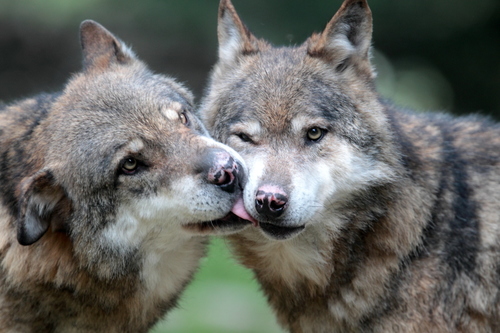
The genus Canis encompasses some of the most recognizable and beloved mammals on Earth, including wolves, coyotes, jackals, and the domestic dog. These highly intelligent, social carnivores have captivated human imagination for millennia, appearing in folklore, mythology, and our very homes. Members of this genus are characterized by their strong social structures, often forming complex family units or packs that hunt, play, and raise young cooperatively. From the freezing tundras of the Arctic to arid African savannas and bustling urban centers, Canis species have adapted to diverse environments worldwide. Their deep bond with humans, particularly through the domestication of dogs, represents one of the most profound interspecies relationships in history, making them truly unique in the animal kingdom.
Hábitat: Found in nearly every terrestrial habitat on Earth, ranging from arctic tundras, dense boreal forests, and open plains to arid deserts and human-dominated urban landscapes.
Members of the Canis genus share a distinct, wolf-like morphology characterized by deep chests, long muzzles, erect ears, and bushy tails. Their fur ranges wildly in color depending on the species and breed, encompassing shades of white, gray, black, brown, and reddish-tan, often featuring complex, banded guard hairs for camouflage or insulation. They typically possess long, slender legs designed for endurance running and non-retractable claws that provide vital traction. Size varies immensely across the genus, from the diminutive Golden Jackal or small domestic dog breeds weighing just a few kilograms, to massive Gray Wolves that can exceed 60 kilograms and stand up to 85 centimeters at the shoulder.
Categoría
MamíferosRareza
Common
Peligro
1/5 · Muy bajo
Snaps
¡Sé la primera persona en hacer un snap!
Coyotes have rapidly expanded their range in North America over the past century, adapting so well to cities that they are frequently found living entirely within downtown Chicago and New York.
The domestic dog shares nearly 99% of its DNA with the gray wolf, demonstrating a relatively recent and remarkably close evolutionary divergence.
When a dog curls up in a tight ball to sleep, it is expressing an ancient wild instinct designed to keep them warm and protect their vulnerable vital organs from predators.
Wolves can hear another wolf howling from up to 10 miles (16 kilometers) away in open terrain.
Members of this genus possess incredibly efficient cardiovascular systems and long legs, allowing them to track and exhaust prey over massive distances rather than relying on brief sprint speed.
They possess hundreds of millions of olfactory receptors, granting them an extraordinary sense of smell used for tracking prey, identifying pack members, and sensing distant dangers.
Through a sophisticated repertoire of howls, barks, whines, and growls, they can communicate detailed information across long distances to coordinate hunts and maintain pack cohesion.
While historically carnivorous and built to hunt ungulates or small mammals, many species like coyotes and domestic dogs are highly opportunistic and will readily consume fruits, vegetables, and human refuse.
Diferencias por edad: Pups transition from mother's milk to regurgitated, partially digested meat before learning to hunt small prey on their own.
Cervus canadensis
A major prey source for gray wolves across North American woodlands.
Corvus corax
Scavengers that frequently follow wolf packs to feed on the remains of their kills.
Puma concolor
Often competes with coyotes and wolves for prey and territory, sometimes resulting in lethal encounters.
Aún no hay insignias de rasgos asignadas a este objeto.
Todavía no hay alias listados.
Las colecciones para este objeto aparecerán aquí a medida que se añadan más temas.
Peligro
1/5 · Muy bajo
Todavía no hay notas especiales de seguridad.
La forma más fácil de identificar a Wolves And Dogs es usar la aplicación de identificación de naturaleza Snappit.
70-160 cm
5-80 kg
6-16 años
65 km/h
While historically carnivorous and built to hunt ungulates or small mammals, many species like coyotes and domestic dogs are highly opportunistic and will readily consume fruits, vegetables, and human refuse.
Found in nearly every terrestrial habitat on Earth, ranging from arctic tundras, dense boreal forests, and open plains to arid deserts and human-dominated urban landscapes.
Pursuit And Pack Hunting
Acércate para separar los grupos y explorar dónde se ha fotografiado este objeto.
Los snaps recientes aparecerán aquí a medida que se añadan nuevas observaciones.