

Woronichinia Naegeliana
woronichinia naegeliana
Woronichinia naegeliana es una fascinante cianobacteria colonial de agua dulce, comúnmente reconocida por su potencial para formar floraciones de agua conspicuas. Estos organismos microscópicos desempeñan un papel crucial como productores primarios en los ecosistemas acuáticos, convirtiendo la luz solar en energía a través de la fotosíntesis. Lo que hace a Woronichinia particularmente interesante es su capacidad de agregarse en colonias distintivas, a menudo esféricas o irregulares, envueltas en una vaina mucilaginosa transparente, lo que le permite adaptarse a diferentes condiciones de luz y disponibilidad de nutrientes en su entorno acuático. Su presencia, particularmente en floraciones densas, puede indicar condiciones eutróficas y puede tener impactos ecológicos y ambientales significativos.
Hábitat: Esta cianobacteria se encuentra típicamente en ambientes de agua dulce ricos en nutrientes (eutróficos) como lagos, estanques, embalses y ríos de curso lento, a menudo prosperando en temperaturas más cálidas.
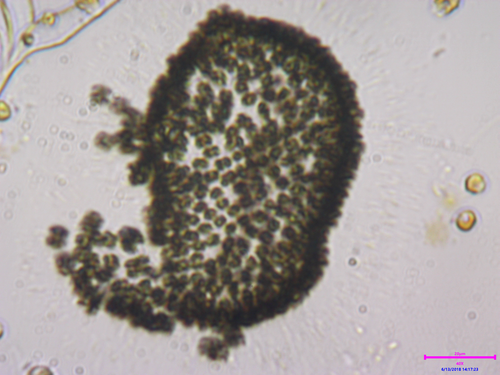
Woronichinia naegeliana aparece como colonias microscópicas, aproximadamente esféricas o irregulares, que típicamente varían de unos pocos micrómetros a varios milímetros de diámetro, a menudo visibles a simple vista como motas verdosas o azuladas o una suspensión turbia en el agua. Dentro de estas colonias, las células individuales son pequeñas, esféricas a ovoides, y están dispuestas radialmente o dispersas dentro de una matriz gelatinosa transparente. Las colonias mismas pueden ser de flotación libre o adheridas, y su color puede variar de verde claro a azul-verde, a veces apareciendo amarillentas o parduscas dependiendo de la composición de pigmentos y los factores ambientales.
Categoría
AnimalRareza
Común
Peligro
1/5 · Muy bajo
Snaps
¡Sé la primera persona en hacer un snap!
Las células individuales dentro de una colonia de Woronichinia a menudo se organizan de manera radial, apareciendo como pequeños grupos en forma de estrella incrustados en el mucílago.
La formación de floraciones densas por Woronichinia naegeliana puede agotar significativamente los niveles de oxígeno en el agua por la noche o durante la descomposición, lo que provoca la muerte de peces.
Las vacuolas de gas en Woronichinia le permiten regular su flotabilidad, flotando a la superficie durante el día para fotosintetizar y hundiéndose por la noche para absorber nutrientes de aguas más profundas.
Las colonias de Woronichinia naegeliana pueden liberar compuestos malolientes al descomponerse, contribuyendo a problemas de sabor y olor en las fuentes de agua potable.
Las células individuales dentro de las colonias contienen vacuolas de gas, lo que permite a la colonia regular su posición en la columna de agua, optimizando la exposición a la luz y los nutrientes.
Como todas las cianobacterias, Woronichinia naegeliana es un fotoautótrofo, convirtiendo eficientemente la luz solar en compuestos orgánicos, formando la base de muchas redes alimentarias acuáticas.
Forma distintivas colonias mucilaginosas que ofrecen protección contra los herbívoros, reducen la exposición a la radiación UV y ayudan en la absorción de nutrientes mediante el aumento de la relación superficie-volumen para toda la colonia.
Woronichinia naegeliana sintetiza su propio alimento utilizando luz solar, dióxido de carbono y nutrientes inorgánicos disueltos en el agua, un proceso fundamental para la producción primaria en los ecosistemas acuáticos.
Various zooplankton species
Consumida por varios pequeños organismos acuáticos.
Microcystis aeruginosa
Otras especies de fitoplancton compiten por la luz y los nutrientes.

Cyprinus carpio
Los peces pueden verse indirectamente afectados por toxinas o el agotamiento de oxígeno durante las floraciones.
Various aquatic bacteria
Las bacterias descomponen las cianobacterias muertas, contribuyendo al ciclo de nutrientes.
Aún no hay insignias de rasgos asignadas a este objeto.
Todavía no hay alias listados.
Las colecciones para este objeto aparecerán aquí a medida que se añadan más temas.
Peligro
1/5 · Muy bajo
Todavía no hay notas especiales de seguridad.
La forma más fácil de identificar a Woronichinia Naegeliana es usar la aplicación de identificación de naturaleza Snappit.
Woronichinia naegeliana sintetiza su propio alimento utilizando luz solar, dióxido de carbono y nutrientes inorgánicos disueltos en el agua, un proceso fundamental para la producción primaria en los ecosistemas acuáticos.
Esta cianobacteria se encuentra típicamente en ambientes de agua dulce ricos en nutrientes (eutróficos) como lagos, estanques, embalses y ríos de curso lento, a menudo prosperando en temperaturas más cálidas.
Fotosíntesis Y Absorción De Nutrientes
Acércate para separar los grupos y explorar dónde se ha fotografiado este objeto.
Los snaps recientes aparecerán aquí a medida que se añadan nuevas observaciones.
Llévate el descubrimiento
Haz una foto con Snappit, identifica la especie y guarda el hallazgo en tu colección.