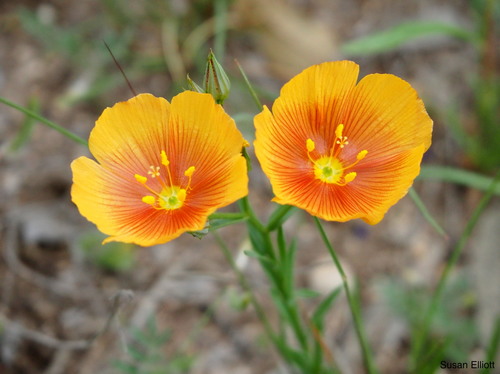


Yellow Flax
linum rigidum
Yellow Flax (Linum rigidum) is a vibrant native wildflower known for its delicate yet striking yellow blooms. This herbaceous plant is a resilient inhabitant of North American prairies, grasslands, and dry, open woodlands, bringing a splash of sunshine to its preferred arid environments. Beyond its aesthetic appeal, Yellow Flax plays a crucial role in its ecosystem as a primary producer, converting sunlight into energy and supporting various insect pollinators with its nectar and pollen. Its ability to thrive in harsh conditions makes it an important component of native plant communities, contributing to biodiversity and ecological stability.
Hábitat: Found primarily in dry, open habitats such as prairies, shortgrass plains, open woodlands, and roadsides, often in sandy or gravelly soils.
Yellow Flax typically grows to a height of 20 to 60 centimeters, featuring slender, erect stems that may branch, often with a reddish tint near the base. The leaves are narrow, linear, and alternately arranged along the stem. The most distinctive feature is its bright, clear yellow flowers, each composed of five distinct petals that are somewhat broader at the tip. These delicate flowers typically open fully during the day and may close in the afternoon heat, usually appearing in loose clusters at the stem tips. The fruit is a small, spherical capsule containing numerous smooth, flattened seeds.
Categoría
PlantasRareza
Common
Peligro
1/5 · Muy bajo
Snaps
¡Sé la primera persona en hacer un snap!
Its seeds are enclosed in a distinctive spherical capsule, which provides protection until they are ripe for dispersal.
The delicate petals of Yellow Flax flowers are often shed by late afternoon, meaning early morning is the best time to see them in their full glory.
The genus name 'Linum' comes from the Greek word 'linon,' meaning thread, referring to the fibrous stems of some flax species that have been used for linen since ancient times.
Unlike its cultivated cousin, Common Flax (Linum usitatissimum), Yellow Flax is not typically grown for its fiber or oil, but it is valued for its ecological benefits in native plant restorations.
Yellow Flax possesses a robust root system that allows it to access deeper soil moisture, enabling it to withstand prolonged periods of drought common in its native dry grassland habitats.
Its bright yellow flowers are adapted to open during the day, maximizing visibility and pollen dispersal to diurnal pollinators like bees and butterflies, which are most active in sunlight.
The plant produces small, spherical seed capsules that, upon drying, split open to release numerous seeds, aiding in efficient dispersal and establishment of new plants in challenging environments.
As an autotrophic plant, Yellow Flax produces its own food through photosynthesis, utilizing sunlight, carbon dioxide from the air, and water and nutrients absorbed from the soil to create sugars for energy and growth.
Apis mellifera
Pollinates the plant, aiding in reproduction.
Danaus plexippus
Provides nectar and pollen as a food source.
Odocoileus virginianus
Grazes on foliage, potentially limiting plant growth.
Schizachyrium scoparium
Competes for resources like sunlight, water, and nutrients.
Aún no hay insignias de rasgos asignadas a este objeto.
Todavía no hay alias listados.
Las colecciones para este objeto aparecerán aquí a medida que se añadan más temas.
Peligro
1/5 · Muy bajo
Todavía no hay notas especiales de seguridad.
La forma más fácil de identificar a Yellow Flax es usar la aplicación de identificación de naturaleza Snappit.
20-60 cm
0.01-0.05 kg
1-2 años
As an autotrophic plant, Yellow Flax produces its own food through photosynthesis, utilizing sunlight, carbon dioxide from the air, and water and nutrients absorbed from the soil to create sugars for energy and growth.
Found primarily in dry, open habitats such as prairies, shortgrass plains, open woodlands, and roadsides, often in sandy or gravelly soils.
10-20
Acércate para separar los grupos y explorar dónde se ha fotografiado este objeto.
Los snaps recientes aparecerán aquí a medida que se añadan nuevas observaciones.
















