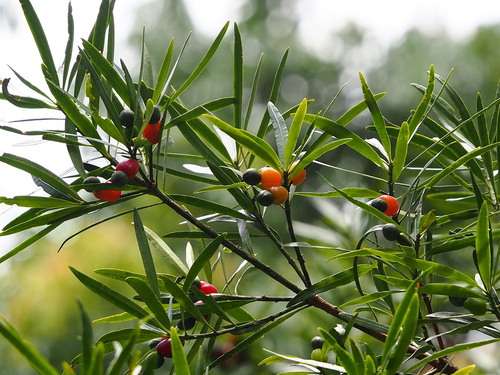
Yellow Mussaenda
pseudomussaenda flava
The Yellow Mussaenda is a beautiful plant with bright yellow leaves! It attracts many butterflies and is a favorite among garden lovers.
Hábitat: Tropical gardens and forests in Southeast Asia.
The Yellow Mussaenda is a vibrant shrub, known for its small, star-shaped yellow flowers often hidden by much larger, bright lemon-yellow, leaf-like bracts. These velvety bracts create a dazzling display, contrasting with its dark green, oval leaves.
Categoría
PlantasRareza
Common
Peligro
0/5 · Sin peligro conocido
Snaps
¡Sé la primera persona en hacer un snap!
It's a plant cousin to the coffee bean, even though it looks totally different!
Its 'flowers' are actually colorful leaves called bracts, making a big show!
Some Mussaenda are nicknamed 'Buddha's Lamp' for their unique, glowing appearance!
Traditional healers sometimes use parts of its relatives for medicinal purposes!
Yellow Mussaenda has huge, bright yellow bracts that act like giant beacons to attract pollinators from far away, ensuring its tiny true flowers are found.
Yellow Mussaenda can produce flowers and showy bracts almost continuously in warm climates, increasing its chances to reproduce throughout the year.
Yellow Mussaenda can be heavily pruned and still grow back vigorously, helping it recover from damage or adapt to garden shaping.
Apis mellifera
Visits flowers to collect nectar and pollen.
Danaus plexippus
Feeds on nectar, helping to spread pollen.
Papilio demodocus
A common African butterfly attracted to its blooms.
Colorido describe a organismos u objetos que exhiben una amplia variedad de colores brillantes y distintivos.
Este rasgo caracteriza a los organismos cuya dieta consiste total o principalmente en material vegetal.
Los hábitats boscosos son entornos terrestres dominados por una densa cubierta arbórea, que sustentan una gran diversidad de vida animal y vegetal.
Los animales diurnos están activos principalmente durante el día y suelen descansar o dormir por la noche.

Describe organismos que transfieren polen, permitiendo la fertilización y reproducción de las plantas.
Peligro
0/5 · Sin peligro conocido
Todavía no hay notas especiales de seguridad.
100-300 cm
100-200 cm
0.5-1 cm
Year-round in tropical climates, summer/fall in temperate zones
No
Ninguna
Perenne
Insectos
Acércate para separar los grupos y explorar dónde se ha fotografiado este objeto.
Los snaps recientes aparecerán aquí a medida que se añadan nuevas observaciones.