

Yellow Rock Rose
cistus calycinus
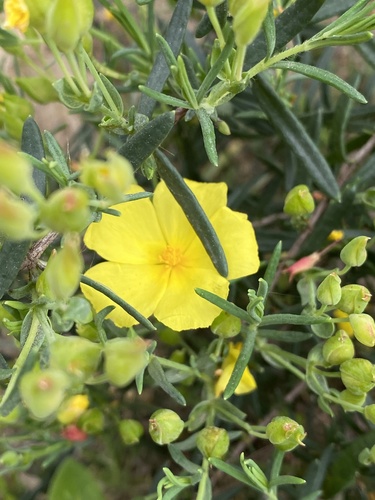
The Yellow Rock Rose (Cistus calycinus, formerly known as Halimium calycinum) is an enchanting evergreen shrub native to the sunny coastlines and dry shrublands of the western Mediterranean. This resilient plant is famous for its bright yellow flowers, which resemble delicate pieces of crumpled paper and bring a vibrant splash of color to sandy, nutrient-poor landscapes. Well-adapted to harsh coastal environments, it thrives where other plants struggle, braving hot, dry summers and nutrient-poor soils with ease. As a pyrophytic species, the Yellow Rock Rose plays a vital role in ecological recovery after wildfires. Its seeds are triggered to germinate by the heat of fire, allowing it to establish quickly and stabilize the soil. Gardeners value this species for xeriscaping due to its extreme drought tolerance and cheerful, pollinator-friendly blooms.
Hábitat: Found in dry, sandy coastal dunes, Mediterranean pine forests, and rocky shrublands.
This low-growing, highly branched shrub typically reaches heights of 30 to 100 centimeters, forming dense, sprawling mounds. It features narrow, linear green leaves with slightly rolled margins and fine, hairy textures that help the plant retain moisture in dry winds. The standout feature is its flowers, which consist of five bright yellow, delicate petals surrounding a dense dome of orange-yellow stamens. These flowers bloom in small clusters, creating a striking contrast against the dark green, resinous foliage.
Categoría
PlantasRareza
Common
Peligro
1/5 · Muy bajo
Snaps
¡Sé la primera persona en hacer un snap!
In coastal ecosystems, its complex, spreading root systems play a critical role in binding and stabilizing loose sand dunes.
Its leaves are covered in sticky, aromatic resins that help reduce water loss and deter grazing herbivores.
The delicate yellow petals of individual flowers often last for only a single day, dropping off by afternoon, but are quickly replaced by fresh blooms the next morning.
Its seeds possess a hard coat that is cracked open by the intense heat of wildfires, allowing it to rapidly germinate and colonize burned areas.
Utilizes narrow, wax-coated leaves with rolled edges to minimize water loss through transpiration during intense summer heat.
Forms mutually beneficial relationships with underground fungi, enabling efficient nutrient and water uptake from highly impoverished soils.
As an autotrophic plant, the Yellow Rock Rose synthesizes its own food through photosynthesis, utilizing sunlight, carbon dioxide, and water.
Apis mellifera
Bees visit the bright yellow flowers to collect pollen and nectar, acting as the plant's primary pollinators.
Terfezia arenaria
Forms a symbiotic root association with sand truffles, helping the plant absorb vital soil nutrients in exchange for carbon.
Aún no hay insignias de rasgos asignadas a este objeto.
Todavía no hay alias listados.
Las colecciones para este objeto aparecerán aquí a medida que se añadan más temas.
Peligro
1/5 · Muy bajo
Todavía no hay notas especiales de seguridad.
La forma más fácil de identificar a Yellow Rock Rose es usar la aplicación de identificación de naturaleza Snappit.
30-100 cm
5-15 años
As an autotrophic plant, the Yellow Rock Rose synthesizes its own food through photosynthesis, utilizing sunlight, carbon dioxide, and water.
Found in dry, sandy coastal dunes, Mediterranean pine forests, and rocky shrublands.
Photosynthesis
Acércate para separar los grupos y explorar dónde se ha fotografiado este objeto.
Los snaps recientes aparecerán aquí a medida que se añadan nuevas observaciones.












.jpg&width=800)



