

Zizotes Milkweed
asclepias oenotheroides
Zizotes Milkweed (Asclepias oenotheroides) is a resilient, low-growing perennial plant native to the arid and semi-arid regions of the southwestern United States and Mexico. Unlike many of its taller, upright milkweed relatives, this species often sprawls close to the ground, adapting exceptionally well to sandy, gravelly, or heavily disturbed soils. Known historically in folk medicine, this tough plant is a critical contributor to local biodiversity, drawing in a wide variety of native bees, wasps, and butterflies with its nutrient-rich nectar. Beyond its role as a nectar source, Zizotes Milkweed is an indispensable host plant for monarch and queen butterflies. Caterpillars of these species feed on its foliage, consuming toxins that protect them from predators. Its drought tolerance and low-profile growth make it an increasingly popular choice for native xeriscaping and dedicated pollinator conservation gardens.
Hábitat: Found in dry, open environments such as sandy prairies, pastures, roadsides, and disturbed fields.
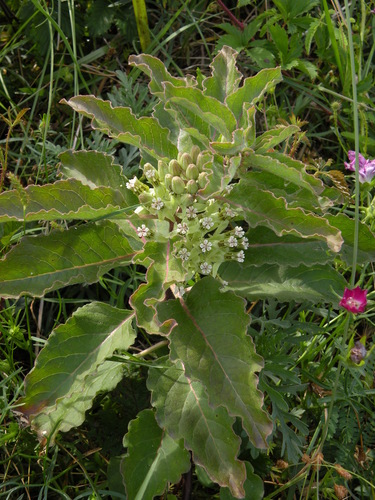
Zizotes Milkweed typically grows as a sprawling or low-ascending herb, reaching heights of 10 to 45 centimeters. It features opposite, broad, lance-shaped leaves with highly characteristic wavy or crinkled margins. The flowers are uniquely clustered in dense, spherical umbels that arise directly from the leaf axils along the sides of the stem, rather than solely at the top. These blooms are a pale greenish-yellow or cream color, featuring elongated, crown-like hoods that lack the prominent internal horns common to other milkweed species.
Categoría
PlantasRareza
Common
Peligro
1/5 · Muy bajo
Snaps
¡Sé la primera persona en hacer un snap!
The cardiac glycosides sequestered by monarch caterpillars from this plant remain in their bodies through metamorphosis, keeping the adult butterflies toxic to birds.
The name 'Zizotes' is derived from a Spanish adaptation of a Nahuatl word referring to skin sores, as the plant's milky sap was traditionally used in folk remedies.
Unlike most milkweeds that only produce flowers at the very top of their stems, Zizotes Milkweed blooms in side-clusters all the way up the plant.
Produces a milky white sap rich in toxic cardiac glycosides (cardenolides) that deters most herbivores from eating its foliage.
Features a deep, fleshy taproot that stores moisture and energy, allowing the plant to survive prolonged dry spells and regenerate after mowing or grazing.
Develops flower clusters at multiple leaf joints along the stem, maximizing reproductive potential and staying accessible to low-flying pollinators.
As a photoautotroph, this plant manufactures its own energy using sunlight, water, and carbon dioxide through photosynthesis, while absorbing essential minerals from the soil.
Danaus plexippus
Serves as a critical larval host plant and source of defensive chemical compounds.
Danaus gilippus
Acts as a primary larval host plant for caterpillars to feed and grow.
Oncopeltus fasciatus
Feeds on the seeds, sap, and pods, concentrating the plant's toxins for its own defense.
Aún no hay insignias de rasgos asignadas a este objeto.
Todavía no hay alias listados.
Las colecciones para este objeto aparecerán aquí a medida que se añadan más temas.
Peligro
1/5 · Muy bajo
Todavía no hay notas especiales de seguridad.
La forma más fácil de identificar a Zizotes Milkweed es usar la aplicación de identificación de naturaleza Snappit.
10-45 cm
3-10 años
As a photoautotroph, this plant manufactures its own energy using sunlight, water, and carbon dioxide through photosynthesis, while absorbing essential minerals from the soil.
Found in dry, open environments such as sandy prairies, pastures, roadsides, and disturbed fields.
Acércate para separar los grupos y explorar dónde se ha fotografiado este objeto.
Los snaps recientes aparecerán aquí a medida que se añadan nuevas observaciones.













_(14586807078).jpg&width=800)
